


Warehouse floor refurbishment guide
Warehouse Floor Repair vs Recoating vs Replacement: Which Do You Need?
When considering warehouse floor repair vs replacement, the answer depends
on what has actually failed. A few isolated defects may only require local
repairs. A sound but worn resin surface may be suitable for preparation and
recoating. Widespread failure, contamination or damaged concrete can require
a much more substantial refurbishment.
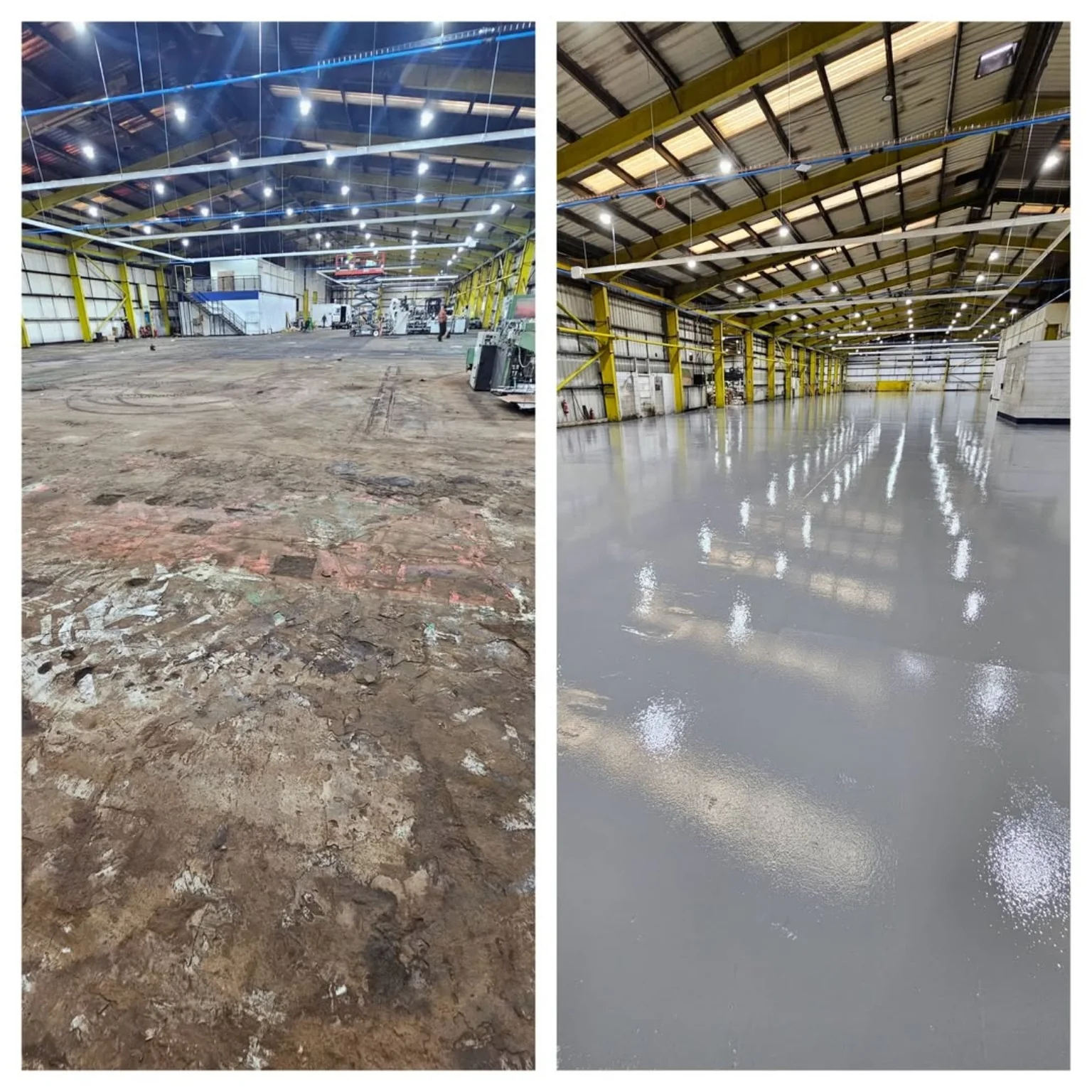
a badly deteriorated existing floor and the completed resin flooring.
Repair, recoat or replace a warehouse floor?
Choose the least disruptive option that still leaves a sound flooring system.
Local repair can make sense where damage is isolated. Recoating may be possible
where the existing resin remains well bonded and the substrate is suitable.
More extensive refurbishment is normally needed where failure is widespread,
the concrete itself is damaged or contamination is present.
The important step is establishing whether the problem is only at the surface
or extends into the existing resin and concrete below.
Quick comparison
Warehouse floor repair, recoating and replacement at a glance
| Option | When it may be considered | What needs checking first |
|---|---|---|
| Local repair |
Isolated holes, cracks, damaged joints or impact defects where the surrounding floor remains serviceable. |
Depth of damage, concrete strength, cause of failure and whether deterioration is spreading. |
| Recoating |
Worn or tired resin surfaces where the existing system remains suitably bonded and the substrate below is sound. |
Adhesion, contamination, compatibility, existing coating condition and required surface preparation. |
| Major refurbishment |
Widespread coating failure, damaged concrete, oil contamination, extensive cracking or an existing system that can no longer provide a suitable base. |
Extent of removal, repairs, substrate condition, preparation method and new resin flooring specification. |
Option one
When is local warehouse floor repair enough?
Not every damaged warehouse floor needs to be completely replaced.
Local repair may be appropriate where defects are confined to specific areas,
for example:
- isolated holes
- small areas of impact damage
- damaged joint edges
- localised cracking
- small failed repairs
- minor damaged concrete around machinery
The surrounding floor still needs to be checked.
If the wider coating is well bonded and the concrete remains sound, repairing
individual defects can extend the useful life of the floor without carrying
out unnecessary work across the whole warehouse.
However, repeatedly repairing new defects across an increasingly deteriorated
floor can eventually become less practical than a wider refurbishment.
Option two
When can an existing warehouse resin floor be recoated?
Recoating can be a sensible route where the existing resin flooring is worn,
scratched or visually tired but remains suitably bonded to a sound substrate.
A recoat should not mean simply cleaning the surface and rolling another
coat over it.
Before recoating, the existing floor may need:
- mechanical preparation
- removal of loose or poorly bonded areas
- repairs to cracks and damaged concrete
- joint repairs
- degreasing or contamination treatment
- compatible primer or intermediate layers where required
The proposed new system must also be compatible with the existing prepared
flooring beneath it.
A resin floor that has failed because the underlying concrete or old coating
is unsound should not simply be hidden beneath another coat.
Option three
When does warehouse floor replacement or major refurbishment make more sense?
More extensive refurbishment becomes more likely when problems are widespread
rather than isolated.
Examples can include:
- large areas of delaminated resin
- widespread peeling or flaking
- oil-contaminated concrete
- numerous cracks and damaged joints
- significant holes or concrete damage
- weak or deteriorated substrate
- multiple layers of failed previous coatings
- a flooring system unsuitable for current warehouse use
In these situations, retaining a failing system underneath a new coating can
create a weak link in the refurbished floor.
The better route may be to mechanically remove unsuitable material, repair
the exposed substrate and install a new resin flooring system onto a properly
prepared base.
Assess before deciding
Six factors that help decide between repair, recoating and replacement
01
Extent of damage
One damaged bay is a different problem from deterioration spread across
thousands of square metres.
02
Existing adhesion
A new coating relies on the layers beneath it. Poorly bonded existing resin
can make recoating unsuitable.
03
Concrete condition
Cracks, holes, weak concrete and damaged joints can require repair before
any new resin flooring is installed.
04
Contamination
Oil, grease and process contamination can affect adhesion and may require
additional preparation or treatment.
05
Current warehouse use
Forklifts, pallet traffic, turning areas and machinery should influence the
new flooring build.
06
Future use
A warehouse changing use may need a different resin flooring specification
from the system originally installed.
Warning signs
Signs that a simple warehouse floor recoat may not be enough
Surface appearance alone does not always show how much work is required.
Warning signs worth investigating include:
- coating lifting in multiple areas
- hollow or loose sections
- cracks continuing through previous repairs
- oil staining returning through the surface
- concrete breaking around joints
- repeated pothole repairs
- large exposed concrete areas
- several incompatible old coatings
The more widespread the underlying problems become, the less likely a simple
cosmetic recoat is to provide a sensible long-term refurbishment.
Preparation reveals the true floor
Why mechanical preparation often changes the repair plan
Old resin flooring can hide the true condition of the concrete beneath it.
Once unsuitable coatings are mechanically removed, previously hidden defects
can become visible.
These can include:
- cracks
- oil-affected concrete
- holes
- weak surface material
- damaged joints
- indentations
- poor previous repairs
For that reason, refurbishment allowances sometimes need to include a realistic
repair provision rather than assuming the concrete beneath an old coating will
be perfect.
Read our guide:
Diamond Grinding vs Shot Blasting Before Resin Flooring
.
Genuine SRS refurbishment
5,000m² Rhondda warehouse: why extensive refurbishment was required
warehouse flooring project.
The approximately 5,000m² Rhondda warehouse was not a simple cosmetic recoat.
The inherited flooring included badly deteriorated resin, oil-affected
concrete, cracking, holes and other damaged areas.
SRS mechanically prepared the floor using diamond grinding and shot blasting
across suitable areas.
Damaged sections were repaired using epoxy mortar and crack-repair materials
before the new Vebro Polymers epoxy flooring system was installed.
The project demonstrates why the difference between warehouse floor repair
vs replacement is determined by the condition beneath the visible surface.
Read the full
5,000m² Rhondda Warehouse Resin Flooring Case Study
.
Genuine SRS warehouse project
3,500m² Bristol warehouse: preparation, repairs and new epoxy flooring
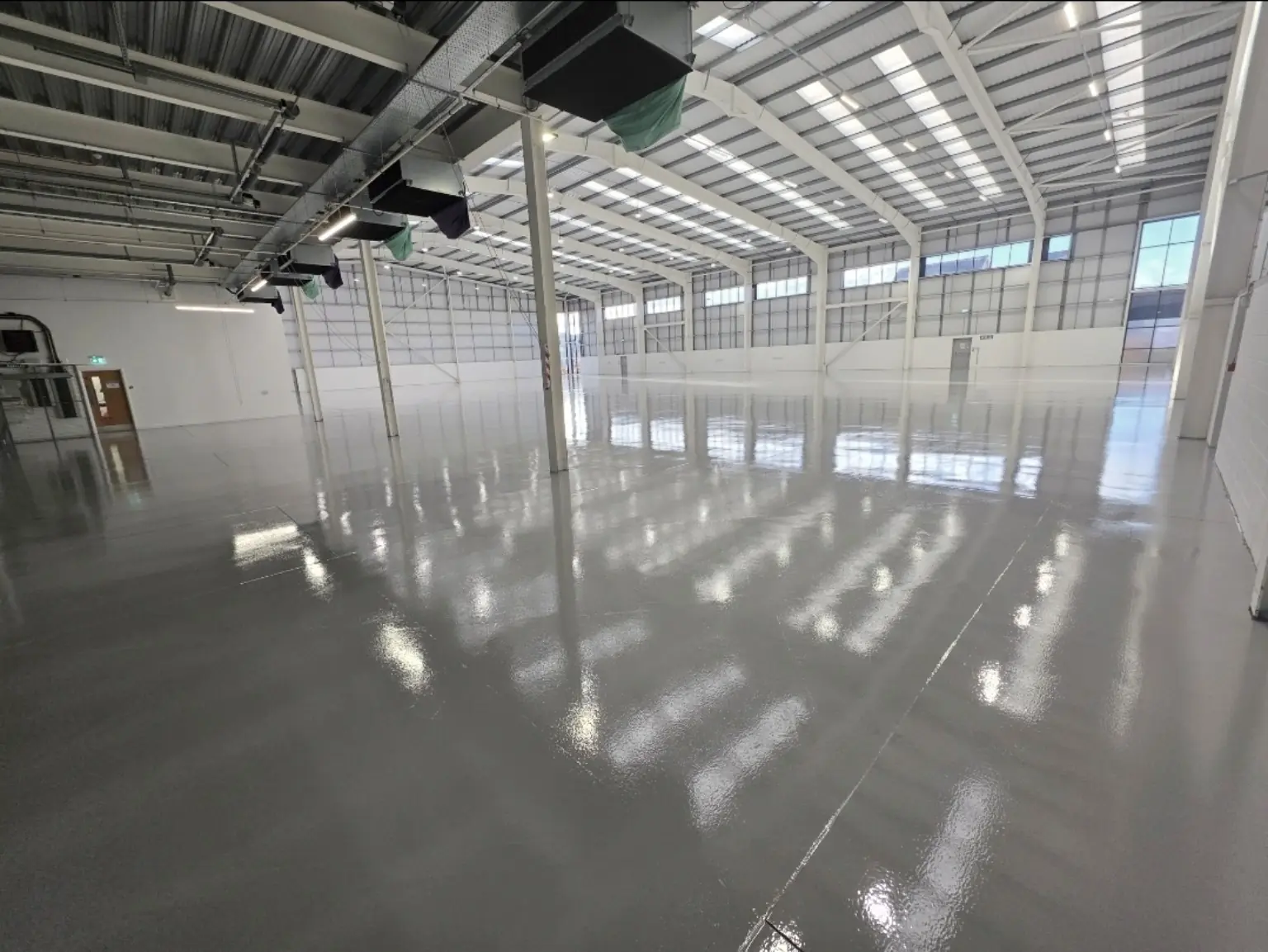
SRS also refurbished an approximately 3,500m² warehouse floor in Bristol.
The existing surface was old, tired and damaged.
Diamond grinding and shot blasting were used during preparation, while damaged
and indented sections extending into the concrete were repaired using epoxy mortar.
The new Vebro Polymers epoxy flooring system was then installed across the
prepared warehouse floor.
This project shows why repairs can form part of a much wider refurbishment
rather than being treated as a separate cosmetic exercise.
View the
3,500m² Bristol Warehouse Case Study
.
Future performance
Do not repair the old floor without considering future forklift traffic
A refurbishment should not only restore the appearance of the warehouse.
It should also consider how the floor will be used afterwards.
High-demand areas can include:
- forklift turning points
- loading bays
- main aisles
- pallet staging areas
- doorways
- racking ends
- machinery locations
If the original floor repeatedly failed in those locations, simply reinstating
the same unsuitable build may recreate the problem.
Making the decision
Warehouse floor repair vs replacement: think beyond today’s defect
The cheapest immediate option is not always the lowest-cost route over the
life of the floor.
If one isolated repair restores an otherwise sound warehouse floor, replacing
everything would be unnecessary.
But if the maintenance team is repeatedly repairing different areas of a
floor that is failing across the warehouse, continued patching can become
disruptive and expensive.
A wider refurbishment can sometimes provide a more consistent finish and
allow the substrate, joints, damage and flooring system to be addressed
together.
The correct decision depends on the scale and cause of the defects rather
than the age of the floor alone.
Operational disruption
Can warehouse floor repairs or refurbishment be phased?
Potentially, yes.
Large refurbishment projects can sometimes be divided into controlled phases,
allowing completed areas to be handed back while work continues elsewhere.
The feasibility depends on:
- warehouse layout
- forklift routes
- stock movements
- racking
- machinery
- repair extent
- flooring system
- curing time
Read our guide:
Warehouse Resin Flooring Installation: Can You Stay Operational?
.
Budget
Which costs less: repair, recoat or replacement?
Local repair will normally involve less work than rebuilding an entire
warehouse floor, but that does not automatically make patch repairs the
best option for a badly deteriorated floor.
The cost can depend on:
- total floor area
- amount of failed coating to remove
- number and depth of repairs
- oil contamination
- mechanical preparation
- system thickness
- phasing
- access
- shutdown restrictions
A useful quotation should make clear whether it allows for local repair,
preparation and recoating or substantial removal and refurbishment.
Read our
Resin Flooring Cost Guide
.
Not sure how much of the floor needs replacing?
Send SRS photographs of the damaged areas and wider warehouse floor
Photographs of both the defects and the surrounding floor can help establish
what should be investigated during the first-stage assessment.
Continue your research
Related warehouse flooring information
Frequently asked questions
Warehouse floor repair and replacement FAQs
Can a warehouse resin floor be repaired without replacing all of it?
Yes. Isolated cracks, holes, joint damage or impact defects can sometimes
be repaired locally where the surrounding floor and substrate remain sound.
Can an old epoxy warehouse floor simply be recoated?
Sometimes, but only where the existing system remains suitable as a base.
Poorly bonded coatings, contamination, weak concrete and widespread failure
can make simple recoating inappropriate.
How do you know when a warehouse floor needs replacing?
Widespread delamination, numerous defects, badly damaged concrete, contamination
or repeated failures can indicate that a wider refurbishment is worth assessing.
The final decision should follow inspection and preparation of the existing floor.
Can damaged concrete be repaired before resin flooring?
Yes. Damaged and indented concrete areas can often be mechanically prepared
and rebuilt using suitable repair materials before the new resin flooring
system is installed.
Should old resin flooring be removed before recoating?
Unsuitable, loose or poorly bonded material should not be relied upon beneath
a new flooring system. Whether all existing resin needs removing depends on
its condition, adhesion, compatibility and the proposed refurbishment system.
Can oil contamination mean a warehouse floor needs replacing?
Oil contamination can require deeper preparation, treatment or localised
removal of affected concrete. The extent of the contamination determines
how substantial the refurbishment needs to be.
Can warehouse floor refurbishment be completed in phases?
Yes, on suitable projects. The warehouse layout, traffic routes, flooring
system, repairs and curing requirements all need to be considered when planning
the phases.
Is repairing a warehouse floor cheaper than replacing it?
Local repairs usually involve less work, but repeatedly patching a floor with
widespread deterioration may not provide the best long-term value. The decision
should be based on the scale and cause of the damage.
Warehouse floor refurbishment
Repair what can be saved and replace what cannot provide a sound base
Send Superior Resin Solutions photographs of the defects, wider floor area,
existing coating, contamination, forklift traffic and shutdown requirements.
We can discuss what should be assessed before deciding between local repair,
recoating or a wider refurbishment.