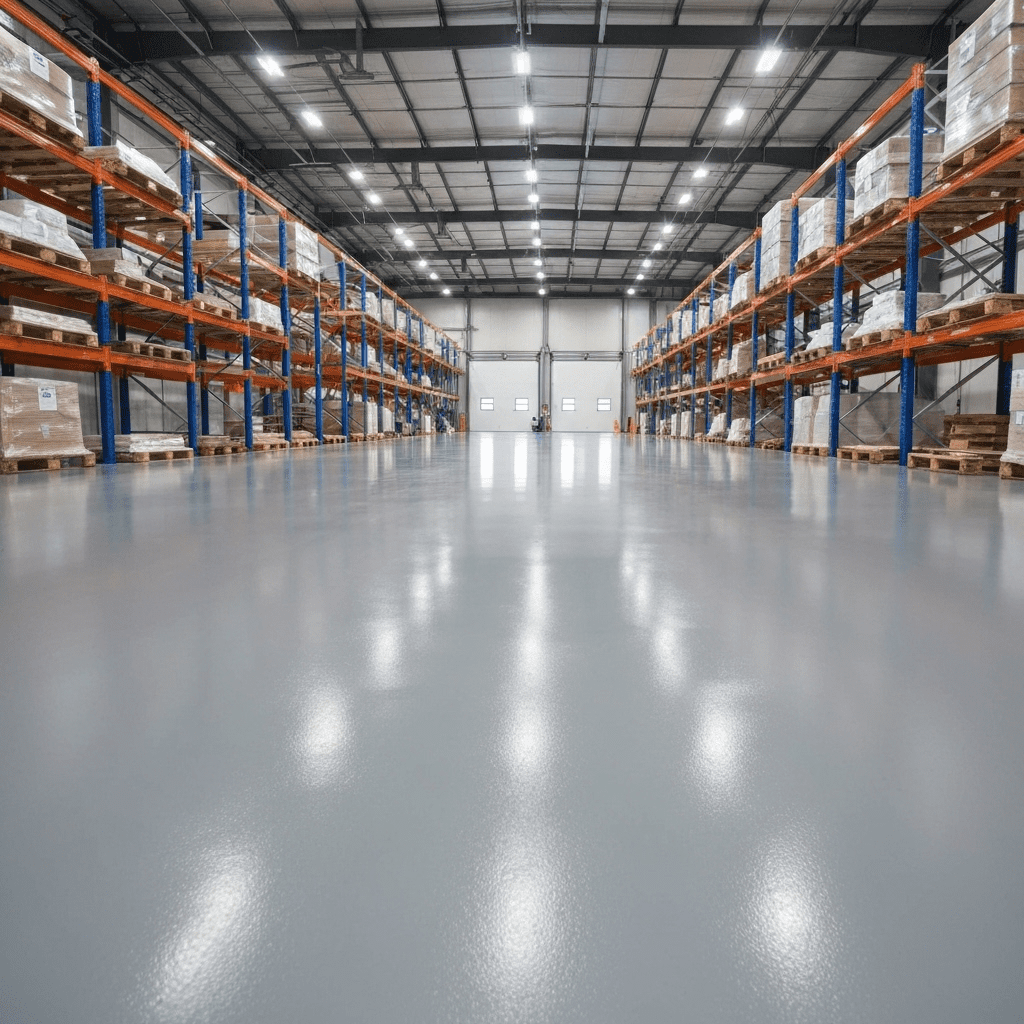
Forklifts and heavy traffic
Forklift weight, tyres, turning circles, pallet trucks, vehicle routes and repeated loading all influence the system build-up.
Factories, warehouses, workshops and production sites
Superior Resin Solutions UK installs industrial resin flooring for factories,
warehouses, engineering workshops, production areas, plant rooms and heavy-use
working environments across South Wales and the wider UK.
The right industrial floor depends on the existing concrete, traffic,
machinery, impact, chemicals, cleaning, slip risk, temperature and the
time available before the area must return to service.
SRS installs epoxy resin flooring, polyurethane systems, polyurethane
screeds, self levelling floors, anti slip finishes, MMA fast-cure flooring
and industrial floor coatings. The system is selected around the actual
operating conditions rather than a one-size-fits-all specification.
Industrial flooring contractors should assess more than the finished colour.
Weak concrete, oil contamination, moisture, damaged joints, cracks, old
coatings, machinery bases and poor previous repairs can all affect the new
floor if they are not identified and treated properly.
Different areas of the same site can face very different loads. The floor
can be zoned and specified according to traffic, contamination, cleaning
and safety requirements.
Forklift weight, tyres, turning circles, pallet trucks, vehicle routes and repeated loading all influence the system build-up.
Dropped tools, metal components, pallets, machinery, abrasive dust and repeated movement require a suitably robust finish.
Oils, fuels, cleaning products and process chemicals must be checked against the exact product and expected exposure.
Wet processing, ramps, entrances and contaminated routes may need texture, drainage and a planned cleaning regime.
Hot washdown, ovens, chilled zones and temperature cycling may require polyurethane or heavy-duty screed systems.
Preparation, repairs, resin layers and safe return to service must fit the operational programme without cutting corners.
SRS supports both new installations and refurbishment projects where an
existing concrete floor needs repair, protection, upgrading or complete replacement.
Resin floors for production lines, assembly areas, machinery routes and high-use manufacturing spaces.
Durable floors for storage, picking, dispatch, loading areas, forklift routes and distribution environments.
Hard-wearing systems for tools, oils, swarf, machinery, vehicle movement and regular maintenance activity.
Hygiene-focused floors for wet processing, commercial kitchens, bakeries, breweries and washdown areas.
Concrete protection and resin flooring for plant areas, utilities, technical spaces and machinery rooms.
Traffic-resistant, textured finishes for loading, turning, access and transition areas where grip matters.
Practical resin flooring for trade units, service businesses, storage, maintenance and mixed commercial use.
Pedestrian routes, crossings, vehicle lanes, exclusion zones and work-bay demarcation.
Resin technology, thickness, texture and finish are selected after the
substrate and operating conditions have been assessed.
Hard-wearing epoxy coatings, broadcast systems and self levelling floors for many dry industrial environments.
PU systems for selected industrial areas exposed to impact, movement, temperature changes or specialist finish requirements.
Robust PU screeds for demanding wet, hot, heavy-use or hygiene-sensitive industrial areas.
Smooth resin systems for selected production, warehouse, pharmaceutical, technical and commercial industrial spaces.
Rapid-cure resin flooring for suitable projects where a short shutdown or phased programme is a priority.
Resin and epoxy coatings for concrete protection, dust reduction, improved appearance and practical maintenance.
This table is a practical starting point. Final selection should follow
substrate assessment and review of the exact traffic, chemicals, temperature,
cleaning and return-to-service requirements.
| System type | Typical use | Main advantages | Important checks | Related page |
|---|---|---|---|---|
| Epoxy floor coating | Plant rooms, stores, workshops and light-to-medium duty industrial areas | Concrete protection, colour, easier cleaning and practical refurbishment | Substrate strength, contamination, moisture, traffic and required build-up | Floor coatings |
| Epoxy broadcast system | Factories, warehouses, ramps, production routes and higher-grip zones | Durability, texture and adaptable build-up | Cleaning method, slip risk, aggregate size, traffic and cure time | Epoxy flooring |
| Self levelling epoxy | Production, technical, commercial industrial and clean working areas | Smooth seamless appearance and consistent finish | Substrate flatness, moisture, point loads, impact and slip requirements | Self levelling flooring |
| Polyurethane flooring | Selected industrial areas requiring specific movement, impact or finish performance | Range of flexible performance characteristics by product | Exact formulation, chemical exposure, temperature and UV requirement | PU flooring |
| Polyurethane screed | Wet production, food processing, heavy-duty and thermally demanding areas | Robust seamless build-up for demanding operations | Depth, drainage, falls, coving, thermal exposure and cleaning chemicals | PU screed |
| MMA fast-cure system | Shutdown, phased and low-downtime refurbishment projects | Rapid curing potential and faster return to service | Ventilation, temperature, preparation, odour control and programme | MMA flooring |
Product data, substrate testing and the agreed written specification take
priority over general website guidance. Chemical resistance, temperature
performance, cure time and service conditions vary by exact manufacturer system.
A thin industrial coating can be a sensible option for concrete protection
and light-to-medium duty use. A heavier resin flooring system is generally
considered where traffic, impact, thermal change, wet processing or service
conditions demand more.
Industrial flooring is normally quoted after the site conditions and scope
are understood. Two floors of the same size can require very different
preparation, repairs, materials and installation programmes.
Weak concrete, failed coatings, cracks, damaged joints, laitance and contamination can add significant preparation and repair work.
A protective coating, broadcast finish, self levelling floor and heavy-duty screed have different material and installation requirements.
Forklifts, impact, chemicals, heat, wet use, hygiene, slip risk and cleaning all influence the specification.
Joints, cracks, drainage, coving, ramps, thresholds, machinery bases and edge details need to be included in the project scope.
Night, weekend, phased or accelerated working can change labour, logistics, curing and material choices.
Open floor plates, small rooms, occupied sites, fixed machinery and difficult access affect production rates and sequencing.
A high-performance resin cannot compensate for weak concrete, unresolved
moisture, embedded oil, loose coatings or unstable repairs.
Review the substrate, old coating, contamination, damage, moisture risk, traffic, cleaning and programme.
Use grinding, shot blasting, scarifying or another appropriate method to remove weak material and create a mechanical key.
Treat cracks, damaged concrete, joints, edges, thresholds, ramps and local defects included in the agreed scope.
Apply the specified primer, resin layers, texture, topcoat and markings before inspection and handover.
These verified projects show SRS delivering both epoxy and heavy-duty polyurethane
flooring across warehouses, industrial units, training facilities and food-processing environments.
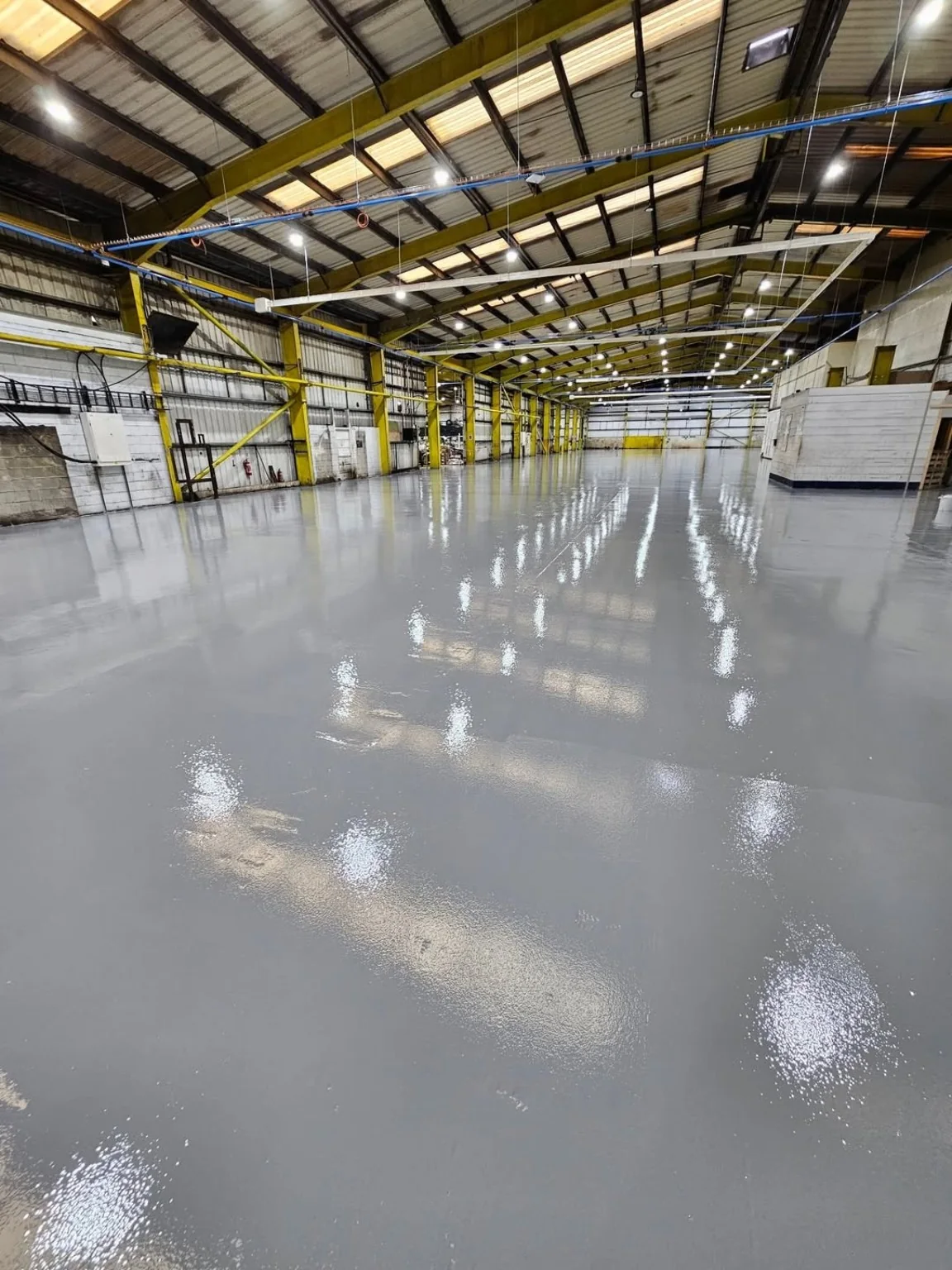
A badly deteriorated industrial floor was mechanically prepared using diamond grinding
and shot blasting, extensively repaired and finished with Vebro EP OT Primer and two
Vebro EP Universal epoxy coats in Glorious Grey. Aluminium oxide was incorporated into
the final coat for additional slip resistance.
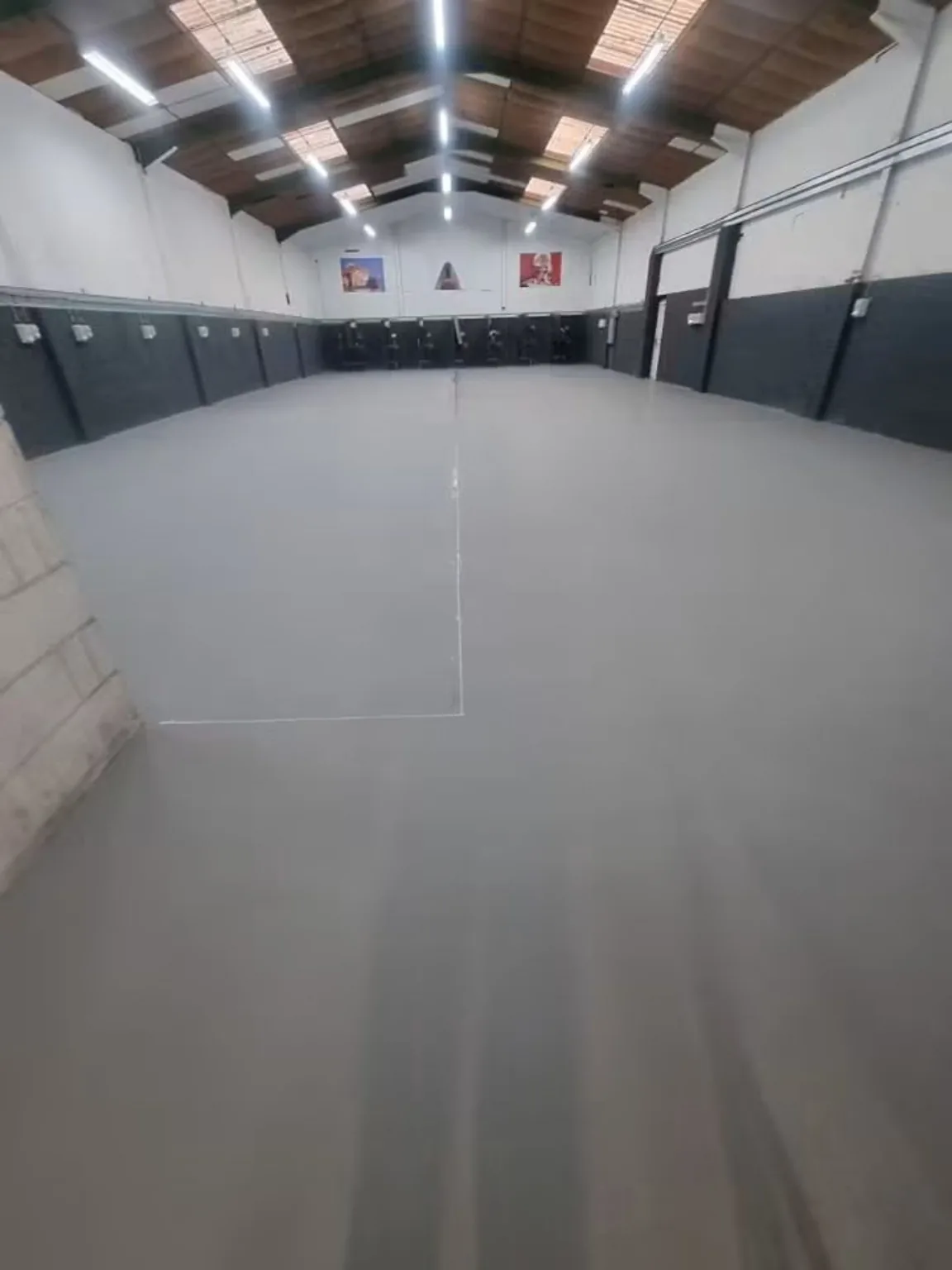
A former welding workshop being converted into a training centre received a 9mm
Resdev Pumadur HF heavy-duty polyurethane floor screed in dark grey. The project
included diamond grinding, local epoxy mortar repairs and joint treatment, with
the full flooring package completed in four days.
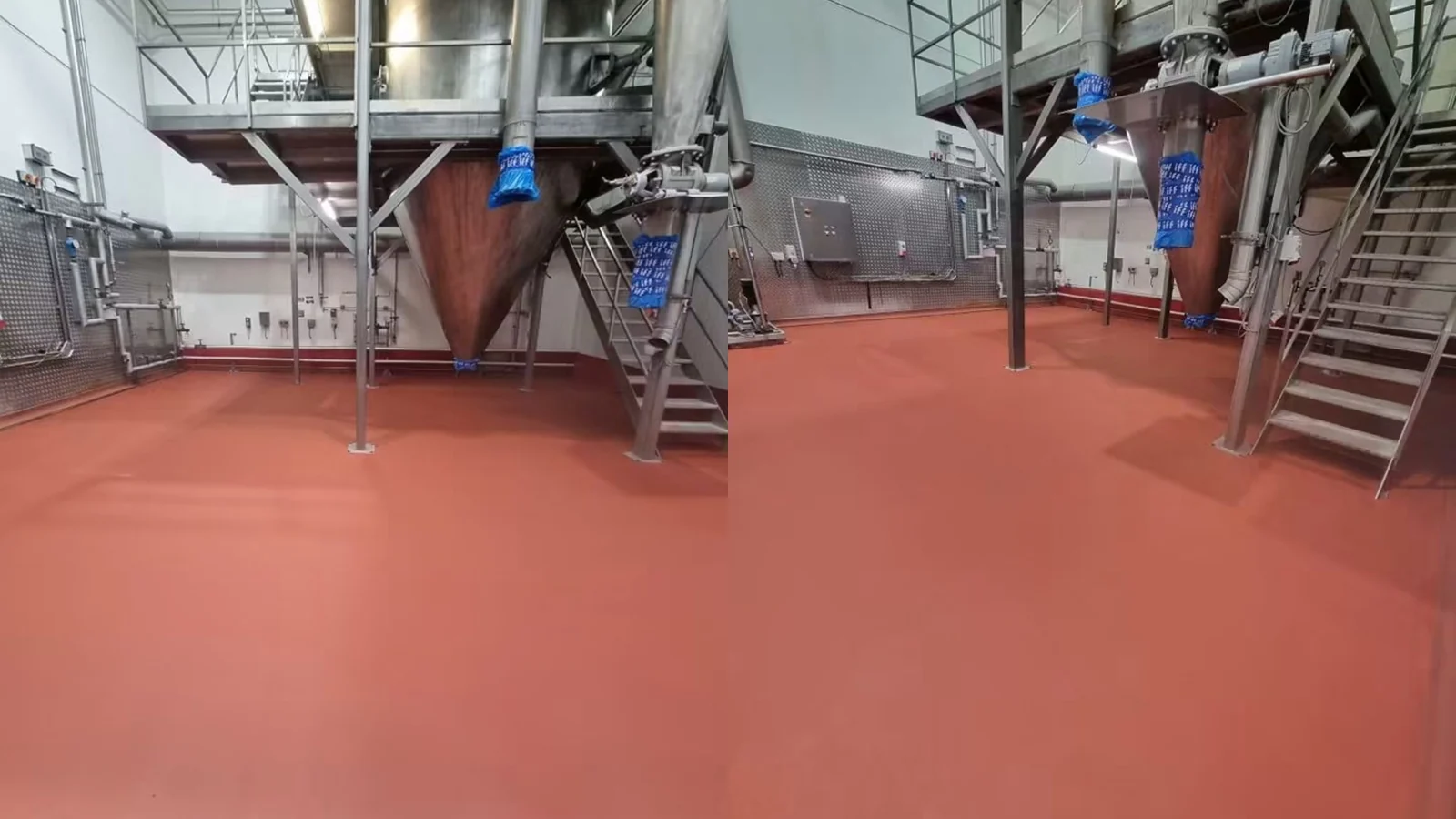
Express Contract Drying Ltd received a 6–9mm Resdev Pumadur HF heavy-duty
polyurethane floor screed in RAL 3001 red, together with 55 linear metres of resin
coving and a 600mm red cladding paint band. The complete flooring package was delivered
in three days.
No floor is completely slip-proof. Surface texture should be selected around
likely contamination and cleaning, while drainage, housekeeping, spill
management, footwear, traffic separation and maintenance remain important.
A responsible quotation identifies conditions that need investigation,
repair or specialist design before a new floor is installed.
The process is planned around the substrate, operational requirements,
preparation, access, installation sequence and safe return to service.
Review the slab, traffic, machinery, contamination, cleaning, access and programme.
Recommend the preparation, repairs, resin build-up, texture, colour and sequencing.
Mechanically prepare the floor and install the agreed industrial resin system.
Inspect the finished floor and provide curing, cleaning and aftercare guidance.
This page helps facilities managers, engineering teams, business owners
and contractors prepare for an industrial flooring survey. Final performance
is confirmed against the selected manufacturer system and written project specification.
Superior Resin Solutions UK is based in Rhigos near Aberdare and supports
factories, warehouses, workshops, production sites and commercial industrial
projects across South Wales and the wider UK.
We support suitable projects in Cardiff, Swansea, Newport, Bridgend,
Caerphilly, Pontypridd, Merthyr Tydfil, Neath Port Talbot, Bristol,
Birmingham, London and other UK locations.
These external resources can support wider decisions about slip risk,
workplace transport, flooring specification and ongoing maintenance.
Official information about floor selection, contamination, cleaning and slip-risk controls.
Guidance for safer pedestrian and vehicle movement in warehouses, factories and industrial workplaces.
UK resin flooring industry information and resources for resin flooring systems and good practice.
Use the specialist pages below to compare applications, finishes,
preparation requirements and resin technologies.
Resin flooring for distribution, storage, picking, dispatch and forklift environments.
Heavy-duty flooring for manufacturing, engineering, automotive and workshop areas.
Epoxy coatings, broadcast systems and self levelling floors for industrial sites.
Heavy-duty PU screeds for wet, hot and demanding industrial environments.
Textured resin flooring for ramps, wet areas, oily bays and operational routes.
Pedestrian walkways, vehicle routes, crossings, work bays and safety demarcation.
Common questions from facilities managers, manufacturers, warehouse
operators, engineering teams, contractors and business owners.
Industrial resin flooring is a seamless floor system applied to a prepared substrate. Depending on the project, it may use epoxy, polyurethane, polyurethane screed, MMA or another resin technology in a coating, broadcast, self levelling or screed build-up.
The best system depends on the concrete, traffic, impact, contamination, chemicals, temperature, cleaning, slip risk and shutdown window. A site survey is normally needed before the final build-up is confirmed.
Suitable industrial resin systems can be specified for forklift routes and busy warehouse or factory areas. The forklift weight, tyre type, turning circles, impact, slab condition and required system build-up all need to be considered.
Neither is automatically better. Epoxy suits many dry industrial floors, while polyurethane and polyurethane screed systems may be considered for selected areas involving movement, temperature change, wet processing or heavier service conditions.
Cost depends on floor area, condition, preparation, repairs, contamination, chosen resin system, texture, detailing, access and programme. Clear photographs and site information are needed before a useful budget or quotation can be prepared.
Sometimes, but the existing substrate or coating must be assessed for adhesion, strength, contamination, moisture and compatibility. Loose or unsuitable materials need to be removed before the new system is installed.
Preparation may involve diamond grinding, shot blasting, scarifying, removal of old coatings, repairs, cleaning and moisture-related work. The method depends on the concrete and the resin system being installed.
Yes, textured finishes can be specified for wet, oily or higher-risk zones. Grip should be balanced with cleanability, and the wider controls should include drainage, cleaning, spill management, footwear and maintenance.
The programme depends on area, preparation, repairs, number of resin layers, temperature, access and cure time. Phased, weekend and fast-cure options may be possible where the site and specification allow.
Service life varies with substrate quality, system thickness, traffic, impact, chemicals, temperature, cleaning and maintenance. Correct preparation and a realistic specification are more useful than a blanket lifespan claim.
Yes. Pedestrian routes, forklift lanes, crossings, work bays, loading zones and exclusion areas can be incorporated into the industrial flooring project where required.
Yes. SRS is based in Rhigos near Aberdare and supports suitable industrial resin flooring projects across South Wales and the wider UK.
Send the site postcode, approximate floor area, photographs, current floor
condition, traffic, machinery, contamination, cleaning process and available
shutdown. SRS will review the information and explain the most practical next step.

Superior Resin Solutions UK Ltd provides industrial, commercial and domestic resin flooring across South Wales and the UK. We install durable epoxy, polyurethane, anti-slip, warehouse, factory, food-grade and resin bound systems for businesses, homes and commercial sites.