Before and after

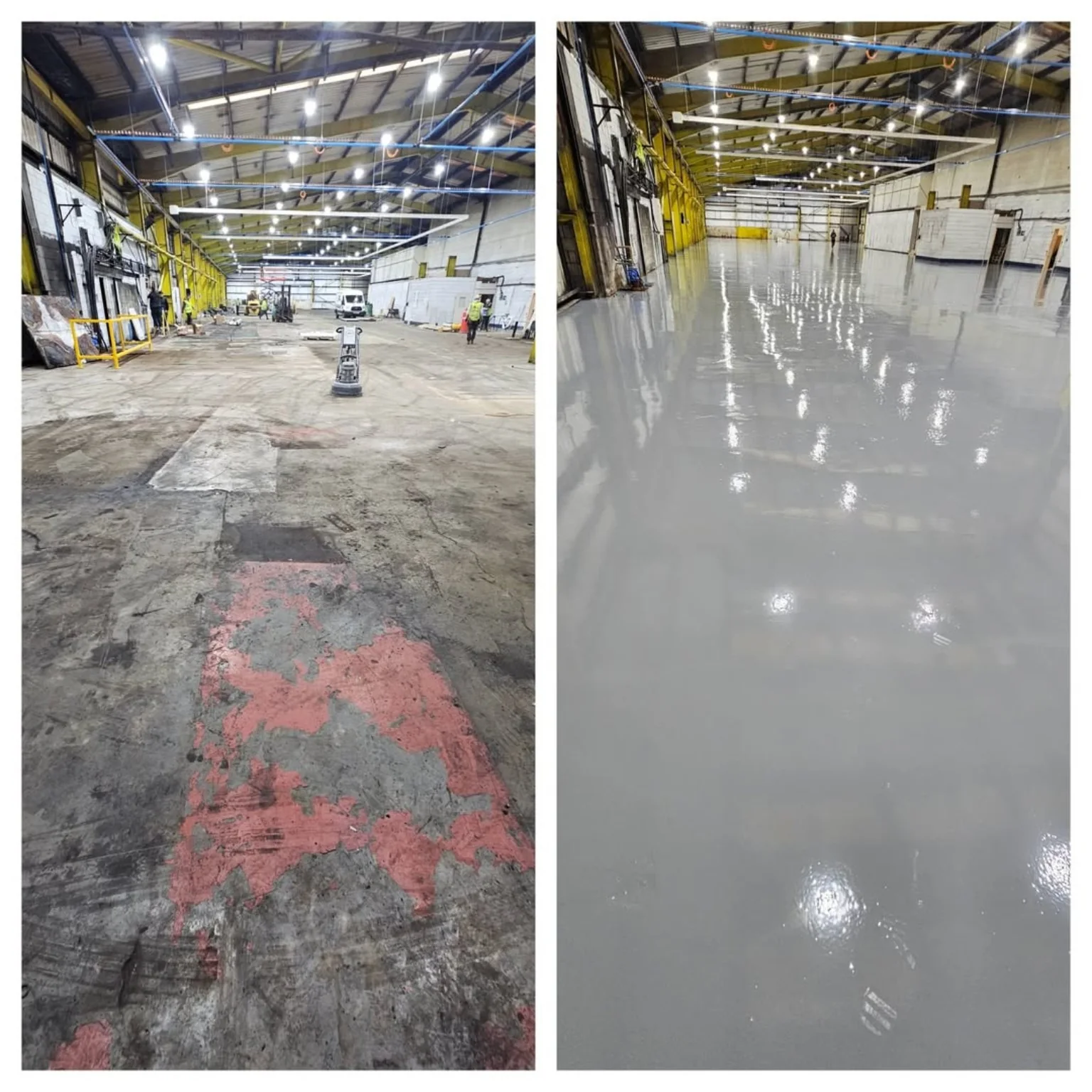
Failed resin and damaged concrete
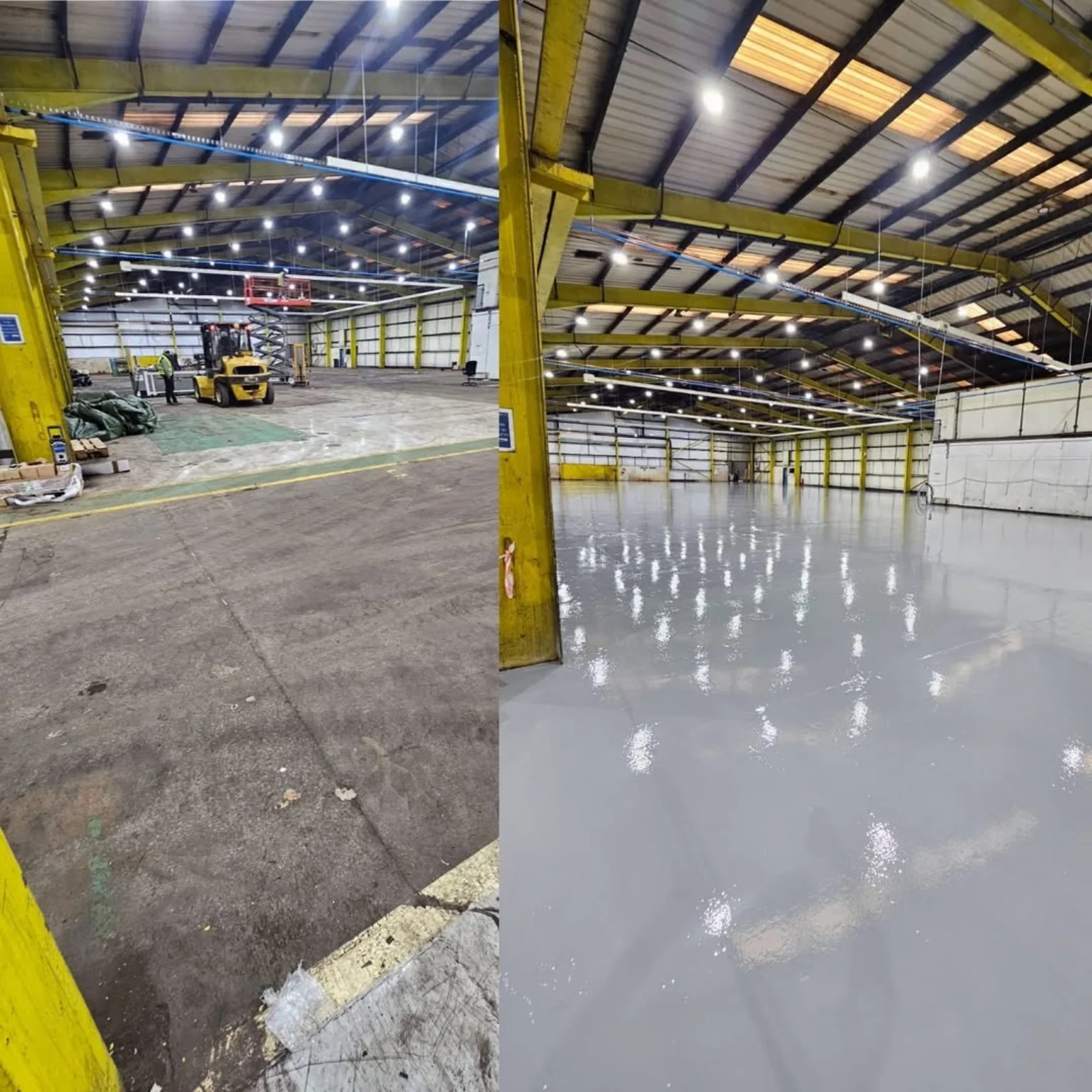
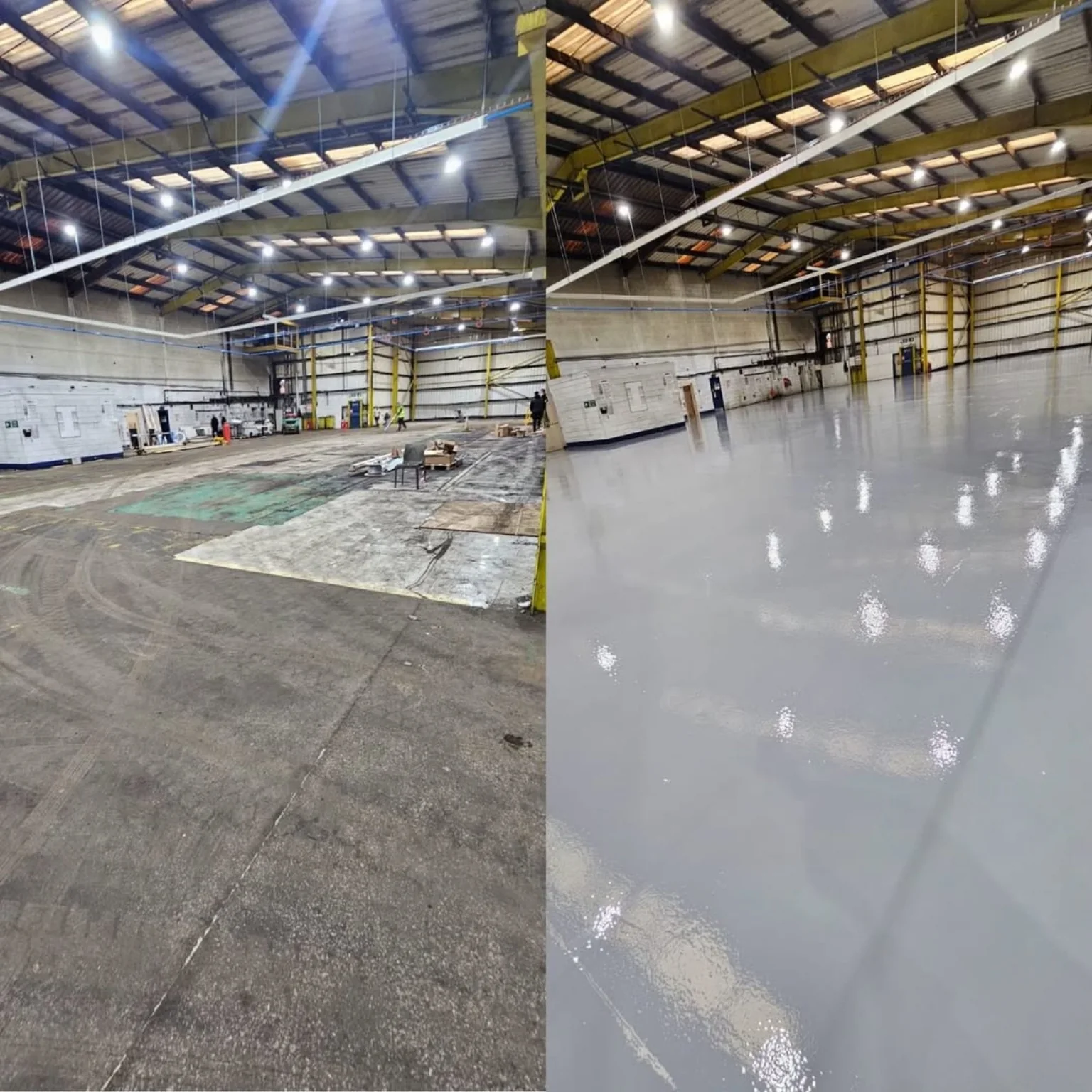
The inherited floor contained deteriorated coatings, worn concrete, oil-affected areas, cracking and extensive defects requiring preparation and repair.
Warehouse flooring case study · Rhondda, South Wales
Superior Resin Solutions delivered warehouse resin flooring in Rhondda for a major South Wales manufacturer expanding into a newly acquired industrial unit. The approximately 5,000m² refurbishment combined extensive mechanical preparation, substrate repairs and a Vebro Polymers epoxy flooring system, delivered in phases across a demanding two-week programme.
The client, a major South Wales manufacturer, had purchased the industrial unit to provide additional space as its business expanded. This warehouse resin flooring in Rhondda needed to support that move while addressing the condition of the inherited floor.
The warehouse provided the extra capacity required, but the existing floor presented a major refurbishment challenge. Large areas contained old, heavily deteriorated resin flooring, while other sections consisted of oil-affected concrete in a poor state of repair.
Beneath the failed surface, SRS encountered cracking, holes, worn concrete and numerous damaged areas that could not simply be hidden beneath a new coating. The substrate first had to be mechanically prepared and properly repaired.
Programme was equally important. Once Phase 1 was completed, the manufacturer needed to begin moving machinery into the unit and installing racking while SRS continued the remaining flooring works.
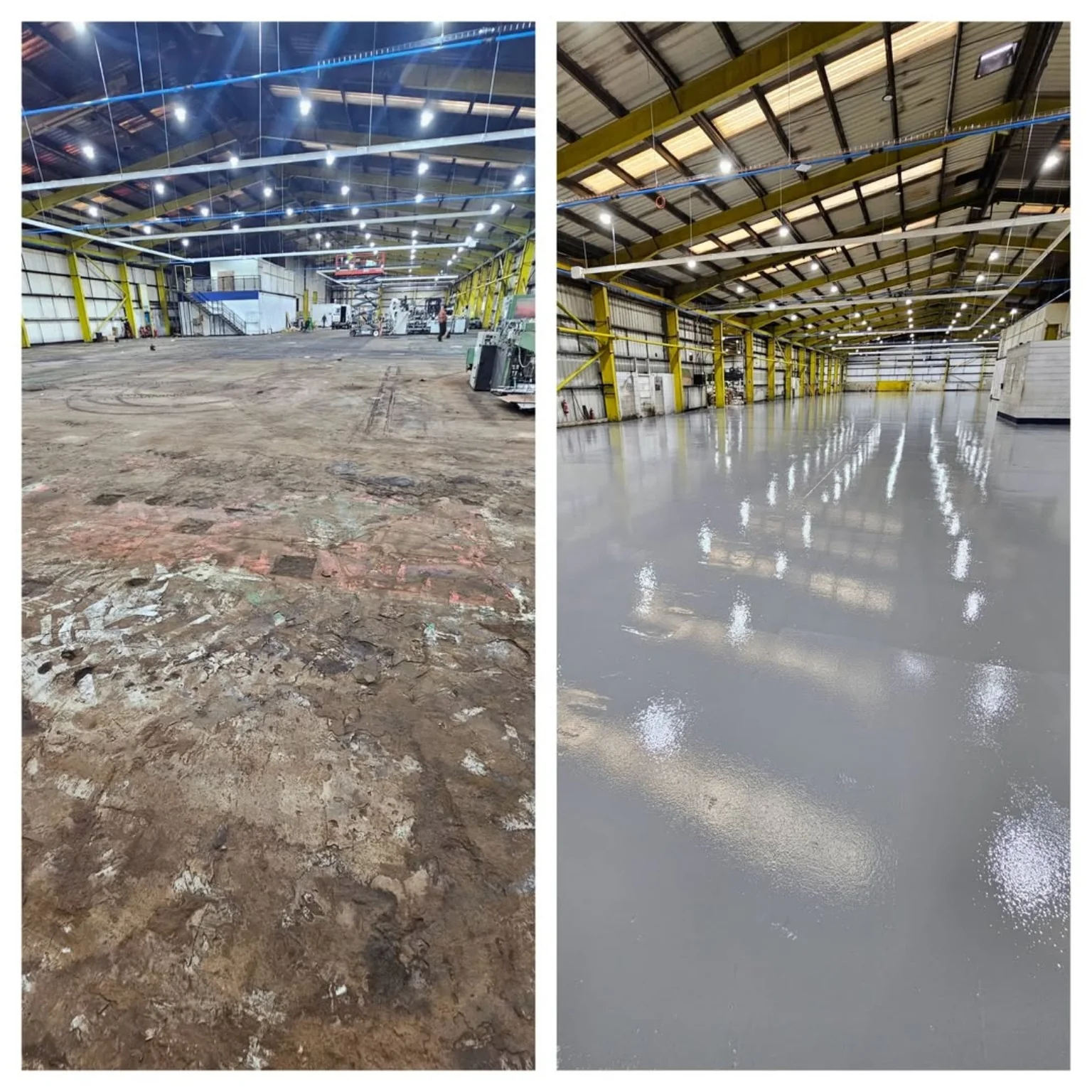
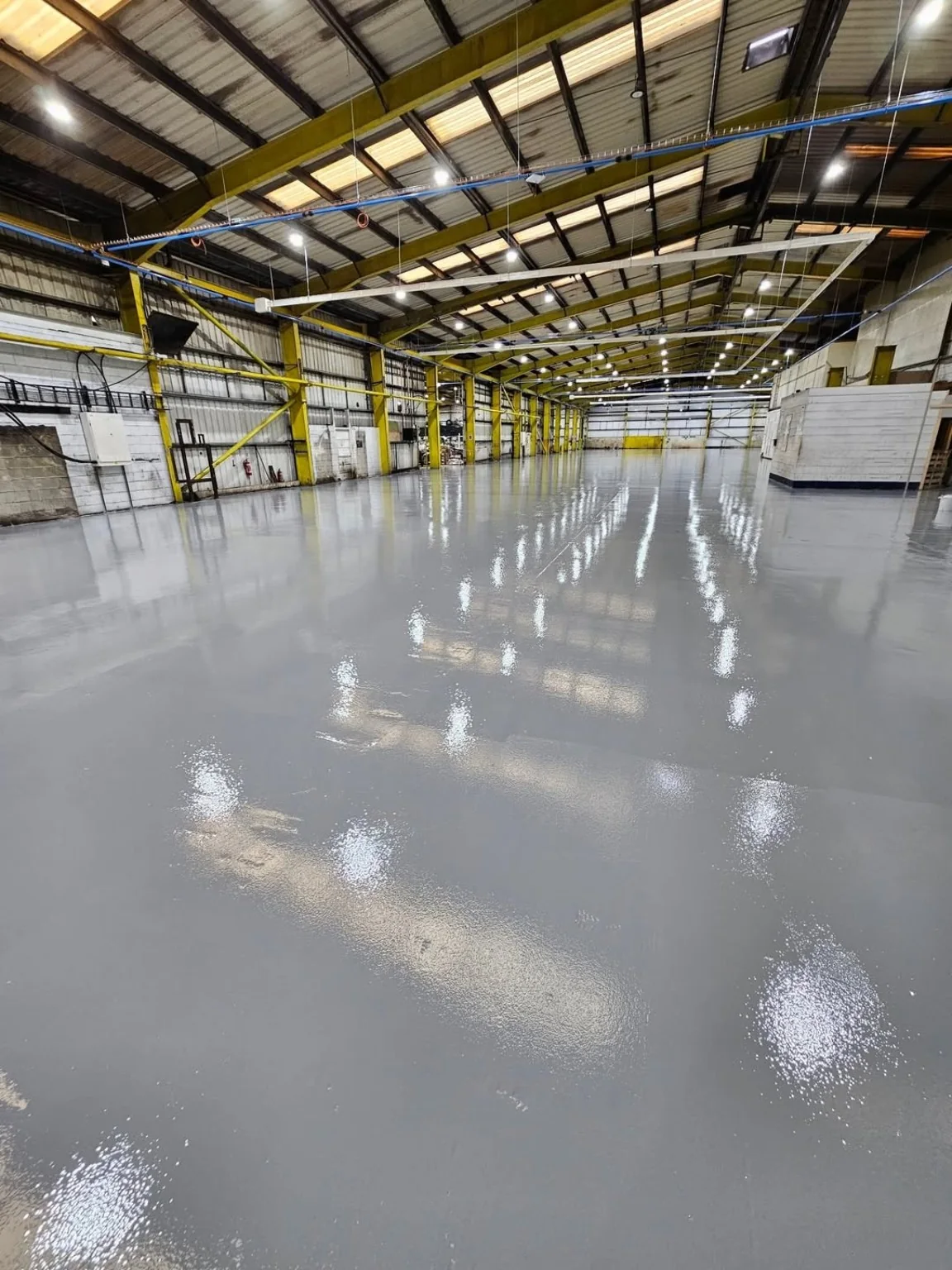
The photographs show the condition of the inherited floor and the clean Glorious Grey epoxy finish achieved after extensive preparation, repairs and installation of the Vebro Polymers flooring system.
The inherited floor contained deteriorated coatings, worn concrete, oil-affected areas, cracking and extensive defects requiring preparation and repair.
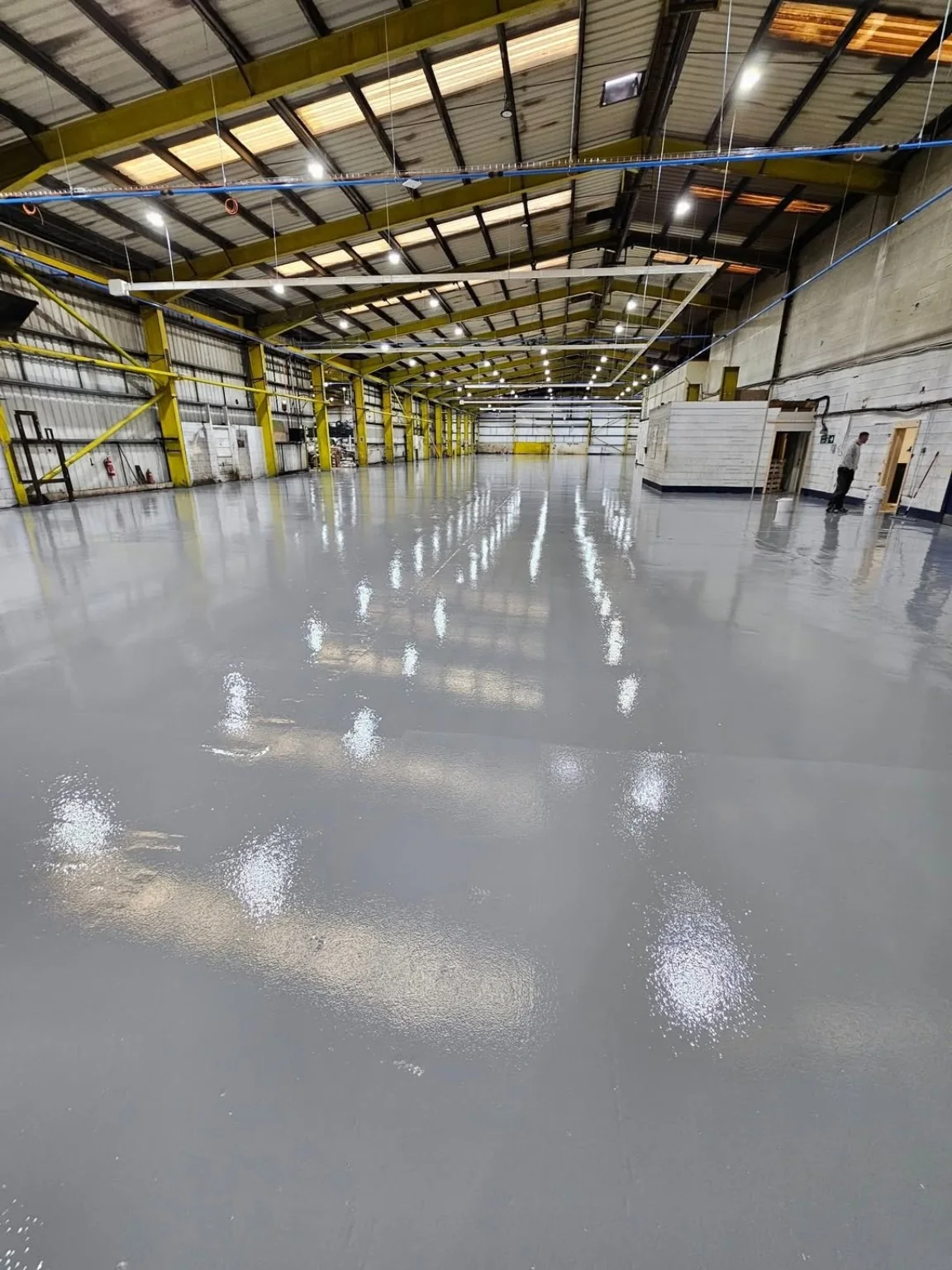
The completed floor provided a consistent epoxy surface with aluminium oxide incorporated into the final coat for additional slip resistance.
The specification for this warehouse resin flooring in Rhondda was selected around the actual condition of the slab, including failed resin, oil contamination, cracking and areas of damaged concrete.
Diamond grinding and shot blasting were used across suitable areas to remove failed material and create the mechanically prepared surface required for the new epoxy system.
Damaged areas were rebuilt using epoxy repair mortars. Suitable surface cracks were treated using resin modified with a thixotropic thickening agent where required.
The oil-affected condition of sections of the existing concrete influenced the primer specification, with Vebro EP OT Primer forming the first resin layer.
Manufactured by Vebro Polymers
Two coats of Vebro EP Universal in Glorious Grey were applied at approximately 350 microns per coat. Aluminium oxide was incorporated into the final coat as an additional safety measure for employees using the facility. Read about specifying anti-slip resin flooring for different site conditions.
Manufactured by Vebro Polymers
The warehouse was not operational when SRS started, but the programme was planned so the manufacturer could begin setting up completed areas while the remaining flooring works continued.
The team reviewed the failed resin, oil-affected concrete, substrate damage, cracking and the manufacturer’s required programme.
Diamond grinding and shot blasting removed unsuitable material and mechanically prepared appropriate areas of the warehouse slab.
Damaged concrete was rebuilt using epoxy mortars, with suitable surface cracks treated using thixotropic resin repair methods.
The epoxy system was installed in phases, allowing machinery and racking installation to begin in Phase 1 while SRS progressed Phase 2.
The warehouse resin flooring in Rhondda transformed a badly deteriorated industrial floor into a repaired and consistent epoxy surface while allowing the client’s wider warehouse setup programme to continue.
A substantial epoxy flooring package completed across the manufacturer’s newly acquired warehouse.
Cracks, holes and damaged areas were treated before the new system was installed rather than simply being concealed.
Machinery and racking installation began in completed Phase 1 areas while SRS continued the remaining flooring works.
Following completion, the manufacturer asked SRS to provide pricing for additional rooms within the facility.
“Floor looks to have dried ok and looking nice. Could do with the quote for the other rooms ASAP as need to submit option.”
Major South Wales manufacturing client
Written feedback received following completion of the warehouse flooring package
Original client message retained by SRS
Explore the SRS services most closely related to this large epoxy warehouse refurbishment. For another completed project, see our 3,500m² Bristol warehouse refurbishment, or browse all resin flooring case studies.
The flooring package covered approximately 5,000m² within a newly acquired industrial unit for a major South Wales manufacturer.
The approximately 5,000m² project was delivered in phases across a two-week programme. The manufacturer began moving machinery and setting up racking in completed Phase 1 areas while SRS continued Phase 2.
The floor contained badly deteriorated old resin flooring, oil-affected concrete, cracking, holes and numerous damaged areas within the underlying substrate.
SRS used a combination of diamond grinding and shot blasting across suitable areas to remove unsuitable material and mechanically prepare the existing floor for repair and recoating.
Larger damaged areas were repaired using epoxy repair mortars. Suitable surface cracks were treated using resin modified with a thixotropic thickening agent where required.
The flooring build-up included Vebro EP OT Primer followed by two coats of Vebro EP Universal in Glorious Grey at approximately 350 microns per coat.
Aluminium oxide was incorporated into the final coat as an additional safety measure for the number of employees expected to use the manufacturing facility.
The work was phased. After Phase 1 was completed, the manufacturer began moving machinery into the finished area and setting up racking while SRS continued with Phase 2.
Yes. Following completion of the warehouse flooring, the client asked SRS to provide pricing for additional rooms within the same facility.
Send your floor area, location, photographs, traffic requirements and preferred handover date. SRS can discuss preparation, repairs and a suitable programme for your site.

Superior Resin Solutions UK Ltd provides industrial, commercial and domestic resin flooring across South Wales and the UK. We install durable epoxy, polyurethane, anti-slip, warehouse, factory, food-grade and resin bound systems for businesses, homes and commercial sites.