Abrasion and traffic
Selected polyurethane finishes can provide durable wear resistance for busy industrial and commercial floors.
Durable PU resin floor systems
Polyurethane flooring for factories, workshops, production areas, commercial premises and selected environments exposed to abrasion, chemicals, movement, temperature changes or sunlight. SRS specifies each PU resin floor around the substrate, operating conditions and available shutdown.
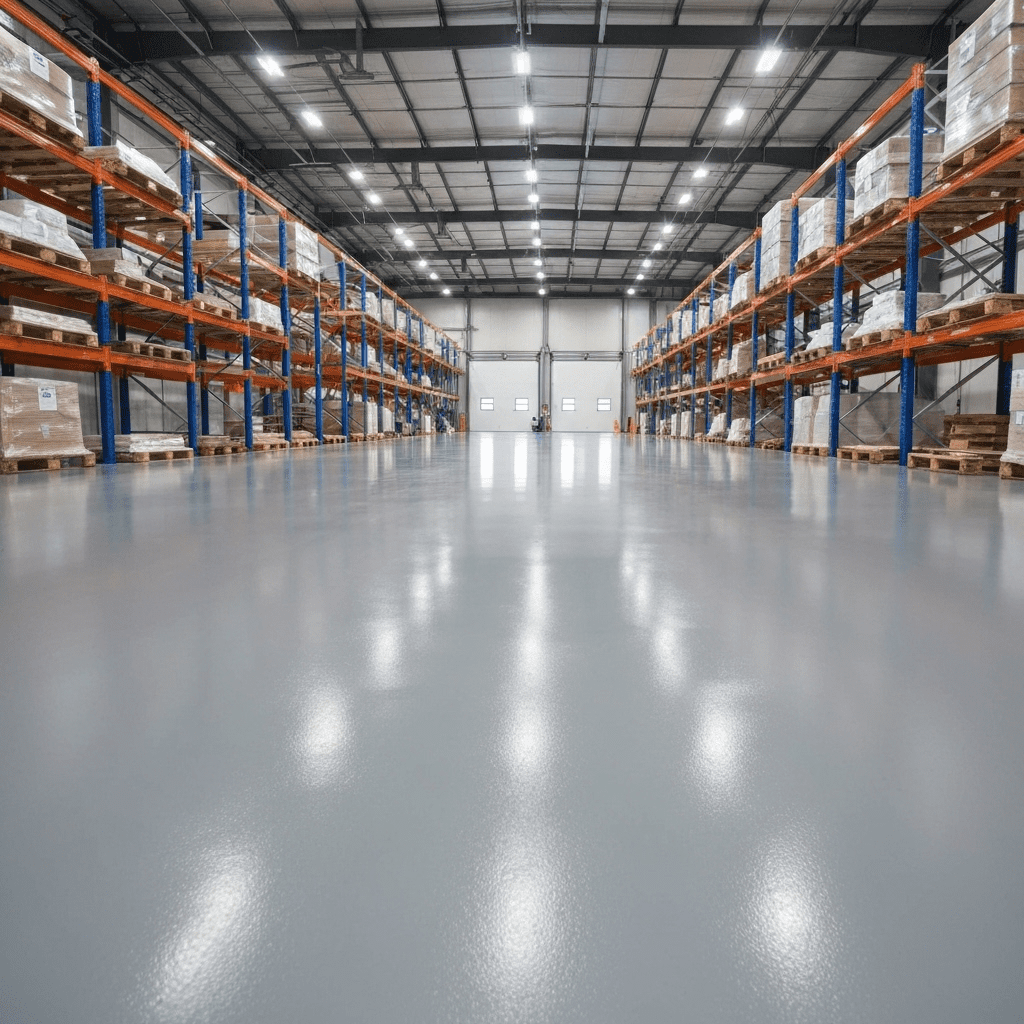
Polyurethane flooring is not one single product. PU coatings, coloured finishes, UV-stable topcoats and heavier polyurethane systems have different strengths, limitations and installation requirements.
Compared with many rigid epoxy systems, selected polyurethane products can provide greater flexibility and resistance to abrasion, temperature movement or ultraviolet exposure. The exact performance depends on the manufacturer, chemistry, thickness and complete system build-up.
SRS assesses the existing slab, moisture, old coatings, contamination, traffic, chemicals, cleaning, sunlight, appearance and shutdown before recommending a polyurethane resin flooring system.
This page covers polyurethane resin flooring and coatings. Heavy-duty polyurethane cement screeds used in wet, hot-wash and thermal-shock areas are covered separately on the polyurethane screed flooring page.
The value of PU flooring comes from matching the exact product and build-up to the operating environment rather than relying on the resin name alone.
Selected polyurethane finishes can provide durable wear resistance for busy industrial and commercial floors.
Some PU systems tolerate limited substrate or thermal movement better than more rigid resin technologies.
Selected aliphatic polyurethane finishes can improve colour stability in sun-exposed areas when correctly specified.
Resistance varies by exact product, concentration, exposure time and temperature, so the chemical schedule must be checked.
Aggregates and textured finishes can improve grip while cleanability, contamination and maintenance are considered together.
Gloss, satin, matt and coloured finishes can support practical zoning and a professional commercial appearance.
Product data, substrate assessment and the written specification determine expected performance. Strong chemicals, high temperatures, thermal shock, standing water and outdoor exposure all need specific review.
PU resin systems can be used in different settings when the substrate, traffic, exposure and cleaning requirements are suitable.
Durable polyurethane flooring for production areas, assembly spaces and selected manufacturing operations.
PU finishes for selected workshop areas exposed to wear, oils, tools, machinery and regular maintenance.
Professional coloured finishes for showrooms, service spaces and customer-facing commercial environments.
Polyurethane topcoats or compatible systems for suitable aisles, storage spaces and operational routes.
Resin floors for selected service bays, garages and vehicle areas where tyre, oil and cleaning demands are assessed.
UV-stable polyurethane finishes can be considered near glazed elevations or areas with strong natural light.
Coloured PU finishes, textured routes and line marking can support clearer workplace movement.
PU resin finishes may suit selected dry or lighter-duty zones, while wet hot-wash areas often need PU screed.
The complete build-up can combine primers, body coats, aggregates, polyurethane layers and compatible seal coats depending on the required performance.
A durable coloured coating for correctly prepared concrete and compatible resin substrates.
An aliphatic polyurethane finish used where improved resistance to yellowing or colour change is required.
Aggregate-textured polyurethane finishes for suitable ramps, wet routes and contaminated working areas.
Professional polyurethane finishes for selected customer-facing and commercial areas.
A thicker polyurethane cement system for demanding wet, hot-wash, chemical or thermal-shock areas.
Some specifications combine compatible epoxy body coats with a polyurethane topcoat to balance build, wear and appearance.
The right choice depends on the substrate, operational exposure, appearance, temperature and available cure window.
| System | Typical strengths | Important limitations | Common applications | Related page |
|---|---|---|---|---|
| Polyurethane flooring | Wear resistance, flexibility, selected chemical performance and UV-stable options | Performance varies widely; compatibility, moisture and cure conditions must be checked | Factories, workshops, commercial areas and sun-exposed interiors | Current page |
| Epoxy resin flooring | Strong adhesion, build, seamless finish and broad industrial use | Many standard epoxies are rigid and can discolour under UV exposure | Factories, warehouses, workshops and commercial units | Epoxy flooring |
| PU screed | Heavy-duty performance, thermal-shock resistance and wet-process suitability by specification | Thicker, more specialised system with different detailing and cost factors | Food production, washdown, wet process and demanding industrial areas | PU screed |
| MMA flooring | Rapid cure and short return-to-service potential | Ventilation, installation controls and exact site conditions require planning | Low-downtime refurbishments and phased projects | MMA flooring |
Manufacturer product data, substrate assessment and the agreed written specification take priority over general website guidance. For a direct system comparison, read our epoxy vs polyurethane flooring guide.
The survey should identify the conditions that affect adhesion, durability, appearance and return to service.
Weak concrete, dust, laitance, old coatings, cracks and failed repairs influence preparation.
Moisture movement and missing damp protection can affect adhesion and long-term performance.
Pedestrians, pallet trucks, forklifts, vehicles, dropped tools and machinery loads need review.
Exact chemicals, concentrations, temperatures, contact time and cleaning products should be listed.
Thermal cycling, hot surfaces, cold areas and ultraviolet exposure can change the recommended system.
Preparation, repairs, each resin layer and safe return to service must fit the operational programme.
Send the site postcode, approximate square metres, photographs, intended use, current floor condition, traffic, chemicals, temperature exposure and required completion date.
The coating can only perform as intended when the concrete is sound, correctly prepared and compatible with the selected system.
Review the concrete, moisture, old coatings, contamination, traffic, chemicals, sunlight and programme.
Use grinding, shot blasting, scarifying or another suitable method to remove weak material and create a key.
Address included cracks, damaged concrete, joints, edges, thresholds and local defects before coating.
Apply the agreed primer, resin build-up, polyurethane layers, texture and markings before curing.
Polyurethane topcoats are sometimes installed over compatible epoxy or resin layers. Mixing products or systems without confirmed compatibility can cause adhesion, curing or appearance problems.
These verified SRS projects used Resdev Pumadur HF heavy-duty polyurethane floor screed. They provide direct project proof for demanding industrial and food-processing environments. For more detail on thicker PU screed systems, see our polyurethane screed flooring page.
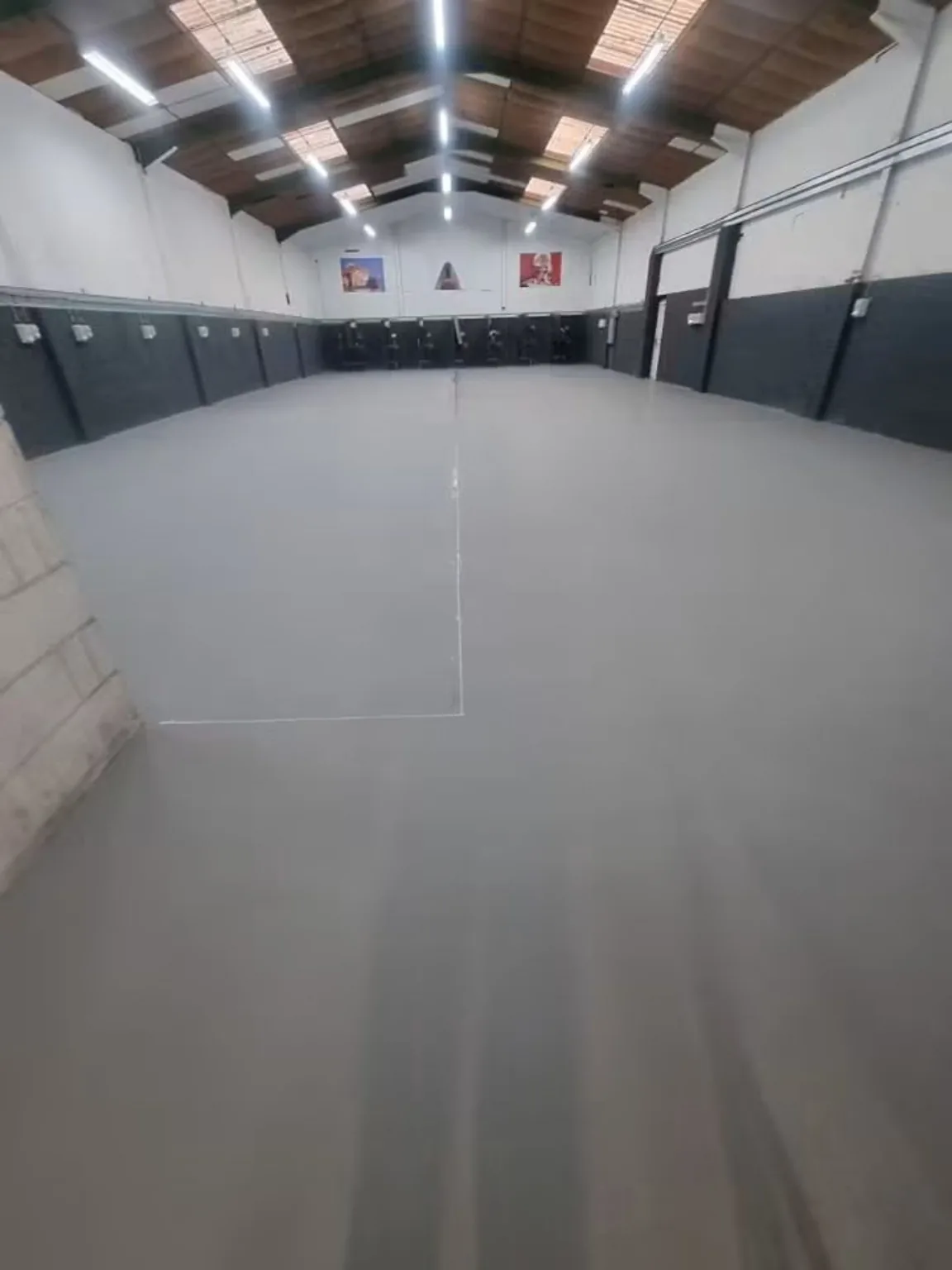
A former welding workshop being converted into a training centre received a 9mm Resdev Pumadur HF heavy-duty polyurethane floor screed in dark grey. The project included diamond grinding, local epoxy mortar repairs and joint treatment, with the complete flooring package delivered in four days.
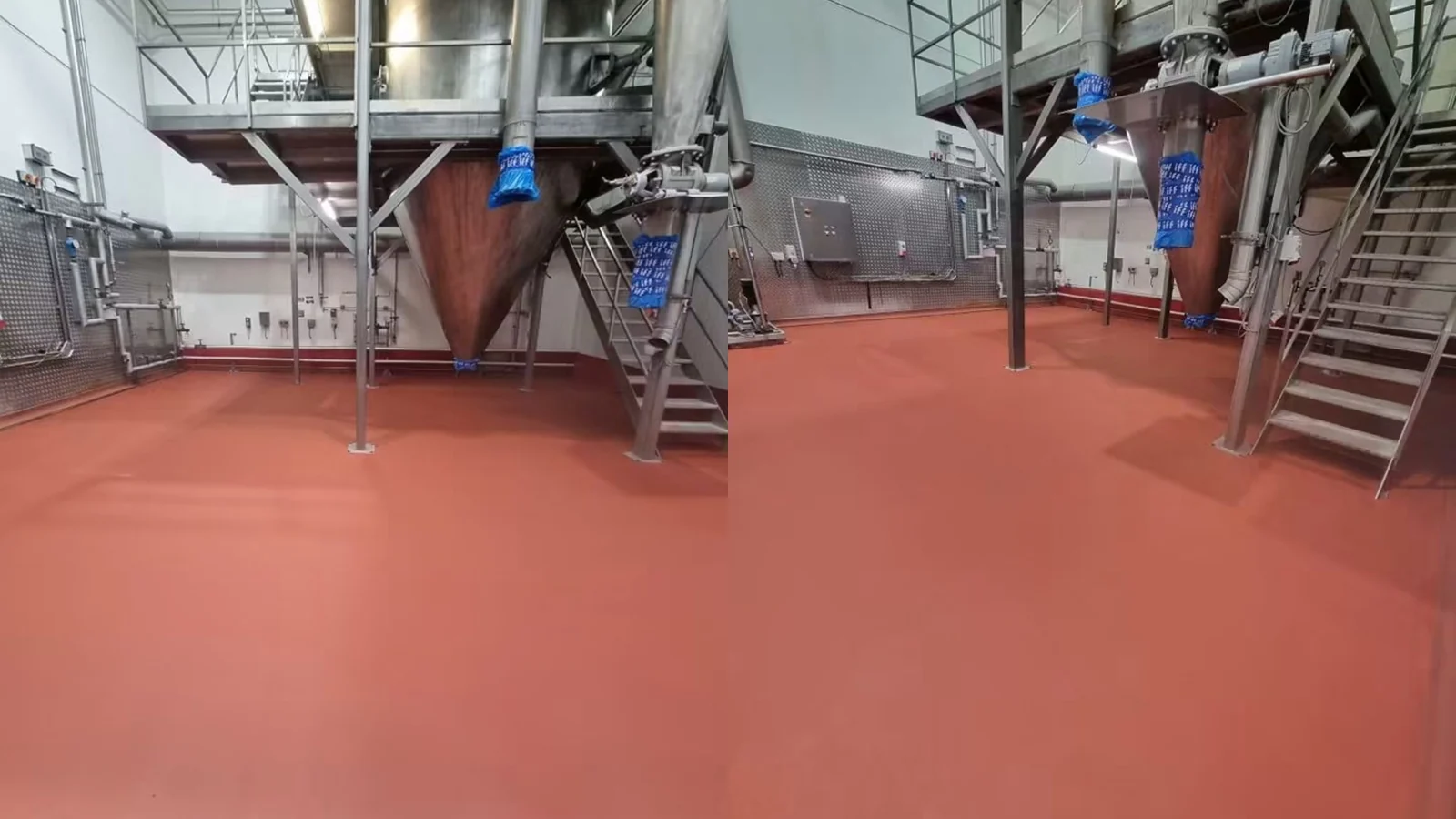
Express Contract Drying Ltd received a 6–9mm Resdev Pumadur HF heavy-duty polyurethane floor screed in RAL 3001 red, together with 55 linear metres of resin coving and a 600mm red cladding band. The full package was completed in three days.
A responsible recommendation identifies unresolved conditions that could shorten service life or require a different system.
The process is planned around the substrate, exposure, access, preparation, compatible layers and safe return to service.
Review the slab, traffic, chemicals, temperature, sunlight, cleaning and programme.
Recommend the preparation, repairs, compatible build-up, texture, colour and sequence.
Mechanically prepare and install the agreed primer, resin layers, polyurethane finish and details.
Inspect the floor and provide curing, cleaning and aftercare guidance.
This page provides general guidance for facilities managers, manufacturers, business owners and contractors. Final performance is confirmed against the selected manufacturer system and written project specification.
Superior Resin Solutions UK is based in Rhigos near Aberdare and supports suitable industrial and commercial polyurethane flooring projects across South Wales and the wider UK.
Polyurethane projects often overlap with epoxy flooring, PU screeds, preparation, anti slip finishes and industrial coatings.
Hard-wearing epoxy coatings and self-levelling systems for industrial and commercial sites.
Heavy-duty PU cement systems for wet, hot-wash and demanding process environments.
Survey-led resin systems for factories, production, engineering and operational sites.
Durable and decorative resin finishes for customer-facing and back-of-house premises.
Textured resin finishes for wet, oily, ramped and contaminated working areas.
Fast-cure resin systems for suitable projects where downtime is tightly restricted.
Common questions from facilities managers, manufacturers, business owners and contractors.
Polyurethane flooring is a resin-based floor coating or system applied to a correctly prepared substrate. Different PU products include protective coatings, coloured finishes, UV-stable topcoats and heavier polyurethane systems.
Epoxy systems are often selected for adhesion, build and broad industrial use. Selected polyurethane systems can offer greater flexibility, abrasion resistance or UV stability. The best choice depends on the full site conditions.
Some aliphatic polyurethane products provide improved ultraviolet and colour stability. Not every PU product is identical, so the exact manufacturer data and complete build-up must be checked.
PU systems can resist selected chemicals, oils and cleaners, but resistance varies by product, concentration, temperature and exposure time. The chemical schedule should be reviewed before specification.
Polyurethane flooring can include textured or aggregate-broadcast finishes to improve grip. Texture must be balanced with cleanability, contamination, drainage, footwear and maintenance.
Polyurethane flooring often refers to coatings and resin finishes. PU screed is normally a thicker polyurethane cement system for demanding wet, hot-wash, chemical or thermal-shock areas.
Often yes, provided the slab is sound and can be mechanically prepared. Old coatings, contamination, moisture, cracks, joints and weak concrete must be assessed first.
Cure time varies by product, temperature, humidity, thickness and site conditions. The programme must include preparation, repairs, all resin layers and the manufacturer’s return-to-service requirements.
Cost depends on the floor area, existing slab, preparation, repairs, selected PU system, thickness, texture, access and shutdown requirements. SRS provides project-specific quotations after reviewing the site.
Yes. SRS is based in Rhigos near Aberdare and supports suitable polyurethane flooring projects across South Wales and the wider UK.
Send the site location, floor area, photographs, current condition, intended use, traffic, chemicals, temperature, sunlight and available shutdown. SRS will review the information and explain the most practical next step.

Superior Resin Solutions UK Ltd provides industrial, commercial and domestic resin flooring across South Wales and the UK. We install durable epoxy, polyurethane, anti-slip, warehouse, factory, food-grade and resin bound systems for businesses, homes and commercial sites.