Control concrete dusting
Seal and protect a suitable concrete surface to reduce loose dust and create a more manageable working environment.
Concrete protection and practical floor upgrades
Durable industrial floor coatings for warehouses, factories, workshops, plant rooms and commercial working areas across South Wales and the wider UK. SRS specifies the coating around the concrete condition, preparation, traffic, contamination, cleaning, slip risk and available shutdown.
Industrial floor coatings can protect concrete, reduce surface dusting, improve appearance and create a cleaner, more practical working surface. Their performance depends on correct floor preparation and repairs and on choosing a build-up that matches the traffic and operating conditions.
SRS installs epoxy floor coatings, high-build resin coatings, textured anti-slip finishes, coloured walkways, polyurethane finishes and fast-cure coating systems for warehouses, factories, workshops, plant rooms, storage spaces and commercial industrial units.
A thin coating is not automatically the right answer for every slab. Weak concrete, deep contamination, active moisture, heavy impact, severe abrasion or major surface damage may require additional repairs or a thicker resin flooring system.
The coating should solve a defined flooring problem rather than simply change the colour of the slab.
Seal and protect a suitable concrete surface to reduce loose dust and create a more manageable working environment.
Support foot traffic, pallet movement and selected industrial use with a coating thickness matched to the demands.
Create a sealed, less porous surface that is easier to sweep and clean than worn or dusty bare concrete.
Refresh tired industrial spaces with colour, gloss and zoning options selected around the working environment.
Add suitable texture where required while balancing grip with cleaning, contamination, drainage and footwear.
Combine coatings with walkways, work bays, crossings and line marking for clearer operational movement.
Different areas may need different coating thicknesses, textures, colours and preparation methods.
Coatings for storage areas, aisles, stockrooms, pedestrian routes and suitable forklift environments.
Resin coatings for manufacturing areas, machine zones, assembly spaces and operational routes.
Practical finishes for oils, tools, light chemicals, machinery and regular workshop cleaning.
Concrete protection for plant spaces, service corridors and technical working areas.
Clean professional finishes for back-of-house areas, trade units, stock spaces and customer-facing premises.
Coloured pedestrian routes, crossings, work bays and safety zones integrated with the coating project.
The exact product and build-up should be confirmed against substrate condition, traffic, contamination, cleaning and manufacturer data.
Sealing and colour-coating systems for suitable concrete exposed mainly to foot traffic and lighter operational use.
Higher-build epoxy finishes for many warehouses, workshops, factories and commercial industrial spaces.
Broadcast aggregate or textured finishes for ramps, entrances, oily bays and areas where extra grip is required.
Contrasting coloured areas, pedestrian routes and operational zones applied as part of a wider flooring scheme.
PU coating and topcoat options for selected environments requiring different flexibility, appearance or UV performance.
Thicker resin flooring may be more suitable where appearance, impact, abrasion or the required service duty exceeds a coating.
This table gives facilities managers, business owners and contractors a practical starting point. Final selection should follow a site assessment and manufacturer specification.
| Floor condition or use | Possible coating route | Main benefits | Important checks | Related page |
|---|---|---|---|---|
| Dusty but sound concrete | Suitable sealer or thin-film resin coating | Dust reduction, colour and easier cleaning | Concrete strength, moisture, laitance and contamination | Request assessment |
| General warehouse or workshop | High-build epoxy coating by duty | Durability, practical maintenance and professional appearance | Forklifts, turning, abrasion, impact, oils and repairs | Epoxy flooring |
| Wet, oily or ramp area | Textured aggregate coating | Additional grip and visible zoning | Contamination, drainage, cleaning and footwear | Anti slip flooring |
| Customer-facing commercial unit | Smooth coloured resin coating or higher-build system | Appearance, seamless finish and easier maintenance | UV exposure, footfall, finish, repairs and downtime | Commercial flooring |
| Heavy impact or severe industrial use | Thicker self levelling, broadcast or screed system | Higher service duty than a basic coating | Loads, impact, chemicals, temperature and slab condition | Industrial flooring |
System descriptions are general guidance. Product data, preparation requirements and the written project specification take priority. Slip resistance, chemical resistance and cure time vary by exact product and build-up.
Surface preparation is central to adhesion. Painting over dust, laitance, oil, weak concrete or a failing old coating creates avoidable risk.
Review the slab, moisture risk, old coating, contamination, cracks, joints, traffic and programme.
Use diamond grinding or shot blasting, scarifying or another suitable method to remove weak material and create a key.
Address included cracks, damaged concrete, edges, thresholds, joints and local defects before coating.
Apply the agreed primer, coating layers, aggregate and markings before inspection and return to service.
The most economical option is the system that matches the required service duty and can bond reliably to the prepared substrate. Our industrial resin flooring thickness guide explains the difference between coating and higher-build systems. The FeRFA resin flooring selection guide provides further industry guidance.
These SRS project photographs show clean, durable finishes used in industrial and commercial working spaces. Explore our resin flooring case studies for project areas, preparation details and confirmed systems.
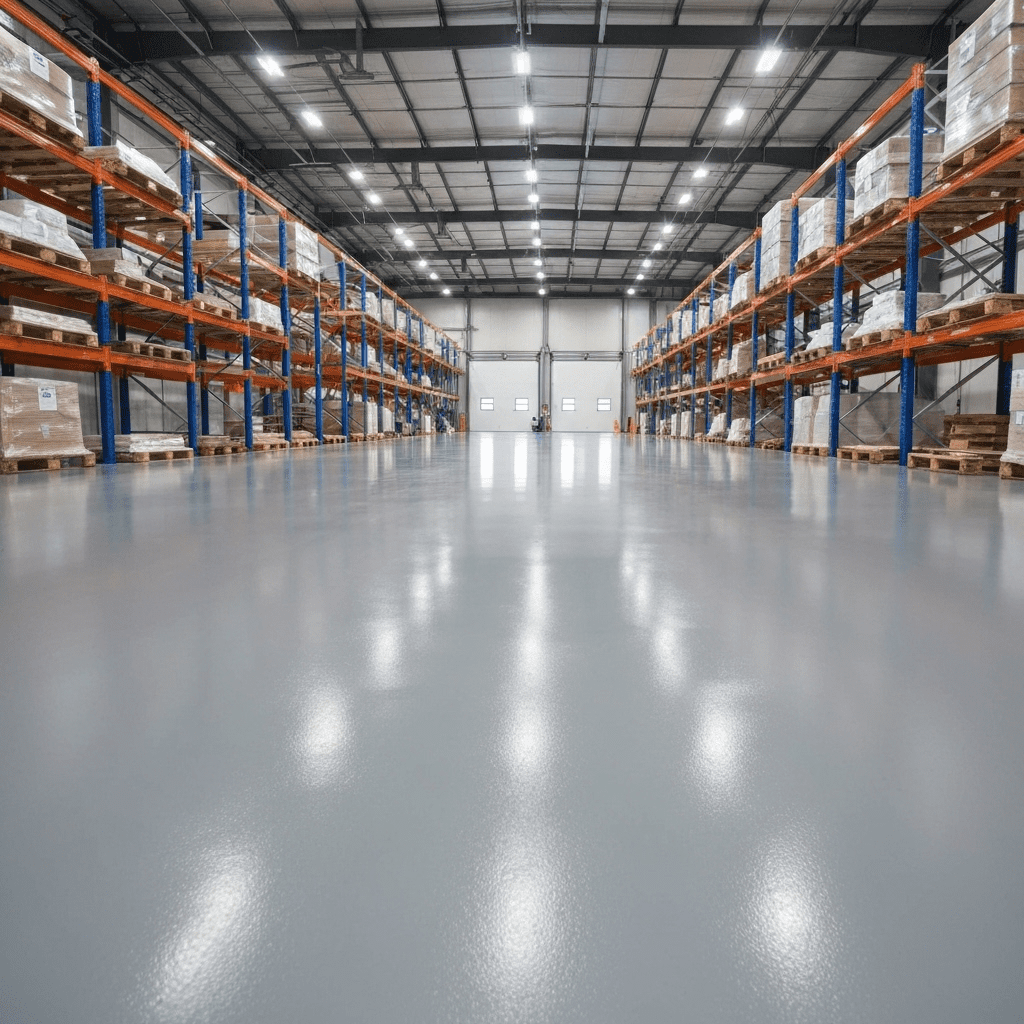
A durable resin finish creating a more professional and manageable operational surface.
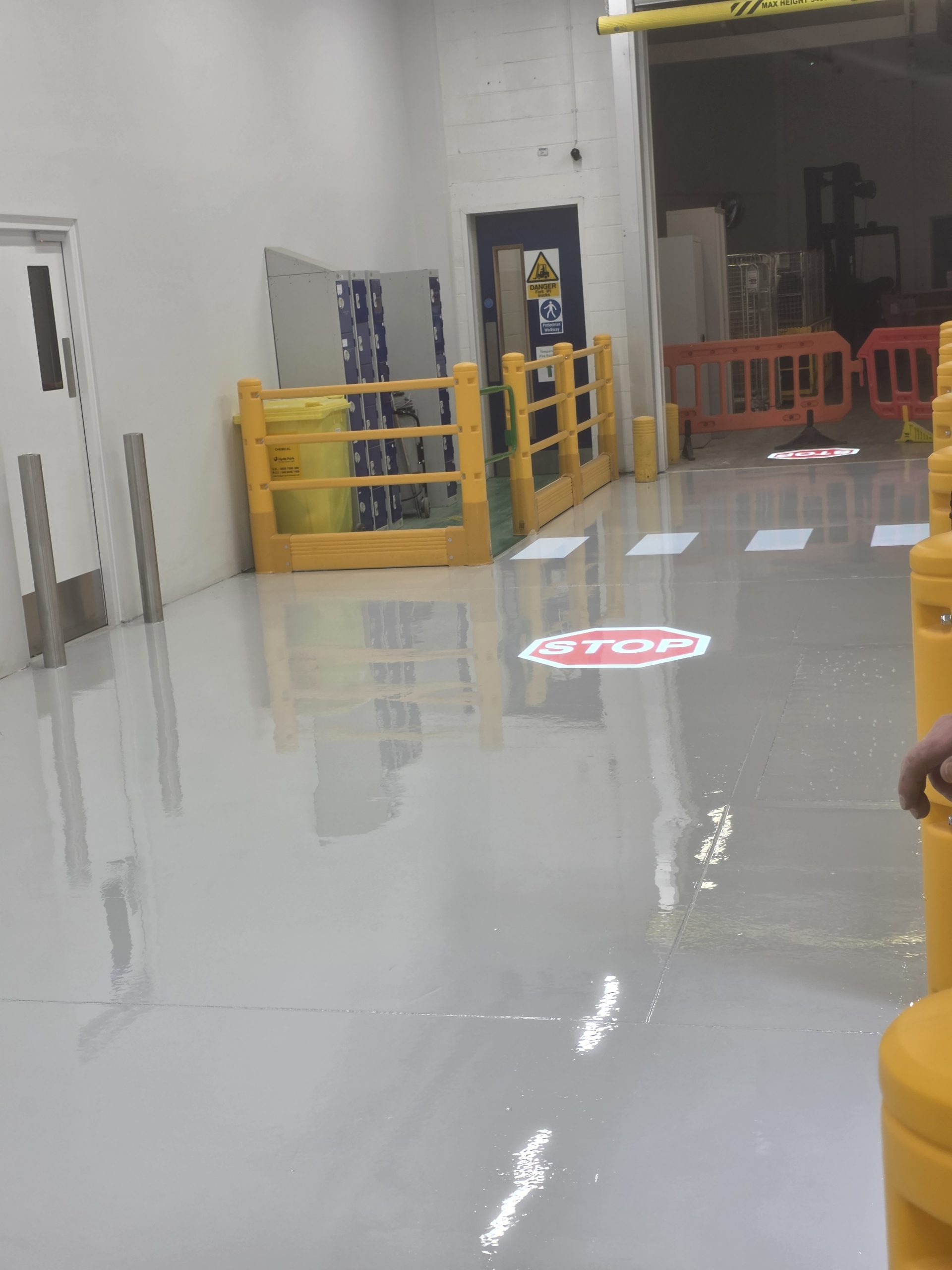
Coloured flooring combined with clear pedestrian routes and operational line marking.
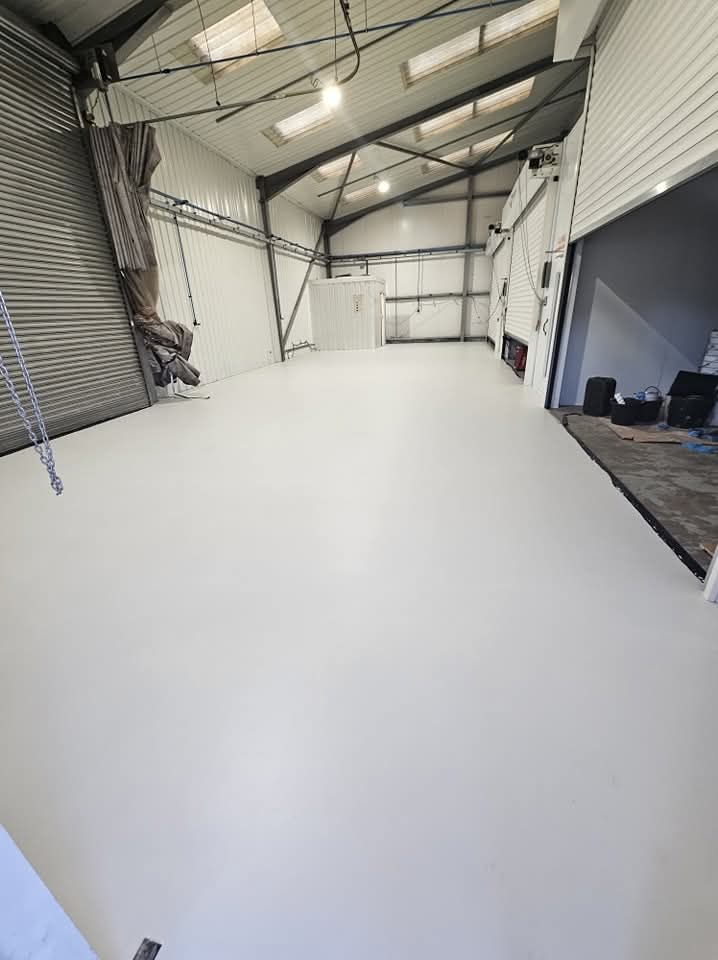
A practical floor finish selected around appearance, cleaning and daily use.
The sequence is planned around substrate condition, preparation, repairs, site access, coating layers and safe return to service.
Review the slab, coating, moisture, contamination, traffic, cleaning and programme.
Recommend preparation, repairs, primer, coating build-up, texture, colour and curing plan.
Mechanically prepare the surface and apply the agreed resin coating and markings.
Inspect the finish and provide practical curing, cleaning and aftercare guidance.
This page helps facilities managers, business owners and contractors prepare for an industrial floor coating assessment. Final performance is confirmed against the selected manufacturer system and written project specification.
Superior Resin Solutions UK is based in Rhigos near Aberdare and supports suitable warehouse, factory, workshop and commercial floor coating projects across South Wales and the wider UK.
Coating projects often overlap with epoxy flooring, repairs, self levelling systems, anti slip finishes and line marking.
Hard-wearing epoxy coatings and higher-build systems for industrial and commercial premises.
Survey-led resin flooring for factories, production areas and heavy-use industrial sites.
Floor coatings and resin systems for forklift routes, aisles, loading and storage areas.
Smooth higher-build resin floors for suitable industrial and commercial environments.
Textured finishes for wet, oily, ramped and contaminated working areas.
Pedestrian routes, crossings, forklift zones, work bays and safety demarcation.
Common questions from warehouses, factories, workshops, commercial units and facilities teams.
Industrial floor coatings are resin systems applied over correctly prepared concrete to protect the surface, reduce dusting, improve appearance and create a more practical working floor.
Common applications include warehouses, factories, workshops, plant rooms, storage areas, production spaces, commercial units and back-of-house working areas.
Suitable epoxy floor coatings can provide durable service in many commercial and industrial environments when the concrete, preparation, build-up and operating conditions are correctly matched.
A suitable coating can seal sound concrete and reduce surface dusting. Weak or failing concrete should be investigated because coating alone cannot strengthen a structurally poor slab.
Yes. Aggregates and textured finishes can be incorporated where additional grip is needed. Slip risk also depends on contamination, cleaning, drainage, footwear and work practices.
Sometimes, but the existing coating must be identified and checked for adhesion, compatibility and contamination. Loose or unsound coatings normally need to be removed.
Preparation may include grinding, shot blasting, scarifying, removal of old coatings, cleaning and repairs. The selected method depends on the slab and coating specification.
The programme depends on floor area, preparation, repairs, coating layers, temperature, ventilation, access and cure time. SRS confirms the expected sequence for each project.
Cost depends on area, slab condition, preparation, repairs, system thickness, texture, colours, access and shutdown requirements. A project-specific assessment gives the most reliable quotation.
Yes. SRS is based in Rhigos near Aberdare and supports suitable industrial floor coating projects across South Wales and the wider UK.
Send the site location, floor area, photographs, current coating, concrete condition, traffic, contamination, cleaning process and available shutdown. SRS will review the information and explain whether a coating or thicker resin system is the most practical route.

Superior Resin Solutions UK Ltd provides industrial, commercial and domestic resin flooring across South Wales and the UK. We install durable epoxy, polyurethane, anti-slip, warehouse, factory, food-grade and resin bound systems for businesses, homes and commercial sites.