Wear and traffic resistance
System thickness and build-up can be selected around pedestrians, pallet trucks, forklifts and routine industrial activity.
Industrial and commercial epoxy flooring systems
Superior Resin Solutions UK installs epoxy resin flooring and epoxy floor coatings for factories, warehouses, workshops, production areas, plant rooms and commercial premises across South Wales and the wider UK.
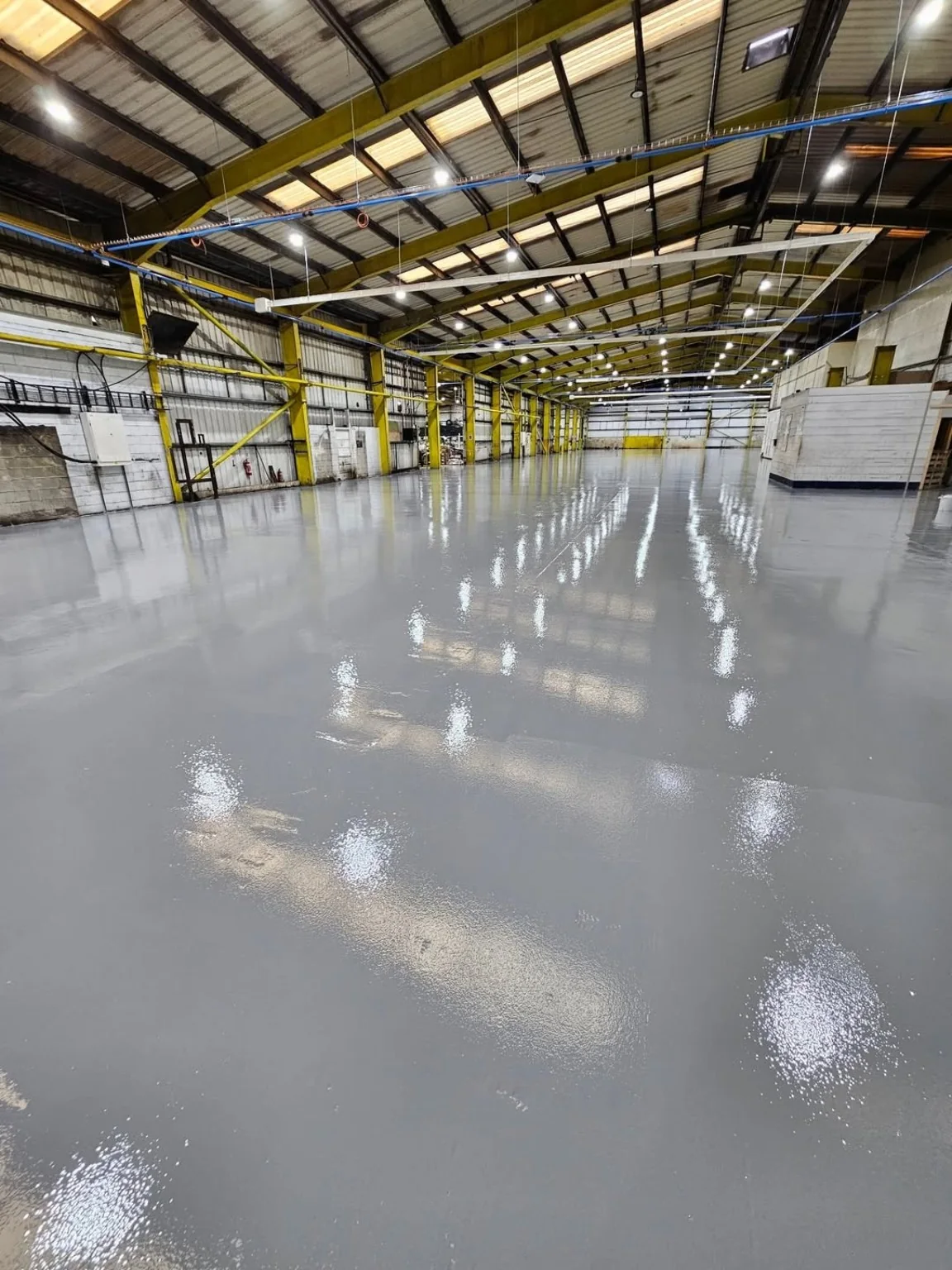
Epoxy resin flooring can create a hard-wearing, seamless and professional surface, but the correct build-up depends on the existing concrete, traffic, impact, contamination, cleaning, slip risk, appearance and shutdown window.
SRS installs epoxy floor coatings, high-build epoxy systems, self-levelling epoxy flooring, quartz broadcast finishes, textured anti slip epoxy and coloured demarcation. The system is chosen around the real demands of the site.
The finished resin is only one part of the installation. Weak concrete, dust, moisture, oil contamination, old coatings, cracks, damaged joints and failed repairs must be identified before the new epoxy floor is applied.
The required finish can be adjusted through the preparation, resin build-up, aggregate, texture, colour and detailing.
System thickness and build-up can be selected around pedestrians, pallet trucks, forklifts and routine industrial activity.
Epoxy can seal prepared concrete and create a continuous surface that is easier to maintain than dusty or damaged bare concrete.
Resistance varies by exact product, concentration, exposure time and temperature, so the chemical schedule must be checked.
Aggregates and textured finishes can improve grip, with cleanability, contamination and maintenance considered together.
Different colours can separate walkways, work areas, vehicle routes, loading zones and operational boundaries.
Smooth, gloss, satin, flake and broadcast finishes can improve the appearance of suitable industrial and commercial spaces.
SRS supports new floors and refurbishment projects where concrete needs repair, sealing, protection or a complete resin upgrade.
Epoxy systems for production lines, assembly areas, machinery routes and general manufacturing spaces.
Warehouse epoxy flooring for aisles, storage areas, pallet movement, forklift routes and dispatch spaces.
Hard-wearing floors for tools, machinery, oils, components, workbenches and maintenance operations.
Clean, professional epoxy finishes for back-of-house areas, showrooms, service spaces and busy commercial premises.
Protective epoxy coatings for suitable plant rooms, utility spaces, corridors and maintenance areas.
Epoxy flooring for selected garages, MOT bays, vehicle workshops and service areas, subject to contamination and tyre demands.
Coloured routes, crossings, bays and operational demarcation integrated with the main epoxy flooring system.
Epoxy can suit some dry or lighter-duty food areas, while wet, hot-wash or thermal-shock zones may need PU screed.
The term epoxy flooring covers different build-ups, thicknesses and finishes. The correct option depends on the substrate and operating demands.
A practical resin coating for prepared concrete in many industrial and commercial environments.
A thicker, smoother resin build-up for selected production, commercial and industrial spaces.
Aggregate-broadcast systems for additional build, wear resistance and adjustable surface texture.
Textured epoxy flooring for ramps, wet routes, workshops and contaminated operational areas.
Multi-colour flake finishes for suitable commercial, utility and customer-facing spaces requiring a more decorative appearance.
Epoxy repair mortars and local build-ups can form part of a wider preparation and installation package.
This table provides a practical starting point. Final product selection, thickness and preparation should be confirmed after assessment.
| Epoxy option | Typical use | Main strengths | Points to confirm | Related page |
|---|---|---|---|---|
| High-build epoxy coating | General factories, workshops, stores and commercial back-of-house spaces | Protective sealed finish, colour choice and practical refurbishment route | Concrete strength, old coating, traffic, contamination and required texture | Floor coatings |
| Self-levelling epoxy | Selected production, commercial and clean working environments | Smooth, seamless and professional appearance | Substrate flatness, impact, slip risk, temperature and cure window | Self levelling |
| Quartz broadcast epoxy | Busy industrial zones, workshops, routes and areas needing more texture | Additional build, wear resistance and adjustable grip | Cleanability, aggregate size, contamination and cleaning equipment | Anti slip flooring |
| Decorative flake epoxy | Commercial, utility and selected customer-facing spaces | Decorative multi-colour finish and sealed surface | Traffic, UV exposure, appearance expectations and maintenance | Commercial flooring |
| Epoxy mortar or repair system | Local defects, thresholds, edges and selected heavy-duty details | Build-up and repair capability as part of preparation | Movement, repair depth, substrate stability and compatibility | Preparation and repairs |
Manufacturer product data and the written project specification take priority over general website guidance. Cure time, chemical resistance, temperature performance and thickness vary by exact system.
Epoxy is a strong and versatile flooring technology, but some operating conditions are better served by polyurethane, PU screed or MMA.
A responsible quotation is based on the existing floor, preparation, repairs, resin build-up and operational requirements—not floor area alone.
Weak concrete, contamination, old coatings, dust, moisture and failed repairs can increase preparation.
A simple coating, broadcast system and self-levelling floor have different material and labour requirements.
Forklifts, impact, chemicals, cleaning, grip and appearance influence the specification.
Cracks, joints, edges, thresholds, ramps, drainage and machinery bases may need separate work.
Phasing, night or weekend work, restricted access and curing arrangements affect the programme.
Large open areas differ from congested rooms with columns, equipment and multiple small zones.
Send the site postcode, approximate square metres, photographs, existing floor condition, intended use, traffic, contaminants and required completion date.
The resin needs a clean, sound and correctly prepared substrate. Preparation is not a cosmetic extra—it is central to adhesion and long-term performance.
Review the concrete, moisture risk, old coating, contamination, cracks, joints, traffic and programme.
Use grinding, shot blasting, scarifying or another suitable method to remove weak material and create a mechanical key.
Address included cracks, damaged concrete, edges, thresholds, joints and local defects before coating.
Apply the agreed primer, epoxy layers, aggregates, seal coats and markings before inspection and curing.
Moisture movement, oil saturation and hidden contamination can cause adhesion problems or blistering. These risks should be investigated before the system is confirmed.
Explore mechanical preparation and concrete floor repairs before selecting the epoxy build-up.
These completed SRS projects show genuine epoxy flooring systems in large warehouse and industrial environments, including mechanical preparation, concrete repairs, anti-slip detailing and programme-critical delivery.
SRS refurbished approximately 5,000m² of badly deteriorated warehouse flooring for a major South Wales manufacturer. The existing floor included old resin, oil-affected concrete, cracking, holes and damaged areas that required substantial preparation and repair before the new epoxy system.
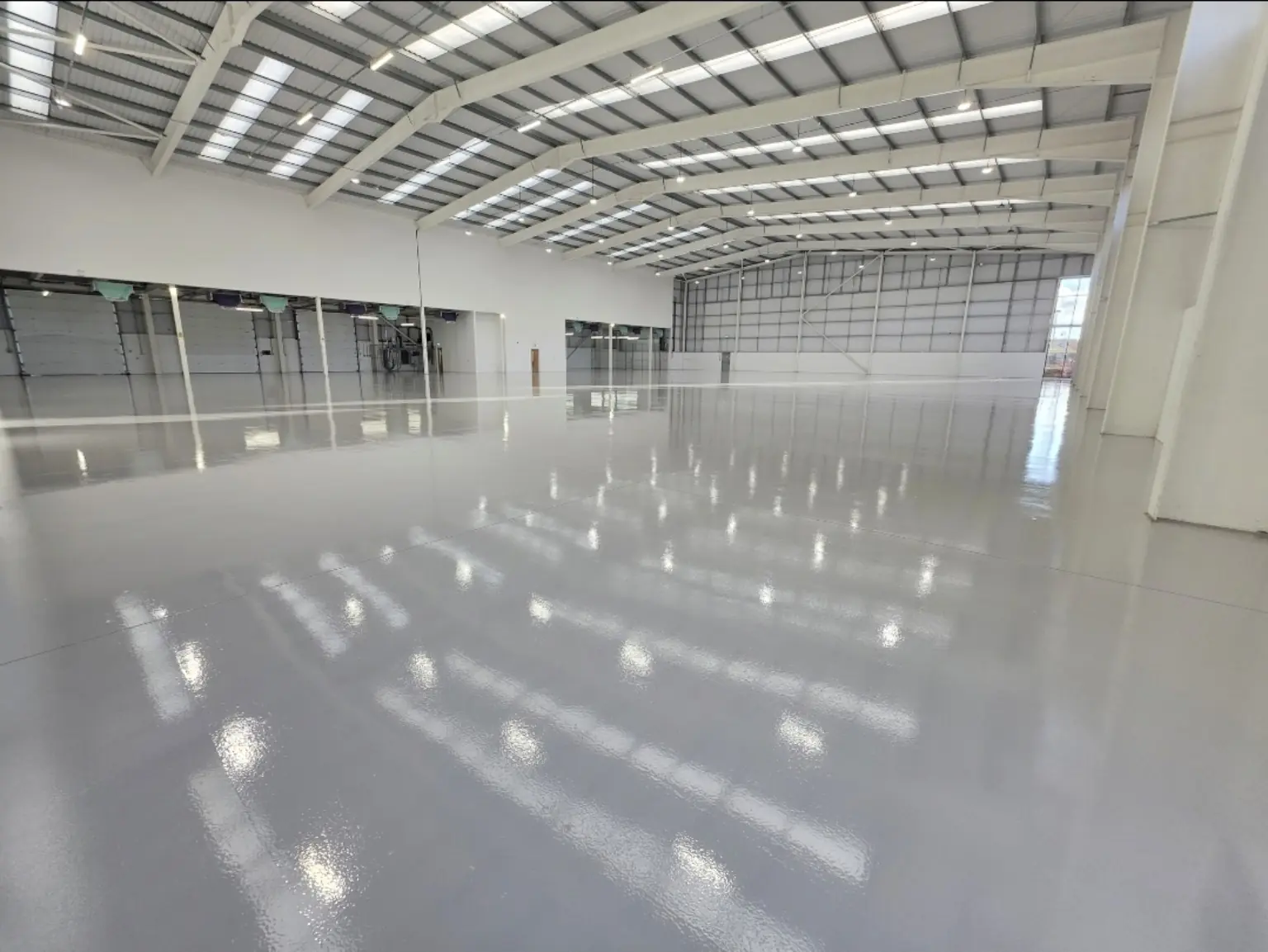
SRS completed approximately 3,500m² of warehouse flooring in Bristol. The old floor was mechanically prepared using diamond grinding and shot blasting, damaged areas were rebuilt with epoxy repair mortar, and a Vebro Polymers epoxy system was installed.
A good recommendation also identifies conditions that need investigation or may point towards another flooring system.
The process is planned around the substrate, operating demands, access, preparation, resin layers and safe return to service.
Review the slab, traffic, contamination, cleaning, appearance and programme.
Recommend the preparation, repairs, epoxy build-up, texture, colour and sequencing.
Mechanically prepare the floor and install the agreed primer, epoxy layers and details.
Inspect the floor and provide curing, cleaning and aftercare guidance.
This page helps facilities managers, business owners and contractors prepare for an epoxy flooring assessment. Final performance is confirmed against the selected manufacturer system and written project specification.
Superior Resin Solutions UK is based in Rhigos near Aberdare and supports suitable industrial and commercial epoxy flooring projects across South Wales and the wider UK.
We support projects in Cardiff, Swansea, Newport, Bridgend, Caerphilly, Pontypridd, Merthyr Tydfil, Neath Port Talbot, Bristol, Birmingham, London and other UK locations.
Independent guidance helps clients understand floor selection, preparation and slip-risk management alongside the project specification.
Industry guidance covering selection, specification and application of synthetic resin flooring.
Workplace floors should be suitable, maintained and considered alongside contamination, cleaning and movement.
Flooring is one control within a wider system that includes cleaning, contamination prevention, footwear and management.
Epoxy projects often overlap with preparation, coatings, anti slip finishes, warehouse flooring and industrial line marking.
Heavy-duty resin systems for factories, production, engineering and operational sites.
Resin flooring for forklift routes, storage areas, loading bays and logistics facilities.
Durable flooring for machinery, tools, production, engineering and automotive areas.
Protective resin coatings for suitable concrete floors in industrial and commercial sites.
Textured finishes for wet, oily, ramped and contaminated working areas.
Mechanical preparation, coating removal, concrete repairs and substrate work before new resin flooring is installed.
Compare the materials around traffic, temperature, cleaning and site conditions.
Understand the substrate and installation issues that can contribute to flooring failure.
Consider the required build-up alongside traffic, impact and preparation.
Common questions from facilities managers, manufacturers, warehouse operators, business owners and contractors.
Epoxy resin flooring is a two-part resin system applied to correctly prepared concrete to create a sealed, seamless surface. Different epoxy build-ups include coatings, high-build systems, self-levelling floors, broadcast finishes and repair mortars.
Epoxy flooring can suit factories, warehouses, workshops, production areas, plant rooms, commercial units, storage facilities and selected automotive or food environments when the exact system matches the site conditions.
Suitable epoxy systems can be specified for forklift routes and busy warehouse floors. Forklift weight, tyres, turning circles, impact, slab condition, preparation and required thickness must be considered.
Service life depends on the substrate, preparation, system build-up, traffic, impact, chemical exposure, cleaning and maintenance. It is not responsible to promise one lifespan for every site.
Epoxy can be installed with textured or aggregate-broadcast finishes to improve slip resistance. The texture should be selected around contamination, drainage, footwear and cleaning because no floor is slip-proof in every condition.
Epoxy systems can resist selected oils, fuels, cleaners and process chemicals, but resistance varies by product, concentration, exposure time and temperature. The exact chemical schedule should be checked before selection.
Often yes, provided the concrete is sound and can be mechanically prepared. Old coatings, contamination, moisture, cracks, joints and weak areas must be assessed and treated as part of the specification.
Standard epoxy can discolour or chalk under ultraviolet exposure. Outdoor or sun-exposed areas should be assessed carefully and may require a UV-stable polyurethane finish or another system.
Cure time varies by product, temperature, layer thickness and site conditions. The programme must include preparation, repairs, application and the manufacturer’s return-to-service requirements.
Yes. SRS is based in Rhigos near Aberdare and supports suitable epoxy resin flooring projects across South Wales and the wider UK.
Send the site location, floor area, photographs, current condition, traffic, contamination, required finish and shutdown window. SRS will review the information and explain the most practical next step.

Superior Resin Solutions UK Ltd provides industrial, commercial and domestic resin flooring across South Wales and the UK. We install durable epoxy, polyurethane, anti-slip, warehouse, factory, food-grade and resin bound systems for businesses, homes and commercial sites.