Wet and washdown areas
Water, grease, process residues and cleaning chemicals create changing conditions that need to be balanced against hygiene and cleanability.
Food · kitchens · processing
Industrial & commercial safety flooring
Survey-led slip resistant resin flooring for warehouses, factories, workshops, ramps, loading bays, wet production areas and busy commercial sites across South Wales and the wider UK. We specify the resin system and surface profile around the actual contamination, traffic, cleaning and downtime on site.
“Anti slip”, “non slip” and “slip resistant” are often used as general search terms, but no floor should be treated as completely slip-proof in every condition. A useful specification considers the floor, foreseeable contamination, cleaning, footwear, traffic, drainage and how the area changes throughout the working day.
Superior Resin Solutions UK installs textured epoxy coatings, aggregate-broadcast resin systems, polyurethane flooring, heavy-duty PU screeds and suitable fast-cure systems. The final build-up is selected after considering the concrete or screed, existing coating, moisture risk, damage, gradients, cleaning routine, chemical exposure, cure window and required finish.
This matters because a warehouse aisle, food-production washdown area, oily workshop, pedestrian ramp and loading bay can all require different texture levels and different resin technologies.
The surface profile and resin system can vary by zone. One project may need a lighter texture in dry areas and a stronger aggregate finish on ramps, washdown areas or routes exposed to contamination.
Water, grease, process residues and cleaning chemicals create changing conditions that need to be balanced against hygiene and cleanability.
Food · kitchens · processing
Forklift traffic, tyres, pallet movement, outside moisture, turning areas and ramps place different demands on the floor.
Logistics · storage · distribution
Oils, dust, swarf, tools, machinery and mixed vehicle and pedestrian movement need a durable, maintainable system.
Manufacturing · engineering · automotive
Gradients, repeated footfall and moisture can justify a different aggregate profile from the adjoining level floor.
Ramps · thresholds · access routes
Colour zoning, anti slip walkways, crossings and demarcation can support clearer separation from forklifts and vehicles.
Walkways · crossings · safety routes
Service corridors, stockrooms, refuse areas and plant spaces need finishes suited to frequent cleaning and daily use.
Retail · leisure · commercial premises
A more aggressive surface can provide additional traction in contamination, but it can also trap dirt and require more effort to clean. The most practical specification balances foreseeable slip risk with hygiene, cleaning, traffic and maintenance.
The final texture is selected between two competing requirements, not from a generic “anti slip” label.
The resin technology is selected for the substrate, traffic, chemical and temperature exposure, hygiene requirements and available cure window. Texture alone does not determine the correct system.
A practical route for many warehouses, workshops, plant areas and commercial working spaces where a durable textured coating is suitable.
PU systems may suit selected wet, heavy-use or operational areas where flexibility or product-specific resistance is required.
Heavy-duty polyurethane screeds are often considered for wet production, washdown and demanding food or industrial environments.
MMA systems may be considered where rapid installation and return-to-service are important and the site conditions are suitable.
This comparison helps facilities managers, contractors and business owners prepare for a survey. Final resin type, thickness, texture, preparation and cure time should be confirmed in the written project specification.
| Area | Typical risk | Possible resin approach | Key survey questions | Related service |
|---|---|---|---|---|
| Wet production and washdown | Water, fats, oils, cleaning chemicals and process residue | Textured epoxy, polyurethane or PU screed selected around hygiene and operating conditions | Drainage, falls, cleaning method, temperature, contamination and coving | Food and beverage flooring |
| Warehouses and loading bays | Forklift movement, tyres, pallets, ramps and outside contamination | Durable broadcast or textured resin system, potentially with zone-specific finishes | Traffic weight, turning circles, slab condition, tyre marking, programme and access | Warehouse flooring |
| Factories and workshops | Oils, dust, swarf, impact, machinery and mixed traffic | Heavy-duty coating, broadcast system or screed with an appropriate texture | Contaminated concrete, repairs, chemicals, impact, machinery and cleaning | Factory and workshop flooring |
| Ramps and pedestrian routes | Gradient, moisture, repeated footfall and surface transitions | More pronounced textured finish, potentially combined with colour zoning | Gradient, drainage, footwear, cleaning access, thresholds and adjoining finishes | Line marking and demarcation |
Manufacturer product data, substrate assessment and the agreed site requirements take priority over general web guidance. Where a measured slip result is required, the test method and target should be agreed with the client, manufacturer or project specifier before installation.
HSE guidance explains that workplace floors need to suit the work taking place and remain in good condition. Contamination, cleaning, drainage, footwear and wider controls should be considered alongside the flooring specification.
The floor needs a sound, suitably prepared base. Existing coatings, laitance, contamination, weak concrete, moisture, cracks and damaged joints should be identified before the resin system is installed.
Review substrate condition, moisture risk, contamination, traffic, cleaning, gradients, drainage, access and the required programme.
Diamond grinding, shot blasting, scarifying or other preparation is selected where appropriate to remove weak material and create a suitable key.
Cracks, damaged concrete, joints, thresholds, drains, falls and coving requirements are reviewed and included where part of the project.
Primer, resin layers, aggregate and seal coats are installed to the agreed system, followed by inspection and practical aftercare advice.
Explore mechanical preparation and concrete floor repairs before selecting the slip resistant resin finish.
For wet-area specification considerations, read our anti slip resin flooring guide for wet areas.
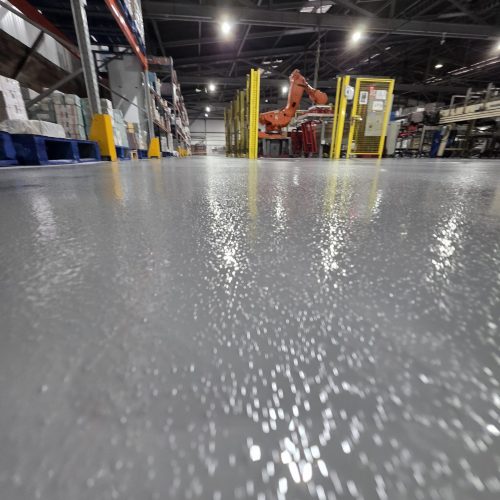
These SRS photographs show completed resin floors with visible textured finishes. Full case studies should be added when the project location, system, floor area, substrate, programme and outcome are verified.
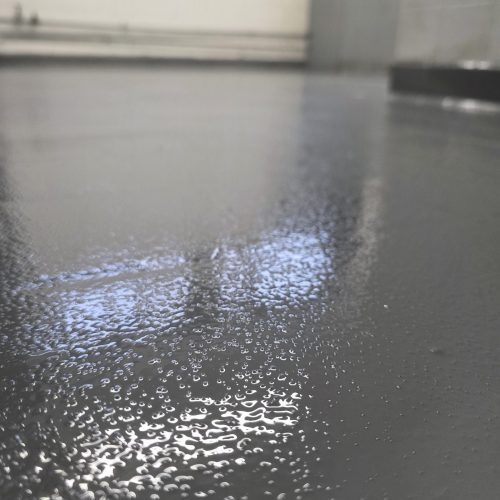
A close view of a completed resin surface showing the texture that contributes to traction and changes the cleaning characteristics.
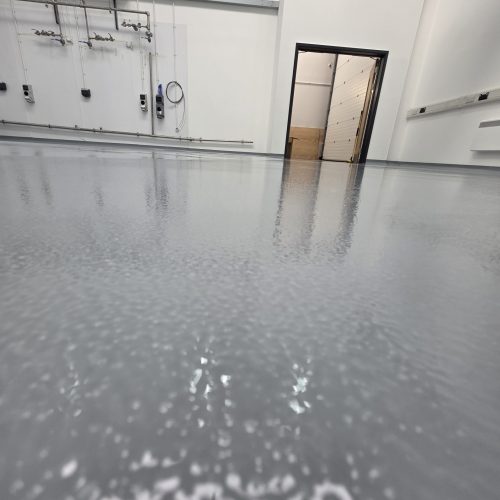
A continuous resin floor used to create a durable, cleanable finish within an operational commercial or production environment.
A textured industrial resin finish in a busy working area with machinery, vehicle movement and practical maintenance requirements.
Explore documented projects: Village Hotel Bristol changing-room flooring and Ebbw Vale food-processing resin flooring. Each case study explains the site requirements and flooring system used.
A professional recommendation should also identify when unresolved site conditions could undermine the installation or when another approach deserves consideration.
One experienced team oversees the assessment, preparation, specification, installation, handover and ongoing-use guidance.
Review the floor, contamination, traffic, cleaning, access and programme.
Recommend the preparation, resin build-up, texture and installation plan.
Prepare the substrate and install the agreed anti slip resin flooring system.
Inspect the completed area and provide cleaning and aftercare guidance.
This page is based on SRS project experience and is intended to help facilities managers, contractors and business owners prepare for a flooring survey. Final performance is confirmed against the selected manufacturer system and written project specification.
SRS is based in Rhigos near Aberdare and supports commercial and industrial flooring projects in Cardiff, Swansea, Newport, Bridgend, Caerphilly, Pontypridd, Merthyr Tydfil, Neath Port Talbot, Bristol, Birmingham, London and other UK locations where the project is suitable.
Anti slip finishes are often specified as part of a wider industrial, warehouse, food-production or line-marking project.
Heavy-duty resin systems for production, engineering and operational industrial environments.
Resin flooring for forklift routes, loading bays, racking aisles and distribution centres.
Hygienic resin flooring for wet processing, washdown and food-production areas.
Epoxy coatings, broadcast systems and seamless industrial and commercial floors.
Heavy-duty polyurethane screeds for wet, hygienic and demanding environments.
Walkways, forklift routes, crossings, loading zones and industrial safety marking.
Common questions from facilities managers, main contractors and businesses comparing slip resistant resin flooring options.
It is an epoxy, polyurethane, PU screed, MMA or other resin flooring system installed with a selected textured profile to improve traction. The texture may be created through aggregate, a broadcast layer, the resin formulation or a combination of coats.
No floor should be described as completely slip-proof in every possible condition. A slip resistant system helps manage foreseeable risk, but cleaning, contamination, drainage, footwear, maintenance and site behaviour also affect safety.
Yes, when the profile is selected carefully. More aggressive textures can require more intensive cleaning, so the contamination risk and cleaning method should be reviewed before the finish is agreed.
It can be suitable when the preparation, resin build-up, texture and thickness are selected for the forklift weight, turning areas, slab condition, cleaning and operational conditions. Heavier-use zones may require a different system from pedestrian areas.
There is no single best system for every site. Textured epoxy, polyurethane, PU screed and MMA systems each have different uses. The correct choice depends on traffic, contamination, temperature, chemicals, substrate, hygiene and the available cure window.
Yes. A project may use different textures for dry production areas, wet zones, pedestrian walkways, ramps and loading bays. Colour zoning and line marking can also help organise movement through the site.
Preparation may include diamond grinding, shot blasting, removal of existing coatings, repairs and moisture-related work. The method is selected after assessing the substrate and the intended resin system.
The programme depends on floor area, repairs, preparation, resin type, temperature, access and curing. Phased working, weekend installation or fast-cure systems may be considered where they are technically suitable.
Yes, suitable resin systems can be specified for food-production, commercial-kitchen and washdown environments. Hygiene, cleaning, thermal exposure, chemicals, falls, drainage and coving should be considered together rather than selecting the texture in isolation.
Yes. SRS is based in Rhigos near Aberdare and supports commercial and industrial flooring projects across South Wales and larger projects throughout the wider UK.
Send the site location, floor area, photographs, current floor, traffic, contamination, cleaning process and available downtime. We will review the information and explain the most practical next step.

Superior Resin Solutions UK Ltd provides industrial, commercial and domestic resin flooring across South Wales and the UK. We install durable epoxy, polyurethane, anti-slip, warehouse, factory, food-grade and resin bound systems for businesses, homes and commercial sites.