

Industrial resin flooring comparison
Epoxy vs Polyurethane Flooring: Which Industrial Floor Is Best?
When comparing epoxy vs polyurethane flooring, the right choice depends
on the substrate, traffic, impact, water, temperature, chemicals, cleaning
requirements and available shutdown time. Heavy-duty PU screed sits within
the wider polyurethane flooring family and is often considered for more
demanding industrial environments.
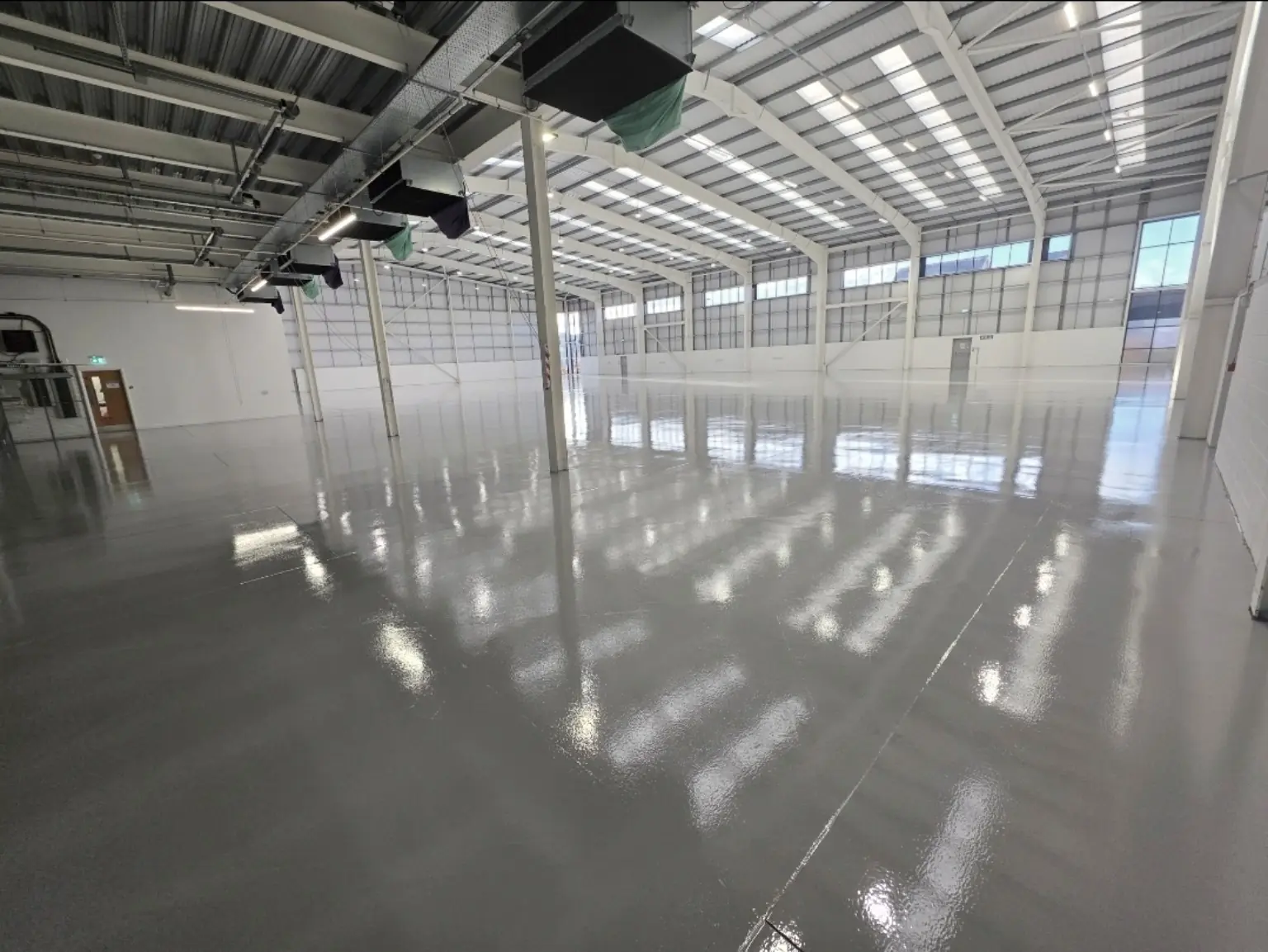
should be selected around the real site conditions.
Epoxy vs polyurethane flooring: which should you choose?
Neither is automatically better. Epoxy flooring can be a practical choice
for many dry industrial, warehouse and workshop environments. Polyurethane
flooring covers a broader family of systems with different flexibility,
finish and performance characteristics.
Heavy-duty PU screed is a polyurethane-cement flooring system within that
broader polyurethane family. It is normally considered separately from
thinner polyurethane coatings because the build, chemistry and intended
duty are different.
Quick comparison
Epoxy vs polyurethane flooring at a glance
These are broad comparisons only. The final specification should always be
confirmed against the selected manufacturer’s system and the actual site.
| Flooring family | Often considered for | Key points to assess |
|---|---|---|
| Epoxy flooring |
Warehouses, dry factories, workshops, plant rooms and suitable commercial areas |
Traffic, abrasion, impact, moisture, contamination, chemicals, substrate condition and system thickness |
| Polyurethane flooring |
Industrial and commercial areas where product-specific flexibility, finish, UV exposure, temperature movement or other operating conditions influence the specification |
Exact polyurethane technology, traffic, chemicals, temperature, water, cleaning, sunlight and substrate condition |
Epoxy flooring
When might epoxy flooring be the better option?
Epoxy flooring is widely used across industrial and commercial environments
because suitable systems can provide a hard, seamless and practical surface.
Typical applications can include:
- warehouses and distribution facilities
- dry factories
- engineering workshops
- plant rooms
- production areas
- selected commercial environments
The important point is that epoxy flooring is not one standard build.
A relatively thin protective coating should not be expected to perform in the
same way as a heavier multi-layer industrial resin system.
Forklift traffic, impact, abrasion, chemicals, moisture, contamination and
the condition of the concrete all influence the required system.
Learn more about
Epoxy Resin Flooring
.
Polyurethane flooring
When might polyurethane flooring be the better option?
Polyurethane flooring is a broad family of resin systems rather than one
single product.
Depending on the exact manufacturer system, selected polyurethane floors
can offer different flexibility, abrasion, finish, temperature or UV
characteristics from epoxy.
Polyurethane flooring may be considered where the project includes:
- temperature movement
- sunlight or UV exposure
- specific finish requirements
- selected chemical exposure
- areas where product-specific flexibility is useful
- commercial or industrial areas needing a different surface finish
The exact product matters. A polyurethane coating, polyurethane topcoat and
polyurethane-cement screed do not have identical build-ups or intended duties.
Explore
Polyurethane Flooring
.
Where PU screed fits
PU screed is a heavy-duty polyurethane flooring option
PU screed is part of the wider polyurethane flooring family, but it is
normally treated as a separate heavy-duty build because it is a
polyurethane-cement system rather than a standard polyurethane coating.
It is commonly considered where the floor must deal with combinations of:
- hot water or hot cleaning
- wet processing
- impact
- heavy traffic
- chemicals or process contamination
- hygiene requirements
- drainage and coving details
Typical environments can include food production, commercial kitchens,
washdown areas, process floors and other demanding industrial spaces.
Read more about
Polyurethane Screed Flooring
.
Choosing the correct system
Six factors that matter more than the resin name
Traffic
Pedestrians, pallet trucks, forklifts, vehicles and machinery create
different levels and patterns of wear.
Impact
Dropped tools, components, pallets and production equipment can place
very different demands on the flooring build.
Water and cleaning
A dry warehouse and a regularly washed processing area should not
automatically receive the same flooring specification.
Temperature
Normal ambient conditions, hot washdown, process heat and repeated
temperature change can all influence system choice.
Chemicals
Chemical type, concentration, temperature, contact time and cleaning
method should be checked against the selected manufacturer system.
Substrate condition
Weak concrete, old coatings, contamination, cracks, moisture and
damaged joints can all affect the flooring above.
Warehouses and logistics
Epoxy vs polyurethane flooring for warehouses
Many dry warehouses can be well suited to correctly specified epoxy resin
flooring where the main demands are forklifts, pallet trucks, abrasion and
general industrial traffic.
A polyurethane route may be worth considering where the project has additional
demands such as particular finish requirements, sunlight, temperature movement
or another condition better matched to the selected polyurethane system.
Heavy-duty PU screed would not normally be chosen simply because a warehouse
has forklifts. It becomes more relevant where the environment also includes
demanding wet, hot, chemical or impact exposure.
Read our guide:
Best Flooring for Warehouses With Forklift Traffic
.
Food and beverage environments
Epoxy vs polyurethane flooring for food-production areas
Food-production facilities can contain very different flooring zones.
A dry storage or packing area may have completely different requirements
from a wet production room exposed to hot cleaning, process water, chemicals
and frequent hygiene procedures.
Heavy-duty polyurethane screed is commonly considered for the more demanding
wet and hot-wash areas because it forms part of the polyurethane flooring
family specifically designed for heavier process conditions.
That does not mean every food facility requires PU screed throughout.
Different zones can legitimately use different flooring systems.
Explore
Food and Beverage Flooring
.
Real SRS epoxy project
3,500m² Bristol warehouse epoxy refurbishment
SRS completed an approximately 3,500m² warehouse resin flooring project
in Bristol where the existing resin surface was old, tired and damaged.
The floor was prepared using diamond grinding and shot blasting. Damaged
areas and indentations extending into the concrete were repaired with epoxy
mortar before the new Vebro Polymers epoxy flooring system was installed.
This is a good example of epoxy being used in a dry warehouse environment
where preparation, repairs and traffic requirements formed part of the
complete specification.
View the
Bristol Warehouse Resin Flooring Case Study
.
Real SRS polyurethane project
450m² Cardiff project using 9mm heavy-duty PU screed
SRS prepared and refurbished approximately 450m² of concrete flooring inside
a Cardiff welding workshop being converted into a training centre.
The existing concrete contained minor damaged areas, cracks and joints that
required treatment before the new floor was installed.
After diamond grinding and local epoxy repairs, SRS installed a 9mm Resdev
Pumadur HF heavy-duty polyurethane floor screed in dark grey.
Preparation, repairs, priming, screed installation and joint works were
completed in four days.
View the
450m² Cardiff Heavy-Duty Flooring Case Study
.
Real food-processing project
120m² Ebbw Vale food-processing polyurethane screed
SRS also completed a 120m² food-processing flooring refurbishment in
Ebbw Vale.
The damaged original floor was removed before the exposed concrete was
mechanically prepared using diamond grinding.
SRS installed a 6–9mm Resdev Pumadur HF heavy-duty polyurethane screed
in RAL 3001 red together with approximately 55 linear metres of resin
coving and a coordinated perimeter detail.
The complete flooring package was delivered in three days.
The flooring route was selected around hygiene, hot-water exposure,
chemical conditions and the need for a durable long-term floor in the
food-processing environment.
Read the full
Ebbw Vale Food Processing Flooring Case Study
.
Preparation comes first
Epoxy and polyurethane floors both depend on the concrete underneath
The resin technology matters, but neither epoxy nor polyurethane can
compensate for an unsuitable substrate.
Potential issues can include:
- weak or dusty concrete
- old or failing coatings
- oil contamination
- cracks and damaged joints
- holes and impact damage
- moisture concerns
- poor previous repairs
Mechanical preparation, repair work and suitable detailing therefore form
part of the complete flooring system rather than being optional extras.
Read our
Industrial Floor Preparation and Repairs
page.
FeRFA also recommends considering traffic, loading, impact, chemicals,
temperature, slip resistance, floor thickness, curing time and the condition
of the substrate when selecting a synthetic resin floor.
View FeRFA’s Guide to the Selection of Synthetic Resin Flooring
.
Budget and value
Is epoxy cheaper than polyurethane flooring?
It is not reliable to compare the resin names alone.
The final cost can be affected by:
- existing floor condition
- mechanical preparation
- repairs
- system thickness
- floor area
- traffic and performance requirements
- coving, drains and detailing
- access and shutdown restrictions
A thin epoxy coating, multi-layer epoxy floor, polyurethane coating and
heavy-duty PU screed are very different flooring builds, so headline
comparisons can be misleading.
Read our
Resin Flooring Cost Guide
.
Not sure which system you need?
Send SRS the operating conditions, not just the floor size
The following information helps identify whether epoxy, polyurethane
coating or heavy-duty PU screed may be worth considering.
Continue your research
Related resin flooring services and guides
Frequently asked questions
Epoxy vs polyurethane flooring FAQs
Is polyurethane flooring better than epoxy?
Not universally. Epoxy and polyurethane flooring systems have
different properties and build-ups. The right option depends on the
substrate, traffic, impact, temperature, chemicals, water, appearance
and operating conditions.
What is the main difference between epoxy and polyurethane flooring?
Epoxy and polyurethane are different resin technologies. Epoxy is
commonly used for hard industrial flooring systems, while polyurethane
products can offer different flexibility, finish, UV or temperature
characteristics depending on the exact system.
Is PU screed a polyurethane floor?
Yes. PU screed sits within the broader polyurethane flooring family,
but it is a heavy-duty polyurethane-cement system and has a different
build and intended duty from a standard polyurethane coating.
Which is better for warehouses, epoxy or polyurethane?
Many dry warehouses can be well suited to epoxy resin flooring.
Polyurethane systems may be considered where other conditions such as
UV exposure, temperature movement or specific finish requirements
influence the specification.
Which flooring is better for food factories?
Heavy-duty polyurethane screed is commonly considered for demanding
wet, hot-wash and hygiene-sensitive food-production areas. Dry storage
or packing zones may require a different resin system.
Can epoxy and polyurethane be used in the same facility?
Yes. Different operational zones within the same site can require
different resin flooring systems. A dry warehouse area and a wet
production room do not automatically need the same specification.
Is polyurethane flooring more expensive than epoxy?
Cost depends on the complete flooring build rather than the resin name
alone. Preparation, repairs, system thickness, floor area, access,
traffic and the installation programme all influence the quotation.
Does preparation differ between epoxy and polyurethane floors?
Preparation is selected around the existing substrate and the proposed
manufacturer system. Mechanical preparation, coating removal, repairs,
moisture assessment and detailing may all be required.
Industrial resin flooring specification
Choose the flooring around the site, not the resin name
Send Superior Resin Solutions photographs, approximate floor area,
current condition, traffic, cleaning requirements, temperature,
chemical exposure and available shutdown time. We can discuss whether
epoxy, polyurethane or a heavy-duty PU screed route is worth assessing.