Resin flooring vs tiles
Is Resin Better Than Tile? Resin Flooring vs Tiles
Resin flooring and tiles can both provide durable floor finishes, but they
behave very differently in industrial and commercial environments. The right
choice depends on traffic, cleaning, impact, substrate condition, slip risk,
appearance, installation time and how the building will actually be used.
Is resin better than tile?
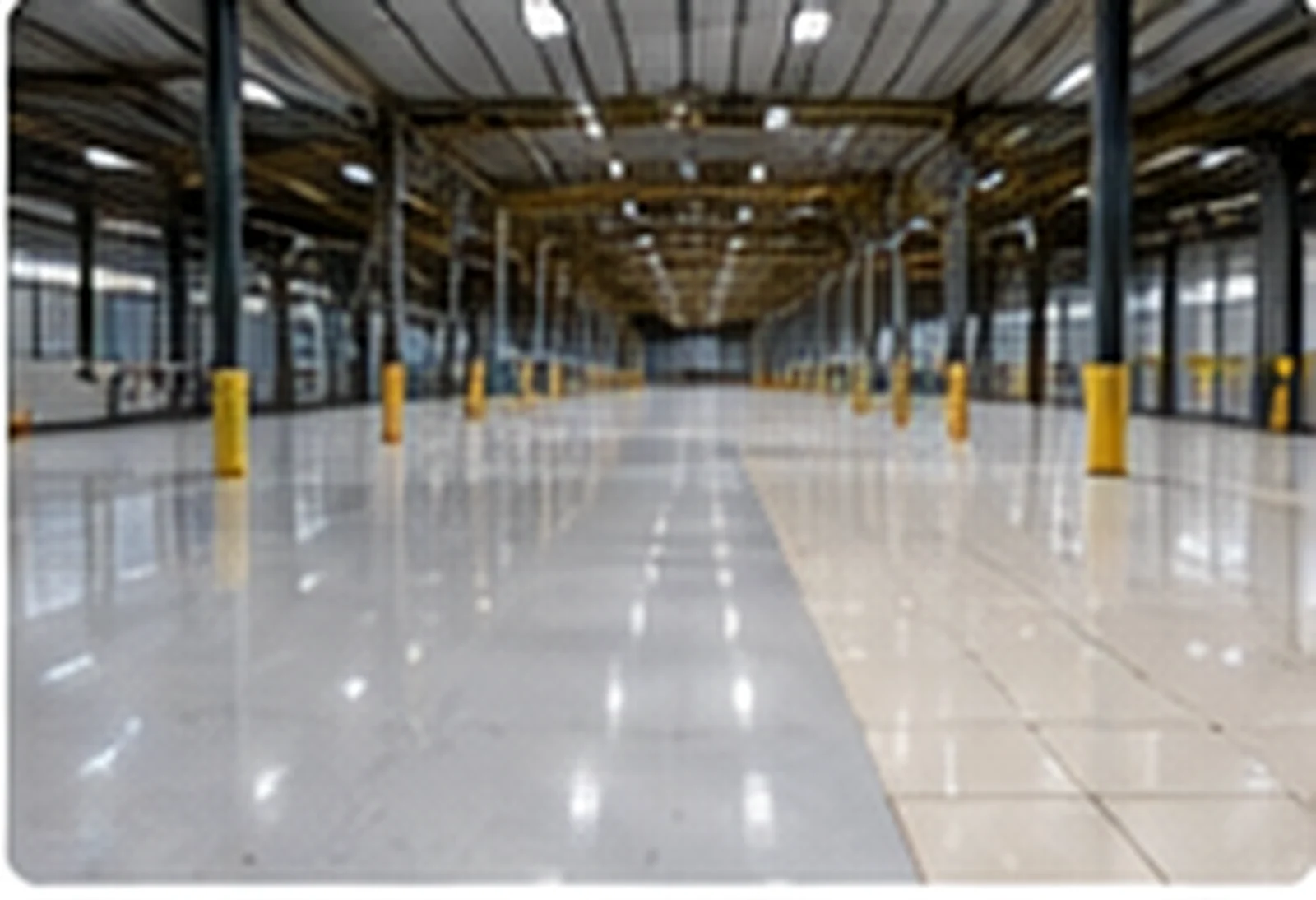
Resin flooring is often the more practical choice for demanding industrial
and commercial environments where a seamless surface, heavy traffic,
straightforward cleaning and a flooring system designed around the site
are important.
Tiles can still be a good choice in some locations, particularly where
individual replacement, decorative appearance or certain high-temperature
applications are priorities. Neither option is automatically better in
every building.
At a glance
Resin flooring vs tiles: the main differences
The most useful comparison is not simply which material is stronger.
It is how each floor behaves under the conditions found on the actual site.
| Factor | Resin flooring | Tiles |
|---|---|---|
| Main surface | Largely seamless across the field of the floor | Made from individual tiles with repeated grout joints |
| Cleaning | Continuous surface can simplify routine cleaning | Grout lines and joints can require additional attention |
| Industrial traffic | Systems can be specified around forklifts, wheels and traffic | Performance depends heavily on tile type, bedding and substrate |
| Impact | System can be selected around expected working conditions | Individual tiles can crack or chip under local impact |
| Repairs | Local repairs may be possible depending on the defect and system | Individual tiles can sometimes be removed and replaced |
| Slip resistance | Texture can be incorporated into suitable resin systems | Depends on the slip properties of the selected tile |
| Appearance | Colours, textures and practical industrial finishes available | Very wide range of decorative formats and patterns |
| Preparation | Concrete preparation is a fundamental part of installation | Substrate preparation and suitable bedding are still important |
| Cost | Varies greatly with preparation and system build | Varies greatly with tile type, preparation and installation |
One of the biggest differences
Resin flooring can create a largely seamless working surface
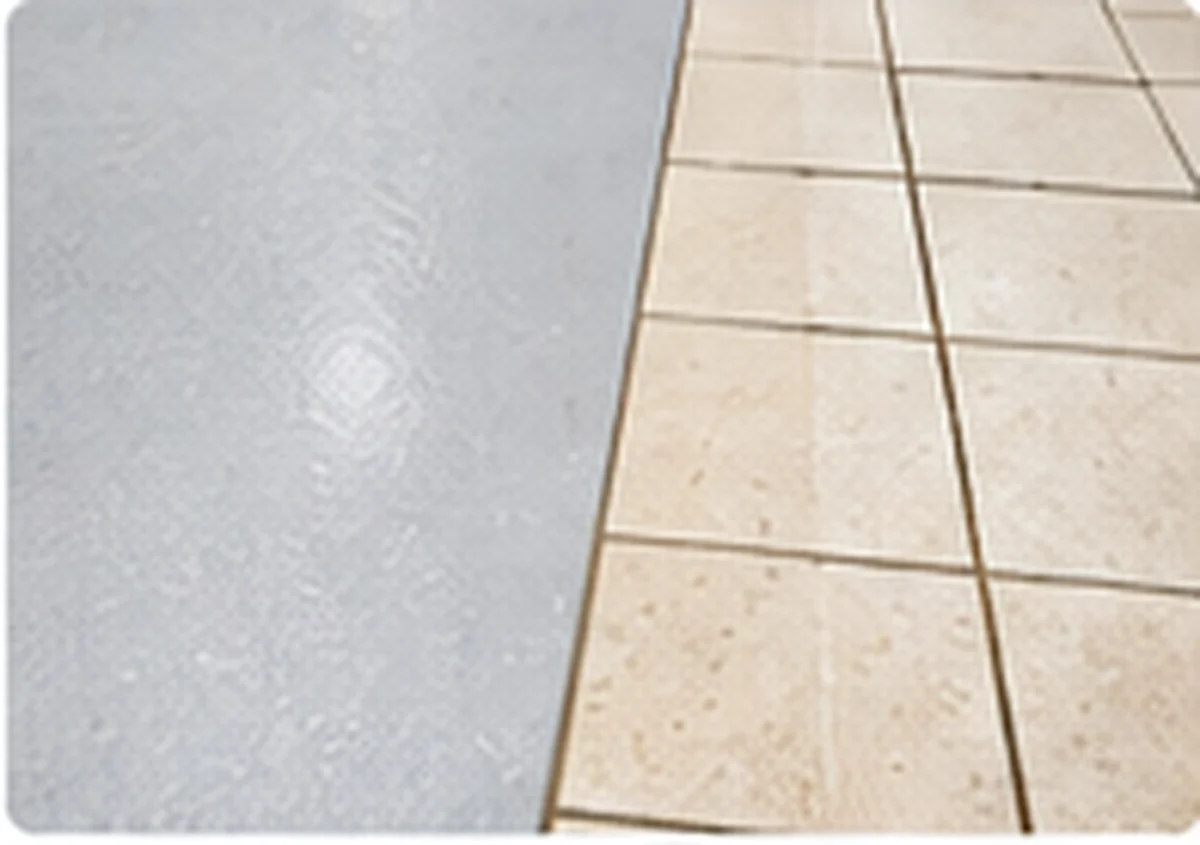
Tiles create repeated joints across the floor. Those joints are an unavoidable
part of the system and need to be considered when the floor is cleaned and maintained.
Resin flooring can create a largely seamless finish across the main working
area. That is one reason it is commonly used in factories, warehouses,
food-production areas and other commercial environments.
This does not mean a resin floor contains no joints at all. Existing movement
joints and important building details still need to be dealt with correctly.
The advantage is that the main field of the floor does not normally contain
thousands of repeated tile and grout joints.
Cleaning and maintenance
Which is easier to clean: resin flooring or tiles?
In many industrial and commercial environments, a largely seamless floor can
simplify routine cleaning because there are fewer repeated joints across the surface.
Tiled floors can also be cleaned effectively, but the condition of grout lines
and joints becomes another part of the maintenance regime.
However, the answer is not simply that smooth resin is always easier to clean.
Highly textured resin flooring can require a more intensive cleaning method than
a smooth finish.
The correct specification therefore needs to balance cleaning requirements
against slip resistance and contamination risk.
For environments where hygiene is particularly important, see our
Hygienic and Cleanroom Flooring
and
Food and Beverage Flooring
pages.
Warehouses and factories
Which is better for forklifts and heavy traffic?
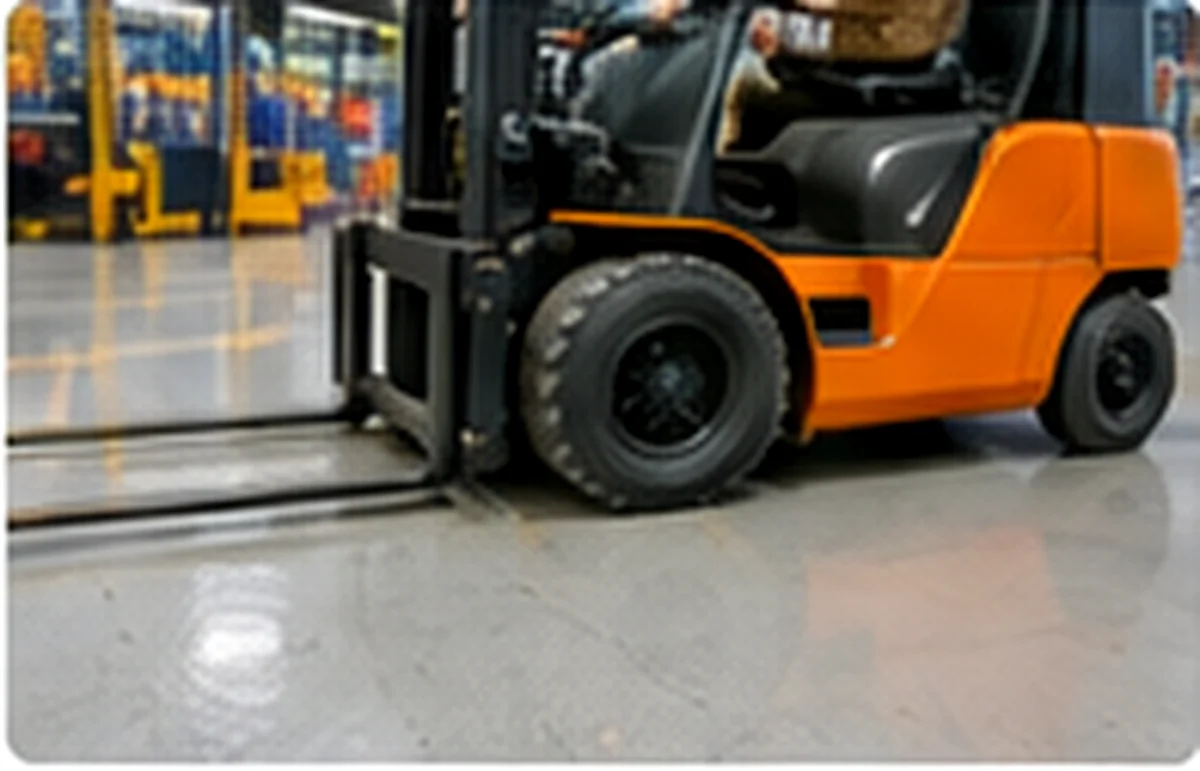
Forklifts, pallet trucks and industrial traffic can place very different demands
on a floor compared with ordinary pedestrian use.
Resin flooring systems can be selected around the expected traffic, abrasion,
impact and operational conditions of the area.
With tiles, performance depends on the tile itself, the bedding beneath it,
grout joints, substrate quality and the type of traffic moving across the floor.
Heavy traffic does not automatically mean every resin floor will perform well.
A thin coating should not be treated as though it offers the same performance
as a more substantial resin flooring system.
The correct specification needs to consider:
- Forklift and vehicle weight
- Wheel type
- Traffic frequency
- Turning areas
- Loading points
- Impact and abrasion
- Existing concrete condition
Read more about
Warehouse Flooring
and
Industrial Resin Flooring
.
Impact and local damage
Tiles can crack, while resin floors can also be damaged
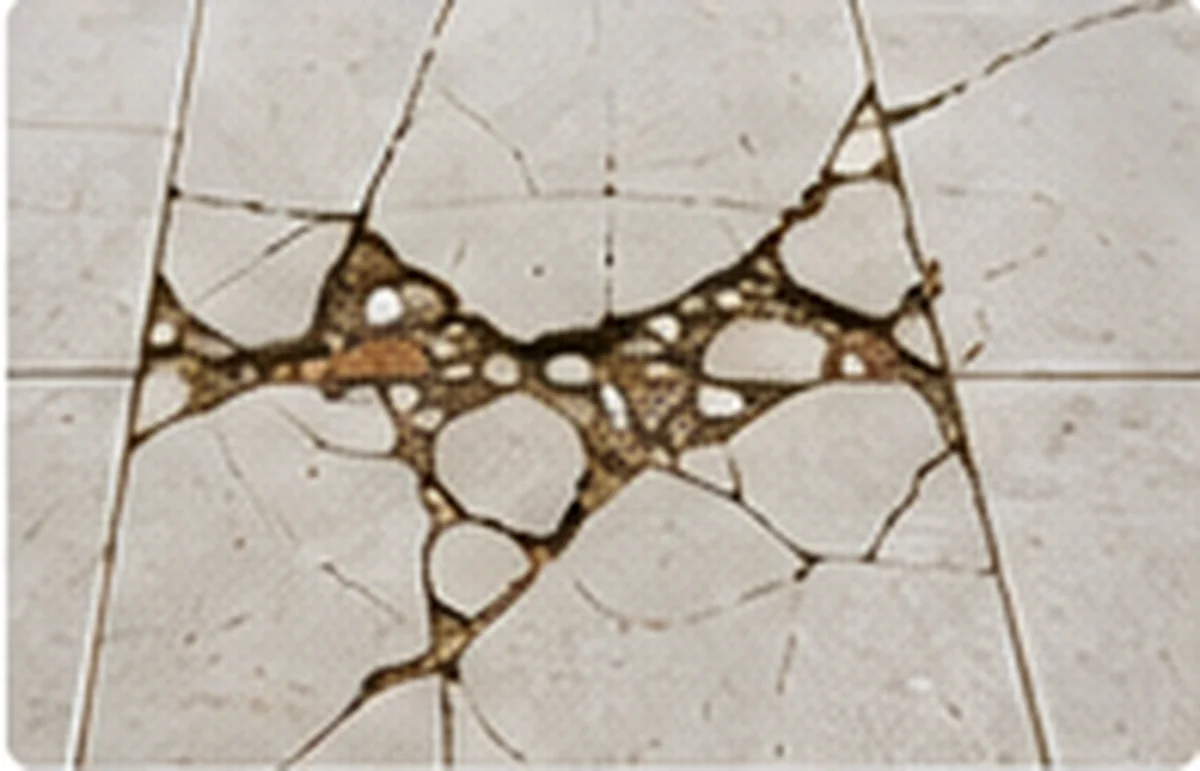
One advantage of tiles is that an individual damaged tile can sometimes be
removed and replaced.
The disadvantage is that hard local impact, substrate movement or problems
beneath the tile can cause individual units to crack or loosen.
Resin floors do not contain individual tiles, but they are not indestructible.
Impact, abrasion, substrate movement or unsuitable specification can still
cause damage.
The key difference is therefore not that one floor can be damaged and the other
cannot. It is how each system behaves, how the damage occurs and how practical
the repair will be.
Our
Resin Flooring Durability Guide
explains this in more detail.
What sits underneath matters
Both systems rely on a suitable substrate
Whether the final finish is resin or tile, problems with the concrete
underneath cannot simply be ignored.
The substrate may contain weak concrete, old coatings, contamination,
cracks, indentations, moisture problems or previous repairs.
For resin flooring, mechanical preparation is normally an important part
of creating a surface suitable for the specified flooring system.
Depending on the existing floor, preparation can include diamond grinding,
shot blasting, coating removal and concrete repair.
You can see the process on our
Industrial Floor Preparation and Repairs
page.
Comparing options for your site?
Start with the existing floor and how the building operates
Send SRS photographs and basic site information. We can review the
flooring requirement and discuss whether a resin system is suitable.
Installation and downtime
Which flooring is quicker to install?
There is no useful universal answer because both installations depend on
the condition of the floor underneath and the system being installed.
Resin flooring can require mechanical preparation, repairs, primers and
multiple resin layers before the area returns to service.
Tiled flooring requires substrate preparation, setting out, adhesive or
bedding, laying, grouting and sufficient time before normal use.
For an operating factory or warehouse, the important question is not simply
which material sounds faster. It is which flooring solution can be installed
properly within the shutdown period available.
Larger resin flooring projects can sometimes be phased into working areas
where the site layout and operational requirements allow it.
Appearance and design
Tiles may offer more traditional decorative choices
Tiles are available in an enormous range of sizes, patterns, finishes and
decorative styles. For some architectural or highly decorative interiors,
that can be a significant advantage.
Resin flooring offers a different appearance: generally more continuous,
modern and seamless.
Resin systems can be produced in different colours and practical finishes,
and separate operational areas can be identified using colour zoning and
line marking.
The choice therefore depends on what the space needs to look like as well
as how it needs to perform.
Slip resistance
Both resin flooring and tiles can provide additional grip
Neither material should automatically be described as anti-slip without
considering the specific finish and working conditions.
Resin systems can incorporate texture where additional grip is required
in wet, oily or higher-risk areas.
Tiles are also available with different slip characteristics.
In both cases, the floor should be selected around the contamination,
cleaning regime and actual operating environment.
For resin options, see
Anti-Slip Resin Flooring
.
Cost and whole-life value
Is resin flooring cheaper than tiles?
It is not useful to say that resin flooring is always cheaper or always
more expensive than tiled flooring.
Both can vary enormously in price.
For resin flooring, cost is influenced by the concrete condition,
preparation, repairs, system type, thickness, anti-slip requirements,
floor area, access and installation programme.
Tiled flooring cost varies with the tile specification, substrate work,
adhesive or bedding system, installation complexity, grouting and detailing.
Whole-life value should also consider cleaning, repairs, disruption and
how well the floor suits the actual environment rather than comparing
installation price alone.
For more information about resin costs, read our
Resin Flooring Cost Guide
.
A balanced comparison
When might tiles be the better option?
Resin flooring is not automatically the best choice for every floor.
There are environments where tiles may be entirely appropriate.
Tiles may deserve consideration where:
- A traditional or highly decorative tiled appearance is required
- Individual units need to be replaceable
- A suitable specialist tile offers properties required by the environment
- The chosen architectural design specifically calls for tiles
- The substrate and operating conditions suit the proposed tiled system
The important point is to compare properly specified systems rather than
assuming every resin floor is superior to every tiled floor.
Where resin has clear advantages
When is resin flooring usually the stronger option?
Resin flooring becomes particularly attractive where the project needs
a seamless, purpose-designed working surface.
Typical examples include:
- Warehouses with forklift and pallet-truck traffic
- Factories and manufacturing areas
- Engineering workshops
- Food-production and processing environments
- Commercial areas requiring a continuous finish
- Existing industrial concrete floors requiring refurbishment
- Areas needing colour zoning or line marking
- Operational zones requiring textured resin finishes
In these environments, the ability to prepare the existing concrete and
build a resin system around the actual operational conditions can be a
major advantage.
Real SRS project
A genuine example of resin flooring in a working warehouse
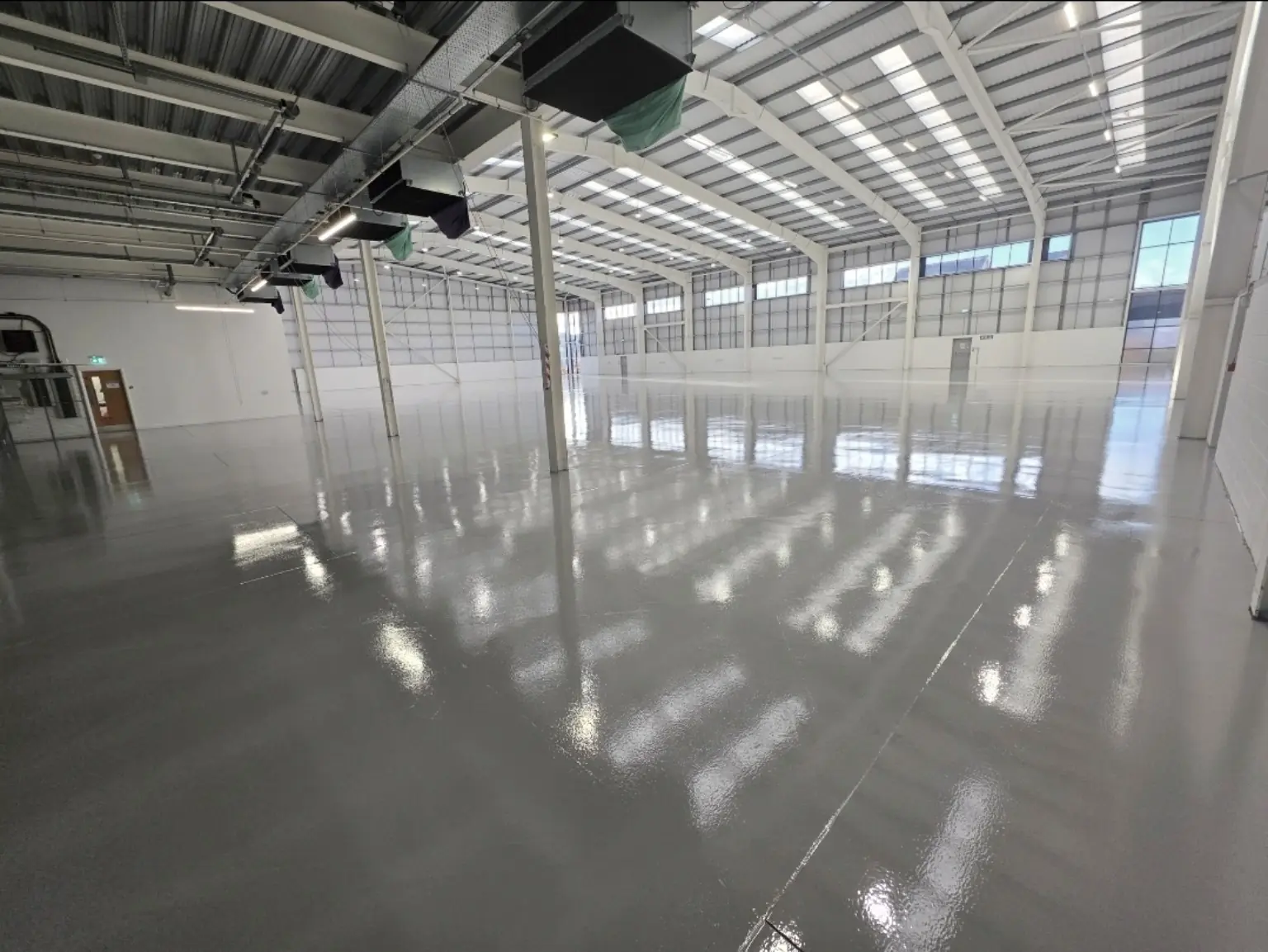
SRS’s approximately 3,500m² Bristol warehouse refurbishment demonstrates
why industrial flooring decisions need to consider more than just the
finished surface.
The existing resin flooring was old, tired and damaged. Preparation
included diamond grinding and shot blasting.
Indentations and damaged areas extending into the concrete were cleaned
and repaired with epoxy mortar before the new Vebro Polymers epoxy
flooring system was installed.
The finished floor provided the continuous industrial surface required
for the warehouse, but the preparation underneath was a fundamental part
of the refurbishment.
See the complete
Bristol Warehouse Resin Flooring Case Study
.
Making the choice
How do you decide between resin flooring and tiles?
Start with the building rather than the flooring brochure.
Ask:
- What is the current floor?
- What condition is the concrete in?
- Will forklifts or vehicles use the area?
- Is impact or abrasion likely?
- Will the floor be regularly wet?
- What chemicals or contamination may reach it?
- How will the area be cleaned?
- Is additional slip resistance required?
- How important is decorative appearance?
- How much shutdown time is available?
- How disruptive would future repairs be?
Those answers usually provide a much better basis for choosing a flooring
system than comparing the two materials in isolation.
Continue your research
Related flooring services and advice
Frequently asked questions
Resin flooring vs tiles FAQs
Is resin better than tile?
Resin flooring can be the better option for many industrial and
commercial environments where a seamless surface, heavy traffic,
cleaning and purpose-designed performance are important. Tiles can
still be suitable where their particular appearance or properties
are preferred.
Is resin flooring easier to clean than tiles?
A largely seamless resin surface can simplify routine cleaning because
there are fewer repeated grout joints. The actual cleaning requirement
still depends on texture and contamination.
Which is better for forklifts, resin or tiles?
Resin systems can be designed around industrial traffic, but the correct
system depends on traffic frequency, vehicle weight, wheels, turning areas,
impact and the condition of the substrate.
Do resin floors crack?
Resin flooring can be affected by substrate cracking or movement.
The condition of the concrete should therefore be assessed before
installation.
Can tiles crack under heavy traffic?
Individual tiles can crack or become damaged where there is impact,
movement or problems with the supporting substrate or bedding system.
Which flooring is more hygienic?
A seamless resin surface can reduce the number of repeated joints across
the main floor area, but hygiene also depends on detailing, drainage,
cleaning practices and the wider operating environment.
Is resin flooring cheaper than tiles?
Neither is universally cheaper. Resin flooring cost depends on preparation,
repairs and system build, while tiled flooring cost depends on tile type,
substrate work, bedding, labour and detailing.
Which flooring is better for wet areas?
Both can potentially be specified for wet environments. The correct choice
depends on slip resistance, drainage, cleaning, contamination, detailing
and the exact floor system being considered.
Can resin flooring go over an existing tiled floor?
The existing floor needs to be assessed before any new resin system is
specified. The condition, bond, movement, contamination and suitability
of the existing substrate all need to be considered.
What information does SRS need to assess my floor?
Useful information includes the site location, approximate floor area,
photographs, existing floor type, visible damage, operational use,
traffic, contamination and available shutdown period.
Resin flooring or tiles?
Choose the flooring around your actual working environment
Send Superior Resin Solutions photographs of the existing floor,
approximate area and details of how the building is used. We can review
the information and discuss whether a resin flooring system is suitable
for the project.