

Industrial slip resistance guide
How to Choose Anti-Slip Resin Flooring for Wet Industrial Areas
Anti-slip resin flooring for wet areas should be specified around the actual
risk on site rather than simply choosing the roughest possible surface. Water,
oils, food contamination, chemicals, footwear, traffic, drainage and cleaning
all affect the level and type of slip resistance required.
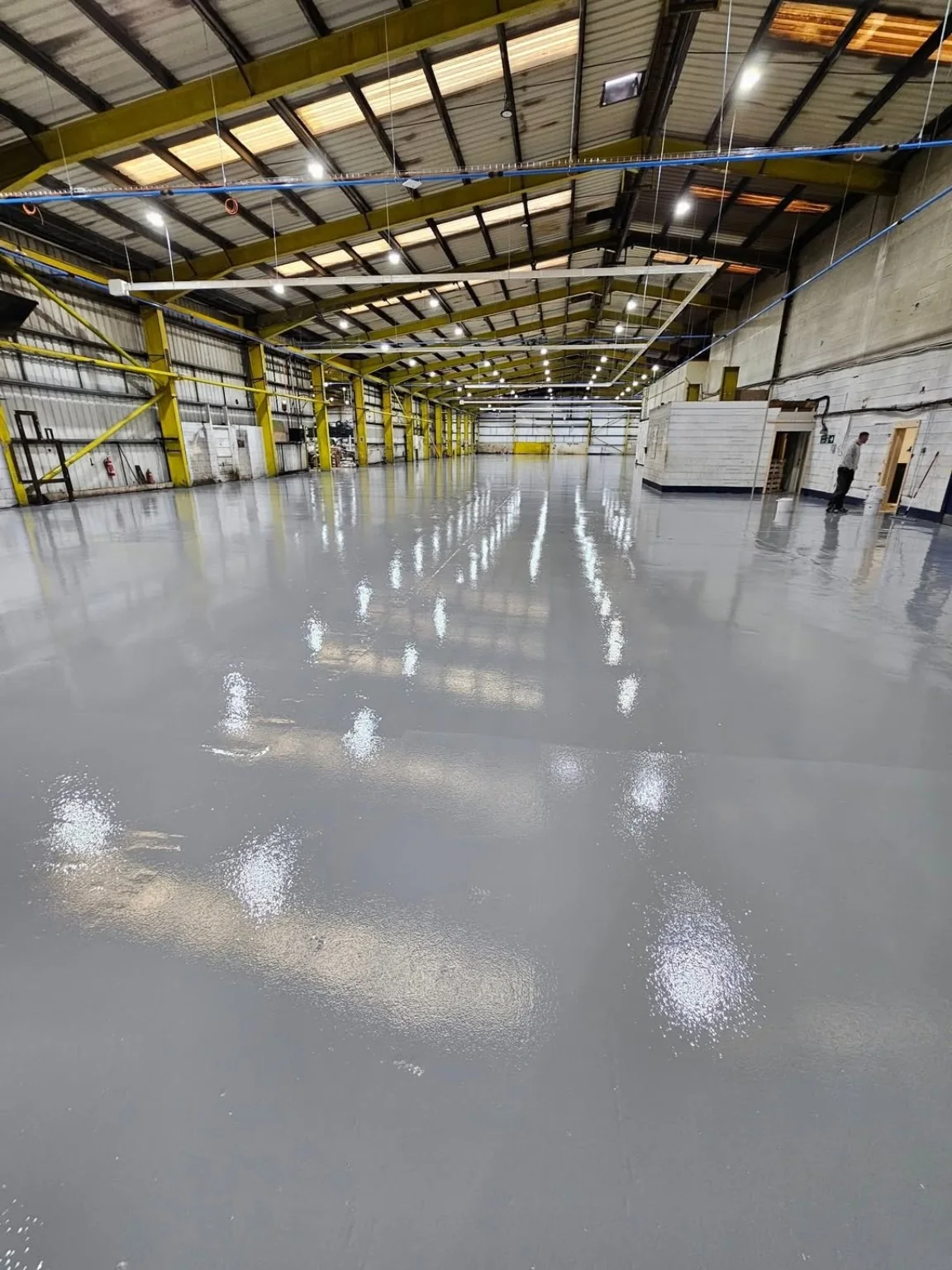
into the final epoxy coat as an additional slip-resistance measure.
What makes a good anti-slip resin floor for a wet industrial area?
A suitable anti-slip floor is one whose surface profile is matched to the
contaminants, traffic and cleaning regime expected in service.
More texture can provide additional grip under certain contaminated conditions,
but a very aggressive surface can also become more difficult to clean.
The aim is therefore to balance slip resistance, cleanability, drainage,
durability and the way people and vehicles actually move through the area.
Specification before labels
Anti-Slip Resin Flooring for Wet Areas Is Not One Standard Finish
Anti-slip resin flooring for wet areas can use different surface textures,
aggregates and resin systems depending on the conditions.
A lightly textured warehouse walkway and a wet food-processing floor can both
require slip resistance, but they may need very different surface profiles.
Before choosing the finish, consider:
- what contaminates the floor
- how often contamination occurs
- whether the contaminant is water, oil, grease or process material
- pedestrian traffic
- forklift and vehicle movements
- footwear
- cleaning method
- drainage
- floor gradients
The surface texture should therefore be selected as part of the complete
industrial flooring specification rather than simply requesting a generic
“anti-slip” finish.
Assess the real slip risk
Six Factors That Influence Anti-Slip Resin Flooring for Wet Areas
01
Contamination
Clean water, oil, grease, food products, chemicals and fine powders can
create very different slip conditions.
02
Frequency
An occasional spill is different from an area that remains wet throughout
normal production.
03
Drainage
Falls, channels and drains influence how quickly water or process liquids
leave the walking surface.
04
Cleaning
The selected texture needs to be compatible with the site’s cleaning
equipment, cleaning chemicals and available cleaning time.
05
Traffic
Pedestrians, trolleys, forklifts and loaded vehicles place different demands
on both texture and durability.
06
Footwear
The footwear used by employees forms part of the overall slip-risk assessment
rather than the flooring operating in isolation.
Different contaminants
A Wet Floor and an Oily Floor Are Not the Same Slip Risk
A useful anti-slip specification starts by identifying what is actually
likely to be on the floor.
Examples can include:
- clean water
- rainwater
- coolants
- hydraulic oil
- food fats
- grease
- cleaning chemicals
- process liquids
A surface profile selected for occasional water contamination may not
necessarily provide the same performance where thick grease or oil is present.
This is one reason generic descriptions such as “non-slip floor” are not
enough to form a proper industrial flooring specification.
Surface profile
How Is Slip Resistance Created in Resin Flooring?
Resin flooring can be installed with different surface profiles depending
on the flooring system and the required level of texture.
One common method is to incorporate a suitable aggregate into or between
resin layers before sealing the system.
The size, quantity and distribution of aggregate, together with the final
resin coats, influence the finished surface texture.
The exact build should follow the selected flooring manufacturer’s system
and the project specification.
SRS’s
Anti-Slip Resin Flooring
service page explains how flooring can be selected around contamination,
traffic and cleaning requirements.
Grip versus cleanability
Why the Roughest Resin Floor Is Not Automatically the Best
Increasing texture can help provide additional grip in contaminated conditions,
but it can also increase the effort required to clean the surface.
This balance matters in environments such as:
- food production
- commercial kitchens
- engineering workshops
- wet manufacturing
- loading areas
- industrial washdown zones
The aim should be a surface that provides the required slip resistance while
still allowing the site’s cleaning regime to remove contamination effectively.
Cleaning should therefore form part of the flooring decision before installation
rather than becoming an afterthought once the floor is complete.
Water management
Anti-Slip Flooring Cannot Compensate for Poor Drainage
If water continually ponds on a floor because falls or drainage are unsuitable,
simply increasing the surface texture does not remove the source of the problem.
Wet industrial flooring specifications should consider:
- where liquid comes from
- where the liquid needs to go
- floor falls
- drainage channels
- gullies
- doorways and thresholds
- regular standing-water areas
A good flooring specification considers the complete wet-area environment
rather than treating texture as the only control measure.
Measuring slip resistance
How Can the Slip Resistance of Industrial Flooring Be Assessed?
Slip resistance can be measured rather than relying only on how rough a floor
looks or feels.
The Pendulum Test is a recognised UK method used when assessing floor
slip resistance.
Testing can be useful where the project specification requires measurable
performance or where an existing floor needs to be assessed.
The relevant test conditions matter because a floor can perform differently
when dry, wet or contaminated.
Where additional grip may be needed
Which Industrial Areas Commonly Need Slip-Resistant Flooring?
The requirement depends on the risk assessment and operating conditions,
but areas commonly worth assessing include:
- wet production zones
- food and beverage processing
- washdown areas
- loading bays
- entrances
- ramps
- engineering workshops
- vehicle maintenance areas
- pedestrian walkways
- areas around drains
The entire building does not necessarily need the same texture.
Different zones can be designed around their own contamination, traffic
and cleaning requirements.
Warehouse slip resistance
Anti-Slip Resin Flooring for Wet Areas Inside Warehouses
Anti-slip resin flooring for wet areas inside warehouses should be considered
where entrances, loading bays, ramps or other locations are regularly exposed
to water, oils or process contamination.
A dry warehouse aisle can have a very different risk profile from a loading
bay exposed to rain or an entrance where water is tracked inside.
Areas worth considering individually can include:
- loading bays
- ramps
- entrances
- pedestrian routes
- vehicle turning areas
- areas affected by oil or process contamination
Forklift traffic also changes the specification because surface texture needs
to be considered alongside vehicle movement and long-term wear.
Explore
Warehouse Resin Flooring
.
Food production
Anti-Slip Resin Flooring for Wet Areas in Food Production
Anti-slip resin flooring for wet areas in food production needs to balance
grip with hygiene and cleanability because water, oils, fats, food residues
and cleaning chemicals can all reach the floor.
Food production can combine several difficult slip-risk factors at once,
including regular washdown and process contamination.
Wet processing, dry packing and warehouse zones within the same food facility
can legitimately require different flooring finishes.
Read:
Food and Beverage Flooring
.
You can also read:
PU Screed vs Epoxy Flooring for Food Factories
.
Genuine SRS project
5,000m² Rhondda Warehouse With Additional Slip Resistance
Rhondda warehouse project.
SRS refurbished approximately 5,000m² of badly deteriorated industrial
flooring for a South Wales manufacturer in Rhondda.
The project involved failed resin flooring, oil-affected concrete, cracks,
holes and other damaged sections.
Following mechanical preparation and repairs, SRS installed a Vebro Polymers
epoxy flooring system.
Aluminium oxide was incorporated into the final coat to provide additional
slip resistance for employees using the manufacturing facility.
The project demonstrates how slip resistance can form part of the complete
industrial flooring specification rather than being treated as a separate
cosmetic finish.
Read the full
5,000m² Rhondda Warehouse Resin Flooring Case Study
.
Substrate preparation
Anti-Slip Resin Flooring Still Depends on a Sound Substrate
A textured finish cannot compensate for poor preparation underneath the floor.
Potential substrate problems include:
- weak concrete
- old failing coatings
- oil contamination
- cracks
- damaged joints
- holes
- moisture issues
These conditions should be assessed before the preparation method and resin
system are confirmed.
Mechanical preparation can include diamond grinding, shot blasting or another
method appropriate for the substrate and selected resin flooring build.
Explore
Industrial Floor Preparation and Repairs
.
Choosing the texture
Smooth Resin Flooring vs Textured Resin Flooring
Smooth resin floors can be easier to clean in suitable dry environments,
but they may provide insufficient grip where regular contamination is present.
A more textured resin finish can provide additional slip resistance, but
cleaning equipment and procedures need to suit the surface.
That means the choice is not simply:
smooth is bad and rough is good.
The correct finish depends on the balance between:
- slip risk
- contamination
- hygiene
- cleaning
- traffic
- durability
This is why the anti-slip profile should be agreed as part of the complete
resin flooring specification.
Ongoing performance
Anti-Slip Performance Still Depends on Cleaning and Maintenance
Even a correctly specified textured floor can become slippery if contamination
is allowed to build up.
Cleaning needs to be capable of removing the substances encountered in the area.
Depending on the site, these can include:
- water
- oil
- grease
- dust
- food residue
- process contamination
The floor should also be inspected for wear because surface profiles can change
over time in high-traffic areas.
Effective cleaning therefore remains part of controlling slip risk even where
a textured resin floor has been installed.
Traffic management
Slip Resistance Can Be Combined With Walkways and Safety Zoning
Industrial safety is not only about the texture of the floor.
Busy warehouses and factories can also use colour zoning and line marking
to help define:
- pedestrian walkways
- forklift lanes
- crossings
- loading areas
- restricted zones
- work areas
Where flooring and line marking are planned together, the finished surface
can support both movement management and the required slip-resistant finish.
Explore
Industrial Line Marking
.
Need anti-slip flooring?
Tell SRS What Actually Gets Onto the Floor
The contaminant, cleaning regime and traffic are more useful than simply
asking for the roughest available finish.
Continue your research
Related Industrial Flooring Information
Frequently asked questions
Anti-Slip Resin Flooring for Wet Areas FAQs
What is the best anti-slip flooring for wet industrial areas?
Anti-slip resin flooring for wet areas should be selected around the contaminant,
traffic, drainage, footwear, cleaning regime and substrate condition. There is
no single surface texture that is best for every industrial environment.
Is rougher resin flooring always more slip resistant?
Additional texture can provide more grip in certain contaminated conditions,
but the finished surface still needs to suit the contaminant and footwear.
Excessive texture can also make cleaning more difficult.
Can epoxy flooring be made anti-slip?
Yes. Suitable epoxy systems can incorporate aggregate or another specified
texture to provide additional slip resistance. The complete flooring build
should follow the selected manufacturer’s specification.
How is resin floor slip resistance tested?
The Pendulum Test is a recognised UK method for assessing floor slip resistance.
The relevant testing condition should reflect how the floor will actually be
used, including wet or contaminated conditions where appropriate.
Does anti-slip resin flooring need special cleaning?
The cleaning method needs to suit the selected texture and contamination.
Heavily textured surfaces can require more effective mechanical cleaning
than smoother floors.
Can anti-slip flooring still become slippery?
Yes. Oil, grease, water, food residues and other contamination can affect
any floor. Correct cleaning, drainage and maintenance remain important even
where a slip-resistant surface has been installed.
Do wet food-production areas need anti-slip resin flooring?
Slip resistance should be considered where water, fats, food residues or
cleaning processes create foreseeable contamination. The required surface
profile also needs to be balanced against hygiene and cleaning requirements.
Can different areas of a factory use different anti-slip textures?
Yes. A dry storage area, wet production zone, ramp and loading bay can have
different operating conditions. Different flooring zones can therefore be
specified to suit how each area is actually used.
Industrial anti-slip flooring
Specify the Texture Around the Real Contamination and Cleaning Regime
Send Superior Resin Solutions photographs, floor area, contamination type,
traffic, drainage, cleaning method and shutdown requirements. We can discuss
which resin flooring and surface profile should be assessed for the area.