
Resin flooring durability and maintenance
Do Resin Floors Scratch Easily? Causes, Prevention & Repairs
Resin floors are designed for demanding commercial and industrial use,
but they are not completely scratch-proof. Surface marking depends on the
resin system, finish, traffic, contamination, cleaning regime and how the
floor is actually used.
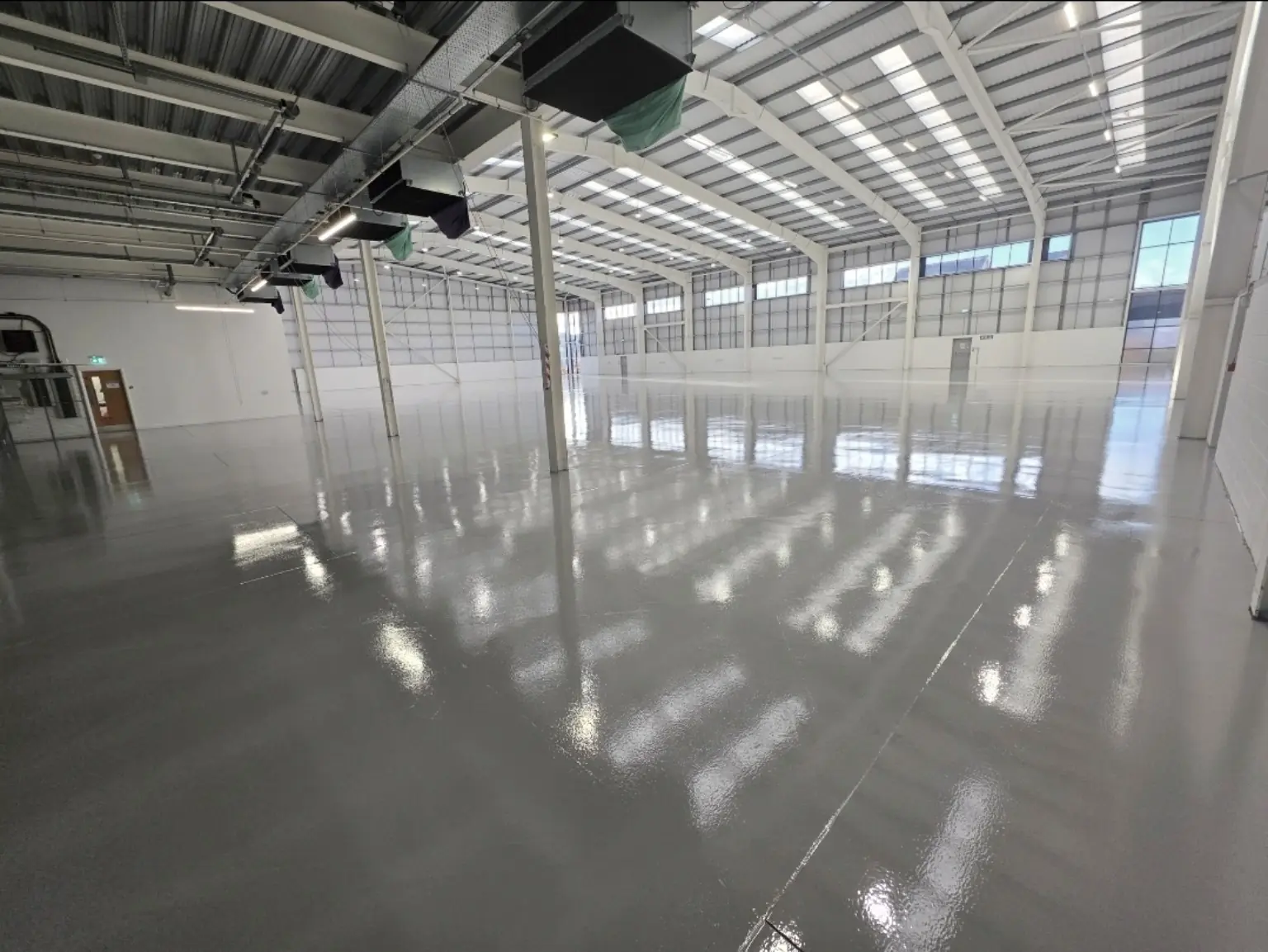
Do resin floors scratch easily?
A correctly specified resin floor should cope well with normal use, but no
resin floor is completely immune to scratches, scuffs or abrasion.
Grit under wheels, dragged metal equipment, forklift turning, inappropriate
cleaning pads and unsuitable system selection can all mark the surface.
The important distinction is between normal cosmetic wear and damage that
affects the performance of the flooring system.
Reviewed for practical accuracy by Richard Evans, Director,
Superior Resin Solutions UK Ltd. This guide has been checked
against SRS project experience in working industrial and commercial
environments.
At a glance
What can cause scratches and surface marks on resin flooring?
Resin flooring wear is usually influenced by a combination of traffic,
contamination, floor finish and how equipment moves across the area.
| Cause | What can happen | What helps |
|---|---|---|
| Loose grit and debris | Acts as an abrasive beneath wheels, shoes and cleaning equipment | Regular sweeping, vacuuming and entrance control |
| Dragged equipment | Metal feet, pallets or machinery can score the surface | Lift equipment correctly and use suitable protection |
| Forklift turning | Concentrated wheel forces can increase visible wear | Specify the system around traffic, wheels and turning areas |
| Cleaning equipment | Incorrect pads or trapped grit can create fine surface marking | Use cleaning methods appropriate to the installed system |
| Glossy finishes | Fine marks can be more visible because light reflects from the surface | Consider appearance requirements when choosing the finish |
| Wrong system for the duty | Premature wear can occur where the flooring is under-specified | Match the system to traffic, impact, cleaning and operating conditions |
Cosmetic wear vs flooring failure
A scratch does not necessarily mean the resin floor is failing
Light surface marks and scuffs can develop on working floors over time.
In many industrial environments this is cosmetic wear rather than a failure
of the resin flooring system.
A floor can continue performing properly even when minor marks are visible.
The more important warning signs are problems such as widespread delamination,
peeling, excessive wear through the system, cracking linked to substrate
movement or repeated local failures.
Those issues should be investigated because they can relate to the substrate,
preparation, moisture, contamination, traffic or the original flooring
specification rather than simple surface scratching.
If an existing floor is deteriorating, see our
Industrial Floor Preparation and Repairs
page.
Epoxy flooring
Can epoxy resin flooring scratch?
Yes. Epoxy flooring is widely used in warehouses, factories and workshops
because suitable systems can provide a hard, durable industrial surface,
but that does not make epoxy impossible to mark.
The final performance depends on the complete flooring build-up rather than
the word “epoxy” alone. Resin flooring ranges from relatively thin coatings
through to much heavier-duty systems.
Traffic levels, forklift wheels, turning forces, contamination, cleaning
and the existing concrete all influence which system is appropriate.
A smooth high-gloss epoxy can also make fine marks more noticeable than
a lower-sheen or differently textured finish because reflected light makes
surface imperfections easier to see.
For system information, visit our
Epoxy Resin Flooring
page.
Polyurethane systems and topcoats
What about polyurethane resin flooring?
Polyurethane flooring systems have different characteristics from epoxy
systems and can be selected where their particular performance properties
suit the project.
Depending on the manufacturer and system, polyurethane or other specialist
seal coats may also be used as part of a flooring specification where
properties such as wear resistance, appearance or UV stability are required.
That does not mean every polyurethane floor is automatically more
scratch-resistant than every epoxy floor. Product selection needs to be
based on the actual system and the operating environment.
See our
Polyurethane Flooring
page for more information.
Warehouses and industrial traffic
Why warehouse resin floors wear differently
Warehouse traffic places very different demands on flooring compared with
an office, showroom or lightly used commercial space.
Areas that deserve particular attention include:
- Forklift turning zones
- Narrow racking aisles
- Loading and unloading areas
- Doorways where external grit enters the building
- Battery charging or maintenance zones
- Areas where pallets or equipment are repeatedly moved
Traffic frequency, vehicle weight, tyre type and turning behaviour should
all be considered when the floor is specified.
This is why a flooring contractor should not treat every warehouse as
requiring the same coating or thickness.
Explore our
Warehouse Resin Flooring
service page for flooring specified around forklift routes, turning areas,
loading zones and other demanding warehouse traffic.
SRS has also completed an approximately 5,000m² warehouse flooring
refurbishment in Rhondda, where the existing floor included failed resin,
oil-affected concrete, cracking and extensive substrate damage. The project
combined mechanical preparation, repairs and a Vebro Polymers epoxy system
in a phased programme.
See the
5,000m² Rhondda Warehouse Resin Flooring Case Study
.
Industry specification guidance
The right resin system should be selected around the actual conditions
FeRFA guidance for synthetic resin flooring highlights the importance of
considering factors such as traffic, loading, impact, chemicals, cleaning,
slip resistance, substrate condition, expected lifespan and the time
available for installation and curing.
That is important when discussing scratches because visible wear is only
one part of overall floor performance.
The system needs to be capable of dealing with the complete working
environment rather than simply looking good when first installed.
For independent industry guidance, see
FeRFA’s Guide to the Selection of Synthetic Resin Flooring
.
Reducing unnecessary wear
How to reduce scratches on resin flooring
You cannot completely eliminate normal wear from a working floor, but good
specification and maintenance can reduce unnecessary damage.
1. Specify the floor around the traffic
Start with what will actually use the floor. Pedestrians, pallet trucks,
forklifts, steel wheels, workbenches and machinery can all create different
demands.
2. Keep abrasive grit under control
Dirt and grit can act like abrasive material beneath footwear, tyres and
cleaning equipment. Regular sweeping or vacuuming can make a significant
difference in busy areas.
3. Avoid dragging metal equipment
Pallets, benches, machinery and metal feet should be lifted or moved using
appropriate equipment rather than dragged across the resin surface.
4. Use appropriate cleaning methods
Dirty cleaning pads or equipment containing trapped grit can mark a floor.
Cleaning products and equipment should be appropriate for the installed
resin system.
5. Consider entrances and contamination
Entrance mats, good housekeeping and controlling material brought in from
external yards can reduce abrasive contamination.
6. Plan for high-wear zones
Turning areas, loading points and concentrated traffic routes may justify
a different resin build-up, finish or maintenance strategy from lightly
trafficked sections of the same building.
What sits underneath matters
Surface preparation affects far more than scratches
Scratching is a surface issue, while preparation primarily affects how the
resin system bonds to the substrate and performs as a flooring system.
Weak concrete, contamination, old coatings and damaged areas need to be
identified before installation.
Mechanical preparation can include methods such as diamond grinding or
shot blasting depending on the substrate and selected system.
FeRFA also identifies correct surface preparation as an essential part of
achieving the intended performance of a resin system.
Read more about our
Industrial Floor Preparation and Repairs
service.
Genuine SRS project
Why preparation and specification mattered on a 3,500m² warehouse floor
On SRS’s approximately 3,500m² Bristol warehouse refurbishment, the
existing resin floor was old, tired and damaged.
Preparation included diamond grinding and shot blasting. Indentations and
damaged areas extending into the concrete were cleaned and repaired using
epoxy mortar before the new Vebro Polymers epoxy flooring system was installed.
The project demonstrates why industrial floor performance is not simply
about choosing “epoxy”. The condition of the existing floor, preparation,
repairs and final system all form part of the specification.
See the full
Bristol Warehouse Resin Flooring Case Study
.
Another SRS warehouse example: 5,000m² in Rhondda
SRS later completed an approximately 5,000m² warehouse resin flooring
refurbishment for a South Wales manufacturer in Rhondda. The inherited floor
included deteriorated resin, oil-affected concrete, cracks, holes and damaged
areas that required preparation and repair before the new epoxy system was installed.
That project reinforces the same point: long-term performance starts with the
condition of the substrate, the preparation and repairs, and selecting a resin
build-up around the actual working environment.
Read the
5,000m² Rhondda Warehouse Resin Flooring Case Study
.
Existing floor damage
Can scratches in resin flooring be repaired?
The appropriate repair depends on the depth and extent of the damage.
Very light cosmetic marking may only require cleaning or may simply form
part of normal surface wear.
A floor with widespread cosmetic wear may sometimes be suitable for further
preparation and a compatible maintenance or refurbishment coat, depending on
the existing system and its condition.
Deeper gouges, impact damage or local failures can require individual
repairs before the surrounding floor is recoated.
Where the problem is actually delamination, cracking or failure of the
substrate, simply coating over the damage is unlikely to address the
underlying cause.
Texture and appearance
Does anti-slip texture prevent scratches?
Anti-slip texture is primarily specified to help manage slip risk rather
than as a scratch-prevention treatment.
A textured finish can visually disguise some types of minor marking better
than a very smooth gloss floor, but it may also require a more appropriate
cleaning method because dirt can sit within the surface profile.
Slip resistance should therefore be selected around the contamination,
footwear, cleaning regime and operating environment rather than purely
appearance.
See our
Anti-Slip Resin Flooring
page.
Need a floor specified around real traffic?
Send SRS the basic project information
Photographs and site information help us understand the substrate,
traffic and operating conditions before discussing an appropriate resin
flooring route.
Continue your research
Related resin flooring pages
Frequently asked questions
Resin floor scratching FAQs
Do epoxy floors scratch easily?
Epoxy flooring is designed to provide a durable surface, but it can
still develop scratches or scuffs. The amount of visible wear depends
on the particular system, finish, traffic, contamination and maintenance.
What is the most scratch-resistant resin floor?
There is no single resin system that is automatically best for every
environment. The flooring should be selected around traffic, abrasion,
impact, chemicals, cleaning, appearance and the condition of the substrate.
Can forklift tyres scratch a resin floor?
Forklift traffic can contribute to wear, particularly in concentrated
turning areas. Vehicle weight, wheel type, frequency and turning patterns
should be considered when the floor is specified.
Can scratches in resin flooring be repaired?
Repair options depend on the depth and cause of the damage. Light marks
may be cosmetic, while deeper damage can require local repairs or
preparation before a compatible refurbishment coat is applied.
Does a glossy resin floor show scratches more?
Fine marks can be more noticeable on highly reflective finishes.
Appearance should therefore be considered alongside the operational
requirements when the flooring system is selected.
Does grit damage resin flooring?
Loose grit can act as an abrasive beneath footwear, wheels and cleaning
equipment. Good housekeeping and entrance control can help reduce
unnecessary surface wear.
Does anti-slip resin flooring scratch less?
Anti-slip texture is selected primarily to help manage slip risk.
Texture may make some marks less visually obvious, but it should not
be specified simply as a scratch-prevention measure.
How can I keep a resin floor looking good?
Keep grit and debris under control, use appropriate cleaning methods,
avoid dragging heavy metal objects and make sure the flooring system
is correctly specified for the traffic and environment.
Industrial or commercial resin flooring?
Choose the flooring system around how your site actually operates
Send Superior Resin Solutions photographs of the existing floor,
approximate area and details of traffic, cleaning and current damage.
We can review the information and discuss the most practical next step.