


Industrial floor preparation guide
Diamond Grinding vs Shot Blasting Before Resin Flooring
When comparing diamond grinding vs shot blasting, neither method is
automatically best for every resin flooring project. The correct preparation
method depends on the existing concrete, coatings or contamination, the required
surface profile, access, edge details and the resin system that will be installed.
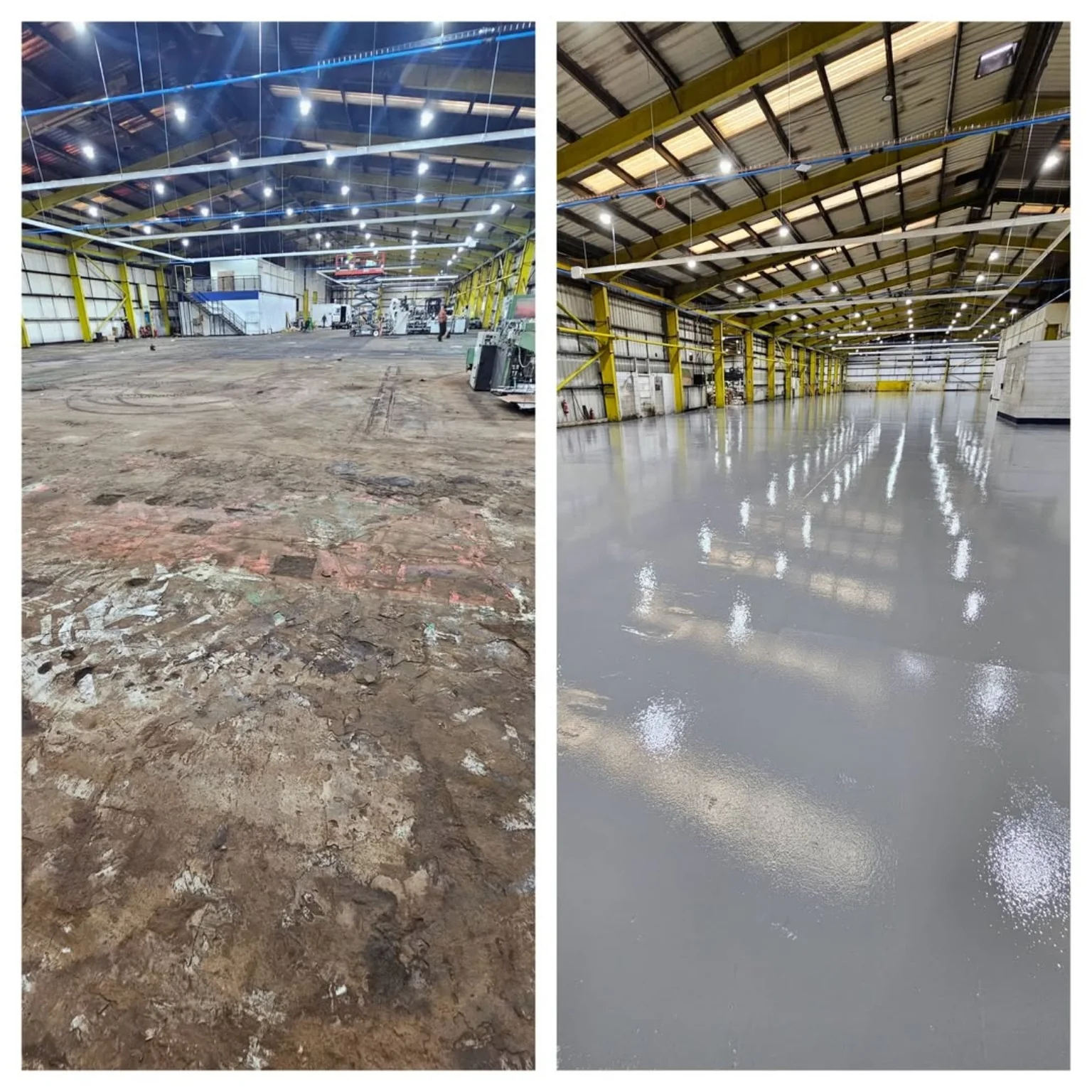
the substrate and the final resin flooring build.
Diamond grinding vs shot blasting: what is the difference?
Diamond grinding uses rotating diamond tooling to mechanically abrade,
clean and profile the surface. Shot blasting propels abrasive media against
the floor inside a contained machine to remove surface material and create
a textured profile.
Both are established preparation methods for resin flooring. The choice
depends on what needs to be removed, the concrete condition, the required
profile and the flooring system being installed.
Quick comparison
Diamond grinding vs shot blasting at a glance
| Preparation method | What it does | Common considerations |
|---|---|---|
| Diamond grinding |
Uses rotating diamond tooling to abrade the concrete surface and remove coatings, contamination or weak material depending on the tooling selected. |
Useful around detailed areas, edges and many refurbishment projects. The tooling and number of passes should match the substrate and removal requirement. |
| Shot blasting |
Uses propelled abrasive media inside a contained machine to impact the surface and create a mechanical profile. |
Often useful across open industrial floors where a consistent textured profile or efficient surface preparation is required. |
Diamond grinding
What is diamond grinding?
Diamond grinding uses specialist machines fitted with diamond tooling that
rotates against the concrete surface.
Depending on the selected tooling and the condition of the floor, grinding can
be used to:
- remove old coatings
- remove weak surface material
- reduce laitance
- remove surface contamination
- smooth local high points
- prepare edges and restricted areas
- create a suitable surface for the next flooring stage
Larger planetary grinders can cover open floor areas, while smaller or
hand-held equipment may be required around walls, machinery bases, columns
and other restricted locations.
Dust extraction forms an important part of modern grinding operations,
and the prepared floor should be properly vacuumed before resin application.
Shot blasting
What is shot blasting?
Shot blasting uses a contained machine that projects abrasive media onto
the surface of the concrete.
The impact helps remove the upper surface layer and produces a mechanically
textured profile.
It can be particularly useful on suitable large open areas where a consistent
profile is needed before installation of a resin flooring system.
The required level of preparation still depends on the substrate and the
specified resin build. Shot blasting should not simply be selected because
it is faster or because the floor area is large.
Edges, corners and restricted areas normally require additional preparation
using other equipment.
Choosing the preparation method
Six things that influence grinding vs shot blasting
Existing coating
Paint, epoxy, resin layers and previous finishes can vary greatly in thickness,
bond strength and condition.
Concrete strength
Weak, friable or damaged concrete needs to be identified before choosing
how aggressively the surface should be prepared.
Contamination
Oil, grease, grime and process contamination can require more than one
preparation stage or additional treatment.
Required profile
Different resin systems require different substrate conditions and surface
profiles, so preparation should match the intended flooring build.
Access and layout
Columns, machinery, racking, walls and restricted areas can influence which
machines can physically reach the surface.
Final resin system
Preparation should be selected around the manufacturer’s resin flooring
system rather than completed in isolation.
There is no universal winner
Is diamond grinding better than shot blasting?
No preparation method is automatically better in every situation.
Diamond grinding can provide excellent control across many refurbishment
projects and is particularly useful where different tooling or detailed
edge work is required.
Shot blasting can be highly effective across suitable open industrial areas
where a mechanically textured profile is required.
Some projects benefit from using both methods rather than
trying to force one machine to complete every part of the floor.
The purpose is not to choose the most powerful machine. The purpose is to
leave the substrate in the correct condition for the specified resin system.
Preparation and repairs
Grinding or blasting does not remove the need for concrete repairs
Mechanical preparation exposes the true condition of an existing industrial floor.
Once old coatings, dirt and weak surface material have been removed, defects
can become much easier to identify.
These can include:
- cracks
- holes
- damaged joints
- weak concrete
- indentations
- previous poor repairs
- oil-affected areas
Those defects may then need separate repair or treatment before the main
resin flooring build begins.
Read more about
Industrial Floor Preparation and Repairs
.
Genuine SRS project
5,000m² Rhondda warehouse: grinding and shot blasting were both used
warehouse refurbishment.
The Rhondda project is a useful real-world example of why preparation needs
to be selected around the existing floor.
SRS inherited an industrial floor containing badly deteriorated old resin,
oil-affected concrete, cracks, holes and damaged areas.
Mechanical preparation included diamond grinding and shot blasting across
suitable areas rather than relying on one preparation method throughout
the entire facility.
Once prepared, damaged areas were repaired using epoxy mortars and
crack-repair materials before the new Vebro Polymers epoxy flooring
system was installed.
Read the full
5,000m² Rhondda Warehouse Resin Flooring Case Study
.
Another genuine SRS project
3,500m² Bristol warehouse preparation and repairs
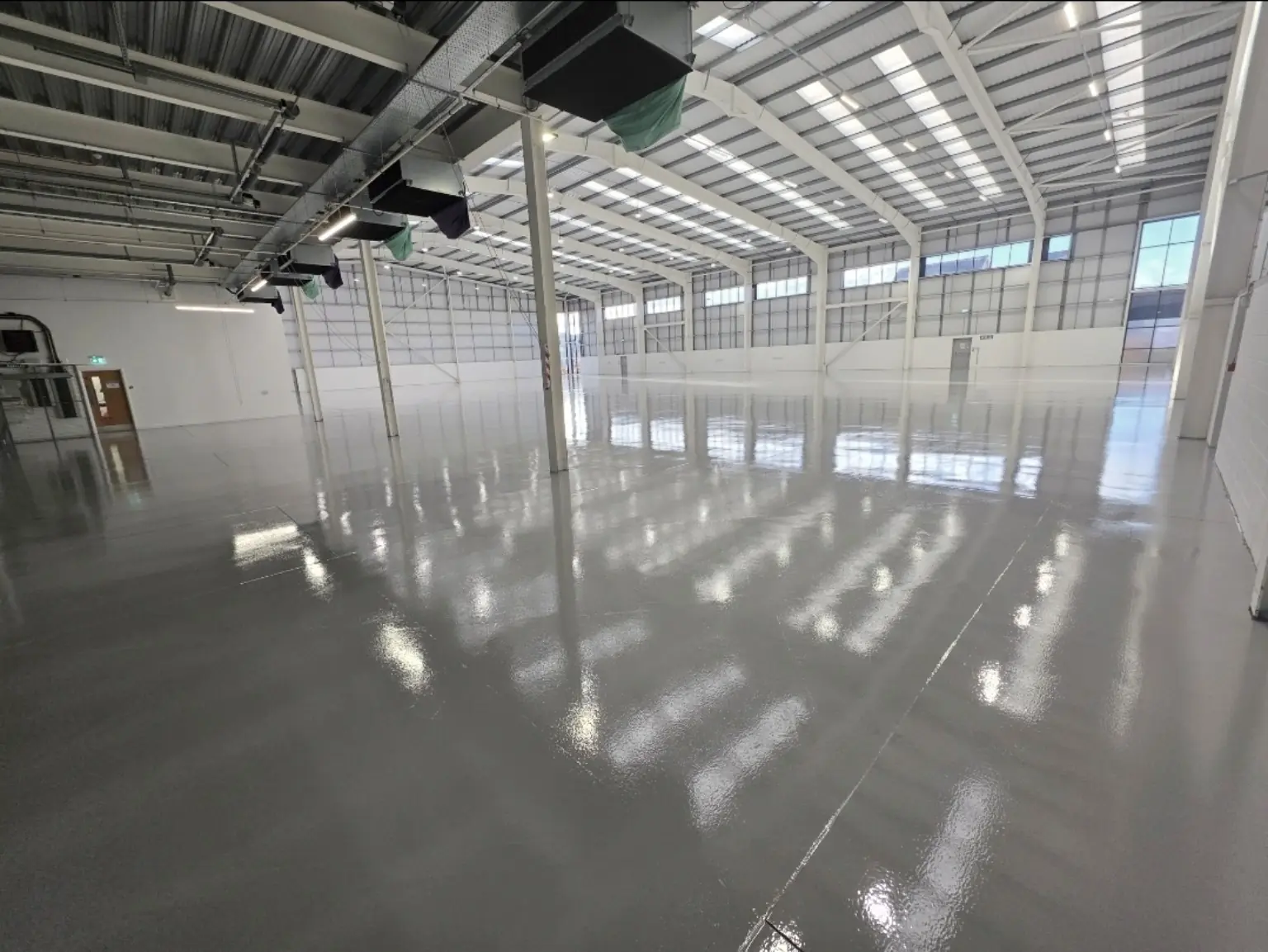
SRS also used mechanical preparation on an approximately 3,500m² warehouse
refurbishment in Bristol.
The existing floor was old, tired and damaged. Diamond grinding and shot
blasting were used as part of the preparation process.
Indentations and damaged sections extending into the concrete were cleaned
and rebuilt using epoxy mortar before the new Vebro Polymers epoxy system
was installed.
The project demonstrates why preparation and repairs should be considered
together. A new resin surface cannot simply hide damaged concrete beneath it.
View the
3,500m² Bristol Warehouse Resin Flooring Case Study
.
Independent industry guidance
FeRFA recognises both grinding and shot blasting as preparation methods
FeRFA’s surface-preparation guidance explains that correct preparation is
essential for the adhesion of the selected resin system and to help the
finished floor achieve its intended service life.
Its guidance covers mechanical methods including grinding, shot blasting
and planing, with the preparation method selected around the substrate,
existing material and proposed resin system.
FeRFA also recommends thorough vacuum cleaning of the prepared surface
before installation of the selected resin system.
View FeRFA’s Guide to Preparing Surfaces for Resin Systems
.
Common mistakes
What can go wrong with industrial floor preparation?
Problems can occur where preparation is treated as a quick cleaning operation
rather than part of the flooring system.
Common issues can include:
- leaving poorly bonded old coatings in place
- failing to remove weak surface material
- insufficient edge preparation
- ignoring oil or contamination
- coating over damaged concrete
- leaving dust or debris on the prepared floor
- using a preparation profile unsuitable for the specified resin system
This is why preparation should be agreed alongside the resin flooring
specification rather than chosen after the flooring product has already
been ordered.
Project cost
Does grinding or shot blasting affect resin flooring cost?
Yes, but the cheapest preparation method is not automatically the best-value route.
Cost can be influenced by:
- floor area
- amount and thickness of material to remove
- condition of the concrete
- machine access
- edge and detail work
- repairs discovered during preparation
- contamination
- the number of preparation stages required
A quotation should therefore explain what preparation has actually been allowed
for rather than simply stating that the floor will be “prepared”.
Read our
Resin Flooring Cost Guide
.
Planning a floor refurbishment?
Send SRS photographs of the existing floor before choosing the preparation method
A few project details can help identify what needs to be checked during
the first-stage assessment.
Continue your research
Related industrial flooring information
Frequently asked questions
Diamond grinding vs shot blasting FAQs
Is shot blasting better than diamond grinding?
Not automatically. Both methods have useful applications. The correct method
depends on the concrete, existing coating, required surface profile, site layout
and the resin system being installed.
Can diamond grinding remove old epoxy flooring?
Diamond grinding can remove many old resin coatings depending on their
thickness, hardness, bond strength and the tooling selected. Some floors may
need more than one preparation method or multiple grinding stages.
What does shot blasting do to concrete?
Shot blasting mechanically impacts the surface using abrasive media, removing
surface material and creating a textured profile suitable for selected flooring
systems.
Does resin flooring always need mechanical preparation?
The preparation method depends on the substrate and specified resin system,
but industrial resin flooring commonly requires mechanical preparation to
create a sound, clean and appropriately profiled surface.
Can shot blasting remove oil contamination?
Shot blasting can remove contaminated surface material, but oil can penetrate
deeper into concrete. Oil-affected floors may require further assessment,
additional preparation or a different treatment route.
Why are edges ground separately?
Large preparation machines cannot always reach walls, columns, machinery bases,
corners or restricted locations. Smaller grinding equipment is therefore often
used for detailed edge preparation.
Can both grinding and shot blasting be used on the same project?
Yes. Different areas of the same project can require different preparation
methods. SRS has used both diamond grinding and shot blasting on large warehouse
refurbishments where the existing floor conditions varied.
Should the prepared floor be vacuumed before resin is applied?
Yes. Dust and loose material need to be removed from the prepared surface
before the selected resin flooring system is installed.
Industrial floor preparation
Choose the preparation method around the floor that is actually there
Send Superior Resin Solutions photographs of the existing floor, approximate
area, old coatings, damage, contamination and proposed use. We can discuss the
likely preparation, repair and resin flooring route.