Resin flooring advice
Is Resin Good for Flooring? Benefits, Uses & Limitations
Resin flooring can be an excellent choice for warehouses, factories,
workshops and commercial premises, but the correct system depends on
how the building is used. Traffic, substrate condition, cleaning,
contamination, slip risk and available installation time all influence
which resin flooring system is most suitable.
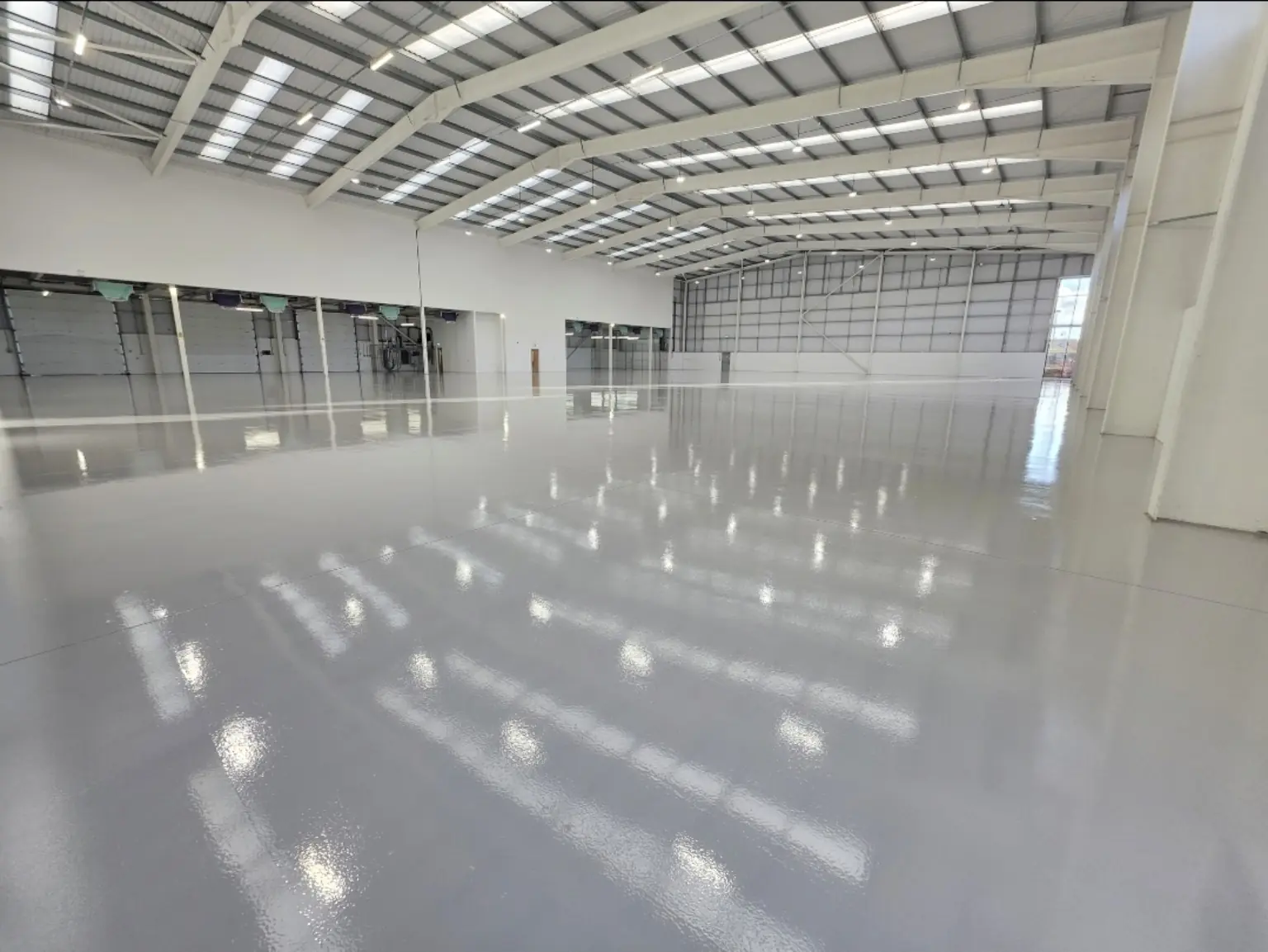
Is resin good for flooring?
Yes. Correctly specified resin flooring can provide a durable,
practical and largely seamless finish for many industrial and
commercial environments.
The important point is that resin flooring is not one single product.
A thin coating, high-build epoxy floor and more substantial resin
system can provide very different levels of performance.
At a glance
Where resin flooring performs well
Resin flooring is most successful when the specification starts with
the building, substrate and operating conditions rather than simply
choosing a colour or finish.
| Requirement | Why resin flooring can work well | What needs considering |
|---|---|---|
| Heavy traffic | Systems can be selected around forklifts, pallet trucks and regular use | Vehicle weight, wheels, traffic frequency and turning areas |
| Cleaning | A largely seamless surface can simplify routine cleaning | Surface texture, contamination and cleaning equipment |
| Slip resistance | Texture can be incorporated into suitable resin systems | Wet conditions, contamination, footwear and cleaning |
| Industrial use | Different resin system builds are available for different duties | Impact, abrasion, substrate condition and expected service |
| Appearance | Colours, zoning and line marking can create an organised finish | Traffic, wear and long-term appearance expectations |
| Existing concrete | Older industrial floors can often be refurbished | Damage, contamination, cracking and previous coatings |
Understanding the flooring
What is resin flooring?
Resin flooring is a broad term covering flooring systems made using
synthetic resin materials installed onto a suitably prepared substrate.
Different systems can be used depending on the building, traffic,
operating conditions and level of performance required.
Common resin flooring options can include:
- Epoxy resin flooring
- High-build epoxy systems
- Self-smoothing resin flooring
- Polyurethane flooring systems
- Heavy-duty resin screeds
- Textured anti-slip resin flooring
- Fast-curing resin flooring systems
This is why asking whether resin flooring is good is only the first
question. The more important question is which resin flooring system
suits the actual site.
Main advantages
What are the benefits of resin flooring?
The strongest benefits depend on the system selected and how the
floor will actually be used.
01
Durable system options
Resin systems can be selected around commercial and industrial
traffic, abrasion and everyday operational use.
02
Largely seamless surface
The main field of the floor can be installed without repeated
grout joints across the working area.
03
Practical cleaning
Suitable resin finishes can provide manageable surfaces for
routine industrial and commercial cleaning.
04
Slip-resistant options
Texture can be incorporated into suitable systems where
additional grip is required.
05
Different system builds
Resin flooring can range from lighter-duty finishes through
to more substantial systems for demanding environments.
06
Professional appearance
Colour, zoning and line marking can help create a cleaner and
more organised working environment.
Industrial environments
Is resin flooring good for warehouses and factories?
Resin flooring can be particularly well suited to warehouses,
factories and workshops because the flooring specification can
be developed around how the building operates.
Forklifts, pallet trucks and industrial traffic can place very
different demands on a floor compared with ordinary pedestrian use.
Important factors include:
- Forklift and vehicle weight
- Wheel type
- Traffic frequency
- Turning areas
- Loading points
- Impact and abrasion
- The condition of the existing concrete
A thin resin coating should not automatically be treated as though
it provides the same performance as a more substantial industrial
flooring system.
Read more about our
Warehouse Flooring
,
Factory and Workshop Flooring
and
Industrial Resin Flooring
services.
Cleaning and maintenance
Is resin flooring easy to clean?
In many commercial and industrial environments, a largely seamless
resin surface can simplify routine cleaning because there are fewer
repeated joints across the main floor area.
The answer still depends on the surface finish.
A heavily textured anti-slip floor may require a more intensive
cleaning method than a smooth resin finish.
The correct flooring specification therefore needs to balance
cleanability with slip resistance and the contamination expected
on the site.
For environments where hygiene is particularly important, see our
Hygienic and Cleanroom Flooring
and
Food and Beverage Flooring
pages.
Slip resistance
Can resin flooring be made anti-slip?
Suitable resin flooring systems can incorporate texture where
additional grip is required.
The correct finish should be selected around the actual operating
conditions rather than treating anti-slip flooring as one standard
specification.
Factors worth considering include:
- Water and wet-process contamination
- Oil, grease or other substances
- Footwear
- Pedestrian and vehicle traffic
- Cleaning regime
- The amount of texture that can practically be maintained
Learn more about
Anti-Slip Resin Flooring
.
What sits underneath matters
Good resin flooring starts with the existing substrate
Resin flooring should not simply be applied over an existing floor
without understanding the condition underneath.
The existing concrete can contain:
- Old or failing coatings
- Weak or damaged areas
- Indentations
- Contamination
- Cracking
- Previous repairs
Mechanical preparation can include methods such as diamond grinding
and shot blasting, depending on the substrate and flooring system.
Repairs may also be required before the new resin flooring system
is installed.
Considering resin flooring?
Start with the existing floor and how the building operates
Send SRS photographs and basic site information. We can review
the flooring requirement and discuss the most practical next step.
Choosing the system
Is epoxy resin flooring a good option?
Epoxy flooring systems are commonly used across industrial and
commercial premises, including warehouses, factories and workshops.
The final specification still needs to reflect the substrate,
traffic, cleaning, operating conditions and required finish.
Epoxy flooring is not one single build-up, so the correct product
and system should be selected around the actual project.
Read more on our
Epoxy Resin Flooring
page.
Chemical exposure
Is resin flooring chemical resistant?
Chemical resistance depends on the particular flooring system.
Different resin products can behave differently when exposed to
oils, cleaning agents, acids, alkalis and other industrial substances.
Where chemical exposure is important, the flooring system should
be assessed against the actual chemical, concentration, exposure
time and operating temperature.
It is therefore better to treat chemical resistance as a
system-specific requirement rather than assume that every resin
floor offers the same protection.
A balanced view
When might resin flooring not be straightforward?
Resin flooring is not automatically the right answer for every
substrate or building.
Additional assessment may be needed where:
- The concrete is weak or extensively damaged
- Existing coatings are failing
- The substrate is heavily contaminated
- There is unresolved moisture or water ingress
- Significant cracking or movement is present
- The available shutdown period is very restricted
- The environment has specialist operational requirements
These issues do not necessarily mean resin flooring cannot be used.
They can affect the preparation, repairs and system that should be
considered.
Real SRS project
A genuine example of resin flooring in a working warehouse
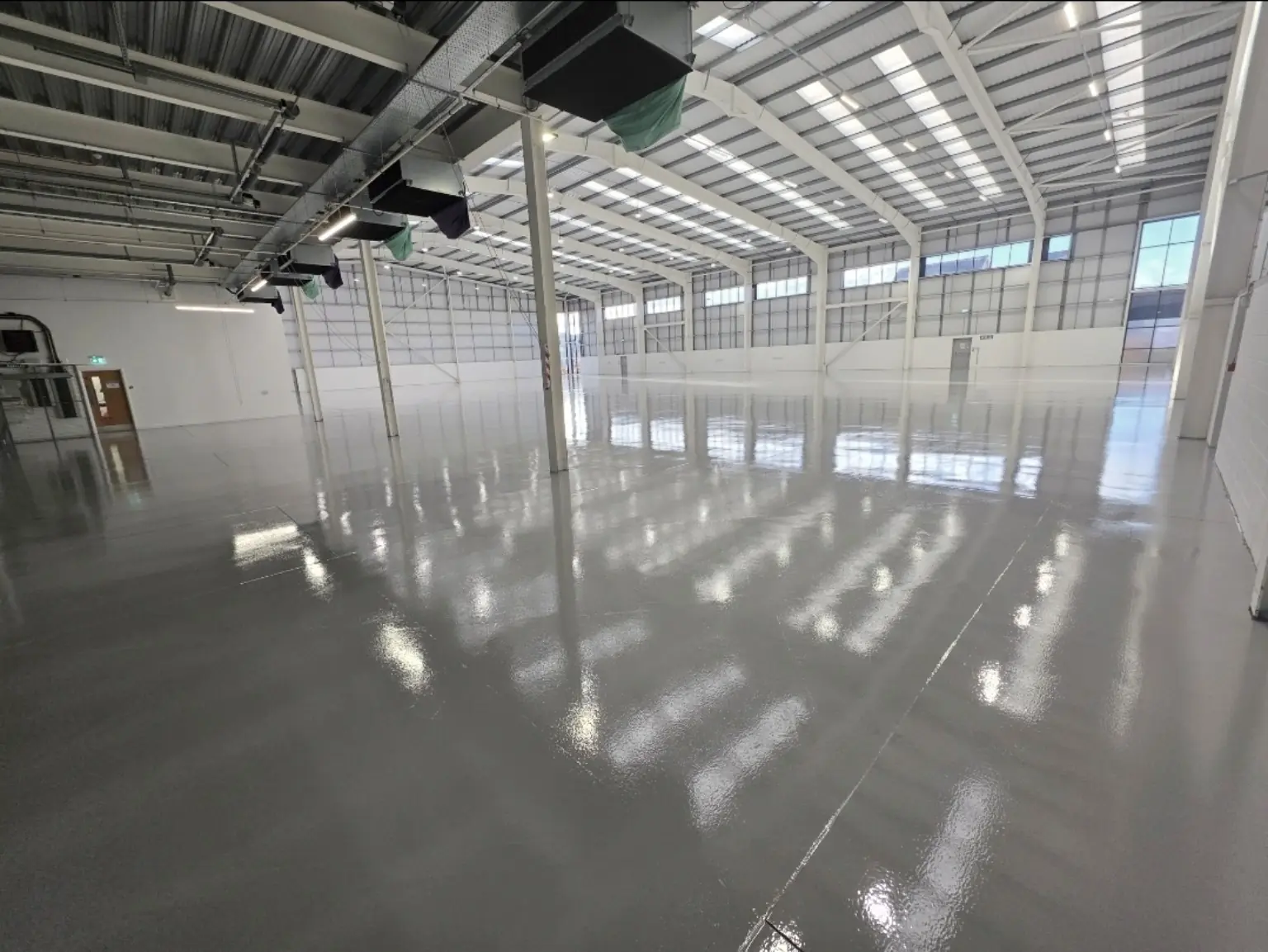
SRS was appointed to refurbish approximately 3,500m² of warehouse
flooring in Bristol after the client had previously been let down
by another resin flooring company.
The existing resin floor was old, tired and damaged.
Preparation included diamond grinding and shot blasting.
Indentations and damaged areas extending into the concrete were
cleaned and repaired using epoxy mortar before the new flooring
system was installed.
The prepared floor received a Vebro Polymers epoxy primer followed
by two coats of Vebro Polymers epoxy coating.
The approximately 3,500m² flooring package was completed in five days.
This project demonstrates why industrial resin flooring is not
simply about the final coating. Preparation, repairs and system
selection all contribute to the finished floor.
See the complete
Bristol Warehouse Resin Flooring Case Study
.
Typical applications
Where is resin flooring commonly used?
The correct system varies from one environment to another, but
resin flooring can be suitable for many industrial and commercial
premises.
Typical applications include:
- Warehouses and distribution centres
- Factories and manufacturing areas
- Engineering workshops
- Commercial premises
- Food-production and processing areas
- Hygienic and controlled environments
- Areas requiring anti-slip finishes
- Existing industrial concrete floors requiring refurbishment
The ability to select the resin system around the operational
conditions is one of the main reasons resin flooring is widely
considered for these environments.
Choosing the right floor
How do you decide if resin flooring is right for your site?
Start with the building rather than the flooring brochure.
Useful questions include:
- What is the existing floor?
- What condition is the concrete in?
- Will forklifts or vehicles use the area?
- Is impact or abrasion likely?
- Will the floor regularly become wet?
- What contamination may reach the surface?
- How will the area be cleaned?
- Is additional slip resistance required?
- What finish is required?
- How much shutdown time is available?
Those answers provide a far better basis for selecting a resin
flooring system than choosing a product purely on appearance
or price.
Continue your research
Related flooring services and advice
Frequently asked questions
Resin flooring FAQs
Is resin flooring good for warehouses?
Yes. Suitable resin flooring systems can work well in warehouses
where the specification accounts for forklift traffic, abrasion,
impact, cleaning and the condition of the existing concrete.
Is resin flooring good for factories?
Resin flooring is commonly used in factories and manufacturing
environments. The correct system should reflect traffic,
contamination, cleaning and operating conditions.
Is resin flooring easy to clean?
A largely seamless resin surface can simplify routine cleaning,
although the cleaning method still needs to suit the texture,
contamination and flooring system.
Can resin flooring be anti-slip?
Suitable resin flooring systems can incorporate additional
texture where increased grip is required. The texture should
also be considered alongside cleaning requirements.
Can resin flooring go over old concrete?
Often, but the concrete should first be assessed and correctly
prepared. Existing coatings, contamination, cracking and damaged
areas may require treatment before installation.
Is epoxy resin flooring durable?
Suitable epoxy flooring systems can provide durable industrial
and commercial finishes. Performance depends on the system,
preparation, traffic and operating conditions.
How long does resin flooring last?
Lifespan varies according to preparation, system build, traffic,
impact, cleaning, maintenance and operating conditions. There is
no single lifespan that applies to every resin floor.
Is resin flooring expensive?
Cost depends on preparation, repairs, system build, floor area,
access and installation programme. Comparing whole-life value
can be more useful than comparing installation price alone.
Can a damaged resin floor be refurbished?
In many cases an existing resin or concrete floor can be prepared,
repaired and refurbished, but the condition of the existing
substrate needs to be assessed first.
What information does SRS need to assess a floor?
Useful information includes the site location, approximate floor
area, photographs, existing floor type, current condition,
traffic, contamination, cleaning requirements and available
shutdown period.
Considering resin flooring?
Choose the flooring system around your actual working environment
Send Superior Resin Solutions photographs of the existing floor,
approximate area and details of how the building is used. We can
review the information and discuss the most practical resin flooring
route for the project.