

Epoxy flooring advice
Epoxy Flooring for Commercial, Industrial and Warehouse Floors
Epoxy flooring can provide a durable, practical and professional finish
for warehouses, factories, workshops and commercial premises. The best
results come from matching the flooring system to the existing concrete,
traffic, cleaning requirements, contamination and how the building is used.
What are the main benefits of epoxy flooring?
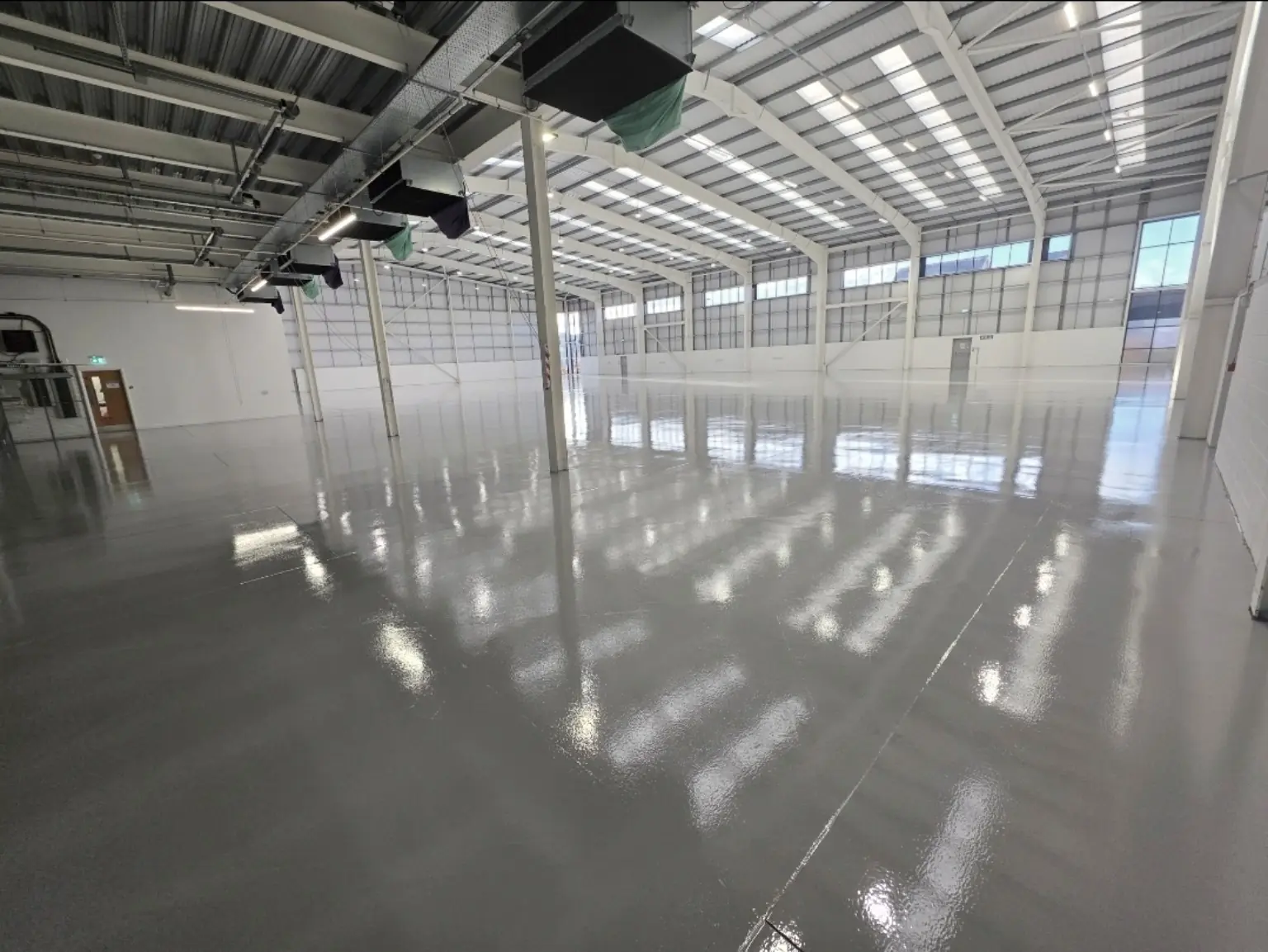
Correctly specified epoxy flooring can create a durable, largely seamless
and easy-to-maintain surface for many commercial and industrial environments.
It can improve the appearance and practicality of an existing concrete floor,
but the final performance depends heavily on preparation, system selection
and the conditions the floor needs to withstand.
At a glance
Why businesses choose epoxy flooring
Epoxy flooring is commonly considered where businesses need to improve
worn concrete and create a cleaner, more practical working surface.
| Requirement | How epoxy flooring can help | What needs considering |
|---|---|---|
| Durability | Suitable systems can cope with regular industrial and commercial use | Traffic, wheels, impact and abrasion |
| Cleaning | A largely seamless surface can simplify routine cleaning | Texture, contamination and cleaning method |
| Appearance | Can transform tired or worn concrete with a uniform finish | Colour, finish and expected wear |
| Spills | Suitable systems can provide a sealed working surface | Specific chemicals and exposure conditions |
| Slip resistance | Texture can be incorporated where additional grip is required | Wet areas, contamination and cleaning |
| Old concrete | Existing floors can often be refurbished rather than left untreated | Damage, contamination, coatings and substrate condition |
Understanding the system
What is epoxy flooring?
Epoxy flooring is a resin-based flooring system installed over a suitably
prepared substrate, commonly concrete.
Depending on the project, epoxy systems can be used to create practical
industrial and commercial floors in different colours, finishes and system
builds.
The correct specification depends on factors such as:
- Existing concrete condition
- Forklift and vehicle traffic
- Pedestrian traffic
- Impact and abrasion
- Cleaning requirements
- Spillages and contamination
- Slip resistance
- Available shutdown time
Learn more on our
Epoxy Resin Flooring
page.
Main benefits
What are the advantages of epoxy flooring?
Durable flooring options
Epoxy systems can be selected for regular commercial and industrial
traffic where the floor needs more than a decorative finish.
Largely seamless finish
The main working area can be installed without repeated grout joints
across the floor.
Practical cleaning
A suitable sealed surface can make routine cleaning more manageable
than old or damaged concrete.
Improved appearance
Epoxy flooring can transform tired concrete into a cleaner and more
professional-looking working surface.
Slip-resistant options
Texture can be incorporated into suitable systems where additional
grip is required.
Colour and zoning
Different colours and line marking can help separate working areas,
walkways and operational zones.
Warehouses
Is epoxy flooring good for warehouses?
Epoxy flooring can be a strong option for warehouse environments where
the floor needs to handle regular traffic while remaining practical to
clean and maintain.
The system should be selected around the actual warehouse operation.
Important considerations include:
- Forklift weight
- Wheel type
- Pallet-truck traffic
- Turning areas
- Loading zones
- Impact and abrasion
- Existing concrete condition
A thin coating should not automatically be expected to perform like a
more substantial industrial resin flooring system.
See our
Warehouse Flooring
page for more information.
Factories and workshops
Is epoxy flooring suitable for factories and workshops?
Factories and workshops often place more demanding requirements on a floor
than standard commercial areas.
Machinery, wheeled traffic, dropped tools, oils, cleaning products and
repeated working activity can all influence the flooring specification.
Epoxy systems can be considered for many of these environments, but the
floor needs to be selected around the actual duty rather than simply
choosing a standard coating.
Explore our
Factory and Workshop Flooring
service.
Cleaning and maintenance
Is epoxy flooring easy to clean?
One of the practical benefits of epoxy flooring is the ability to create
a largely seamless working surface.
Compared with worn, dusty or damaged concrete, a suitable resin finish
can make routine cleaning more manageable.
Cleaning requirements still depend on the surface texture.
A smooth finish and a heavily textured anti-slip finish will not require
exactly the same cleaning method, so cleanability and slip resistance
should be considered together.
Spills and chemicals
Is epoxy flooring resistant to chemicals and spills?
Chemical resistance depends on the particular epoxy system and the
substance the floor will be exposed to.
Where oils, cleaning chemicals or other industrial substances are present,
the flooring specification should consider:
- The chemical or substance involved
- Concentration
- Temperature
- Frequency of exposure
- How long the substance may remain on the floor
- Cleaning procedures
It is better to select the flooring system around the actual exposure
rather than assume every epoxy product offers the same level of resistance.
Slip resistance
Can epoxy flooring be made anti-slip?
Suitable epoxy flooring systems can incorporate additional texture where
increased grip is required.
The correct finish depends on the real conditions of the site, including
water, oil, contamination, footwear, traffic and cleaning.
More texture can improve grip in appropriate situations, but heavily
textured surfaces can also require a more intensive cleaning regime.
Read more about
Anti-Slip Resin Flooring
.
Preparation matters
Why surface preparation is critical for epoxy flooring
The quality of the finished epoxy floor depends heavily on the condition
and preparation of the substrate underneath.
Existing floors can contain:
- Old or failing coatings
- Weak concrete
- Contamination
- Cracks
- Indentations and damaged areas
- Previous repairs
Mechanical preparation may include methods such as diamond grinding or
shot blasting depending on the concrete and the flooring system being installed.
Damaged areas should also be dealt with before the new flooring system is applied.
Planning an epoxy flooring project?
Start with the existing floor and how the building operates
Send SRS photographs and basic site information. We can review the
flooring requirement and discuss the appropriate next step.
Real SRS project
3,500m² Bristol warehouse epoxy flooring refurbishment
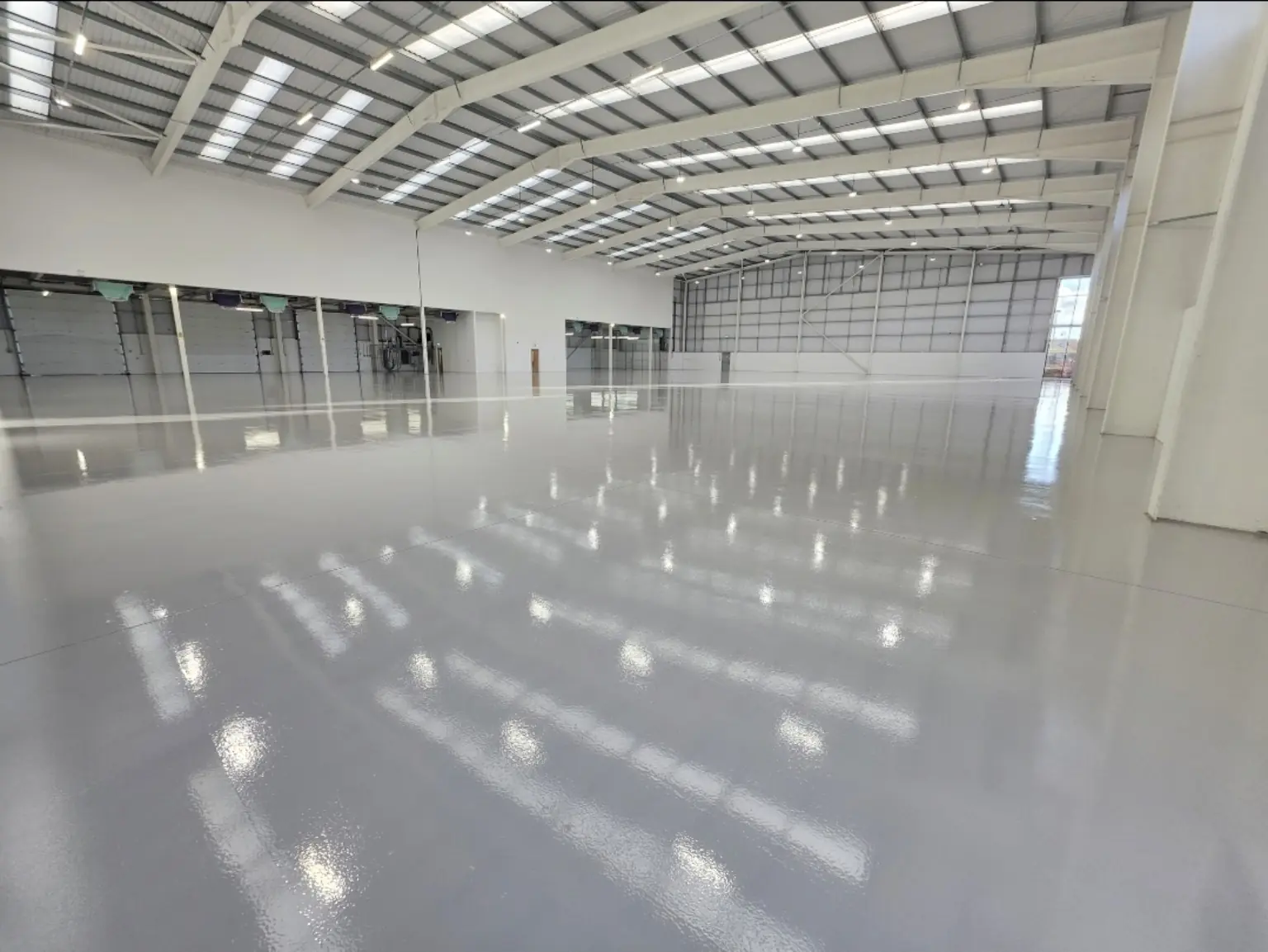
SRS was appointed to refurbish approximately 3,500m² of warehouse flooring
in Bristol after the client had previously been let down by another resin
flooring company.
The existing resin floor was old, tired and damaged.
Preparation included diamond grinding and shot blasting. Indentations and
damaged areas extending into the concrete were cleaned and repaired using
epoxy mortar.
The prepared floor then received a Vebro Polymers epoxy primer followed
by two epoxy coats.
The approximately 3,500m² flooring package was completed in five days.
View the complete
Bristol Warehouse Resin Flooring Case Study
.
A balanced view
Is epoxy flooring right for every site?
No single flooring system is automatically right for every building.
Some sites may require a different resin build, greater thickness,
specialist slip resistance or another flooring system entirely.
Before choosing epoxy flooring, consider:
- The condition of the concrete
- The type and volume of traffic
- Impact and abrasion
- Spills and chemical exposure
- Cleaning requirements
- Slip resistance
- Temperature and operating conditions
- Available installation time
The strongest specification starts with the site requirements rather
than selecting the flooring solely on appearance or price.
Continue your research
Related epoxy and resin flooring services
Frequently asked questions
Epoxy flooring FAQs
What are the benefits of epoxy flooring?
Suitable epoxy flooring can provide a durable, largely seamless and
practical surface that can improve the appearance and maintainability
of commercial and industrial floors.
Is epoxy flooring good for warehouses?
Yes. Correctly specified epoxy flooring can work well in warehouses,
but the system should be selected around forklift traffic, wheels,
abrasion, impact and the condition of the concrete.
Is epoxy flooring suitable for factories?
Epoxy flooring is commonly considered for factories and workshops.
The specification should reflect traffic, contamination, cleaning
and operating conditions.
Is epoxy flooring easy to clean?
A largely seamless epoxy surface can simplify routine cleaning,
although the cleaning method should suit the texture and contamination
present.
Can epoxy flooring be anti-slip?
Suitable epoxy systems can incorporate texture where additional grip
is required. The final finish should also be practical to clean.
Can epoxy flooring go over old concrete?
Often, but the concrete should first be assessed and prepared.
Existing coatings, contamination, damage and weak areas may require
treatment before installation.
Is epoxy flooring chemical resistant?
Chemical resistance depends on the specific epoxy system and the
substance, concentration, temperature and exposure conditions.
Does epoxy flooring need surface preparation?
Yes. Correct preparation of the substrate is an important part of
a professional epoxy flooring installation.
How long does epoxy flooring last?
Lifespan varies according to preparation, system build, traffic,
impact, cleaning, maintenance and operating conditions.
How do I get an epoxy flooring quotation?
Send SRS the site location, approximate floor area, photographs,
existing floor condition, intended use and available installation
period so the project can be reviewed.
Planning an epoxy flooring project?
Choose the system around how your site actually operates
Send Superior Resin Solutions photographs of the existing floor,
approximate area and details of the traffic and operating conditions.
We can review the information and discuss the most practical next step.